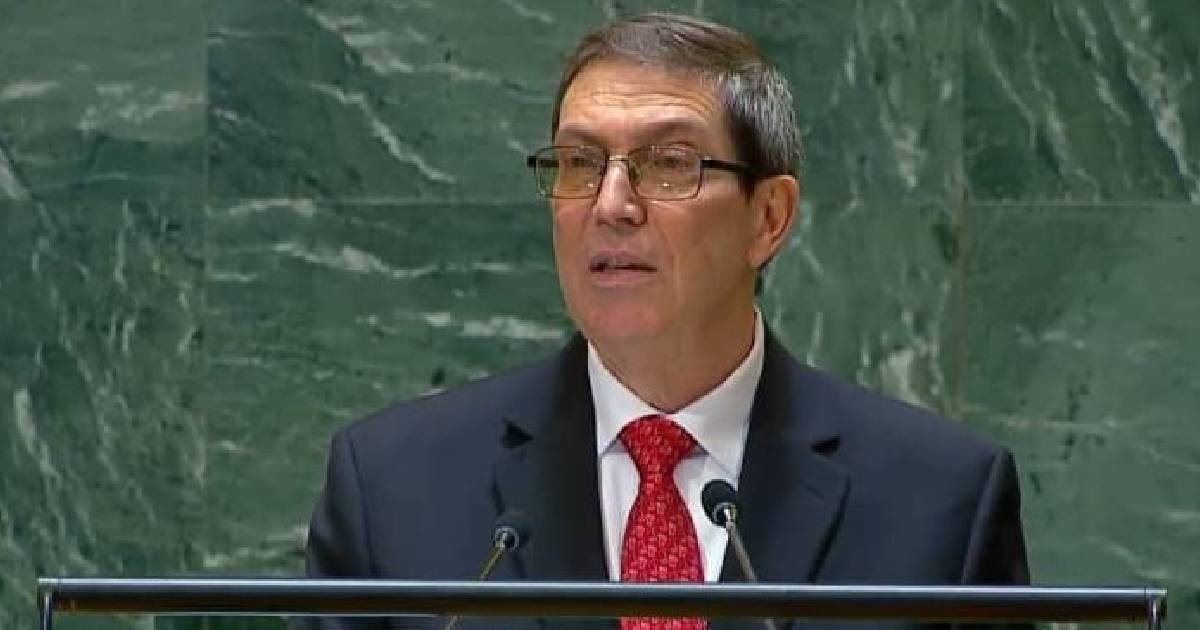
On Thursday, Cuban Foreign Minister Bruno Rodríguez Parrilla addressed the open session of the BRICS Foreign Ministers' Meeting in New Delhi. During his speech, he warned that Cuba is facing a direct military threat from the United States and urged the international community to take action to prevent it.
Rodríguez declared, "Our nation is under the threat of direct military aggression and is suffering from a harsh blockade on fuel supplies, posing an increasing threat to global peace and security."
The Cuban diplomat condemned three specific measures implemented by the Trump administration this year: the January 29 Executive Order imposing a petroleum embargo, the May 1 sanctions against third-country entities dealing with Cuba, and the May 7 decisions by the Treasury Department.
He urgently called on the nations present to mobilize: "We urge the global community to act to prevent a military venture against Cuba that would lead to a humanitarian disaster, bloodshed, and the deaths of both Cubans and young Americans, destabilizing the region with unpredictable consequences."
Rodríguez also refuted claims that Cuba poses a threat to U.S. national security, asserting, "Cuba is the nation being threatened and attacked."
He described the embargo as "an act of genocide and collective punishment causing extraordinary human harm," attributing power outages, water pumping issues, liquefied gas shortages, and impacts on transportation and healthcare services to U.S. policy.
Energy Crisis and Military Rhetoric
This intervention comes amid an unprecedented energy crisis in Cuba, with a record electrical deficit exceeding 2,100 MW and power outages lasting up to 22 hours daily in Havana.
The military rhetoric has escalated in recent weeks: On May 2, Trump stated he would "almost immediately" take control of Cuba, on May 5 threatened to deploy the USS Abraham Lincoln carrier near the Island, and on May 12, Defense Secretary Pete Hegseth confirmed to Congress that Cuba is a "national security threat."
Diplomatic Moves and International Support
Diplomatically, Rodríguez expressed gratitude for the support of China, Russia, Vietnam, and India, proposing the establishment of a BRICS repository for science and research to benefit the Global South.
Simultaneously with his speech in New Delhi, the foreign minister announced on Thursday that Cuba is "willing to consider" the $100 million humanitarian aid offer from the U.S., which he had labeled a "fable" just two days earlier.
Understanding the U.S.-Cuba Tensions
What are the main concerns raised by Cuba's Foreign Minister?
Cuba's Foreign Minister Bruno Rodríguez raised concerns about a direct military threat from the United States, the severe impact of the U.S. fuel embargo, and the broader implications for international peace and security.
How has the U.S. responded to these accusations?
The U.S. has ramped up its military rhetoric, with statements from Trump and Defense Secretary Pete Hegseth suggesting a heightened perception of Cuba as a security threat.
What diplomatic efforts are being made by Cuba?
Cuba is seeking international support from BRICS nations and has proposed a scientific collaboration to aid the Global South. They also expressed a willingness to consider U.S. humanitarian aid.