On Thursday, Cuban Foreign Minister Bruno Rodríguez Parrilla stated that the Cuban government is "willing to listen" to the details of a $100 million humanitarian aid offer from the Trump administration, just two days after labeling it as "a fable" and "a lie."
Later, Miguel Díaz-Canel took to X, expressing that the United States "will not find obstacles or ingratitude from Cuba" if the aid is provided with "genuine intent" and in accordance with universally recognized humanitarian practices.
This development coincided with a visit from John Ratcliffe, director of the CIA, who led a U.S. delegation to Havana to meet with his Cuban Interior Ministry counterpart, marking one of the highest-level interactions between Washington and the Cuban regime in recent years.
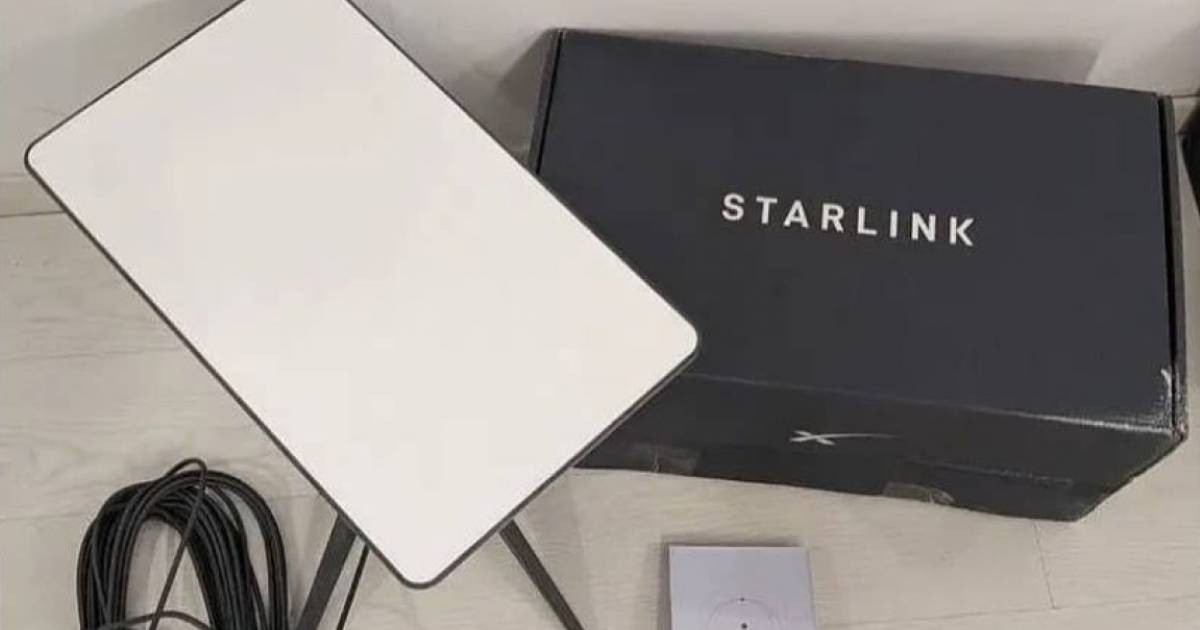
However, there has been no mention by the Cuban regime of accepting the offer for satellite internet access through Starlink technology. Why is this the case?
Details of the Aid Package
The $100 million offer was formally extended on Wednesday by the State Department through an official statement. It specified that the funds would be channeled via the Catholic Church and independent humanitarian organizations, deliberately bypassing the Cuban state.
The statement also disclosed that Washington had made "numerous private offers" to the regime, including free satellite internet access via Starlink, all of which were rejected without a positive response.
Starlink: The Unspoken Offer
The most telling aspect of Thursday's shift is that neither Rodríguez nor Díaz-Canel addressed the Starlink offer in any of their statements. They tacitly agreed to discuss material aid—fuel, food, medicines—while remaining completely silent on the topic of free internet, the one part of the offer that directly challenges the regime's political control.
The reason for this silence became apparent on May 4, when the official Cuban outlet Razones de Cuba published an article titled "The Hybrid War of Starlink Against Cuba." The piece admitted that the satellite network is "inherently resistant to physical attacks or government interdiction," and compared an antenna to "the installation of microphones, cameras, or missile launch bases on national territory."
Starlink Proposal Rejected
The Starlink proposal was initially presented on April 10 during the first visit of a U.S. government aircraft to Havana since 2016, promising "free, fast, and reliable connectivity throughout the island," as confirmed by a senior State Department official to EFE.
The regime turned down the offer nine days later and imposes penalties of three to eight years in prison for possessing Starlink equipment.
Rodríguez conditioned their openness to the proposal on it being "free of political maneuvers and attempts to exploit the hardships and pain of a besieged people," insisting that "the best help" would be "to de-escalate the energy, economic, commercial, and financial blockade measures."
Díaz-Canel described the offer as "inconsistent and paradoxical," given that the U.S. government itself "collectively punishes" the Cuban people, although he acknowledged that "the experience of working with the Catholic Church is rich and productive."
Cuban-American Congressman Carlos Giménez warned that the Cuban government would try to "steal the aid and profit by reselling it to the people."
The State Department was clear in placing the responsibility on Havana: "The decision lies with the Cuban regime to accept our assistance offer or deny critical, life-saving aid, ultimately being accountable to the Cuban people for obstructing this assistance."
Questions Regarding US Aid and Internet Access in Cuba
Why did Cuba reject the Starlink offer?
The Cuban government views Starlink as a threat to its political control, as the technology offers free and uncensored internet access that is resistant to government control or interference.
What is included in the US aid package to Cuba?
The aid package includes $100 million in humanitarian assistance, which is intended to provide fuel, food, and medicines, and is to be distributed through the Catholic Church and independent humanitarian organizations.
How has the Cuban government responded to US humanitarian offers in the past?
Historically, the Cuban government has been skeptical of US offers, often rejecting them due to perceived political motives, while demanding the lifting of various economic and commercial blockades.