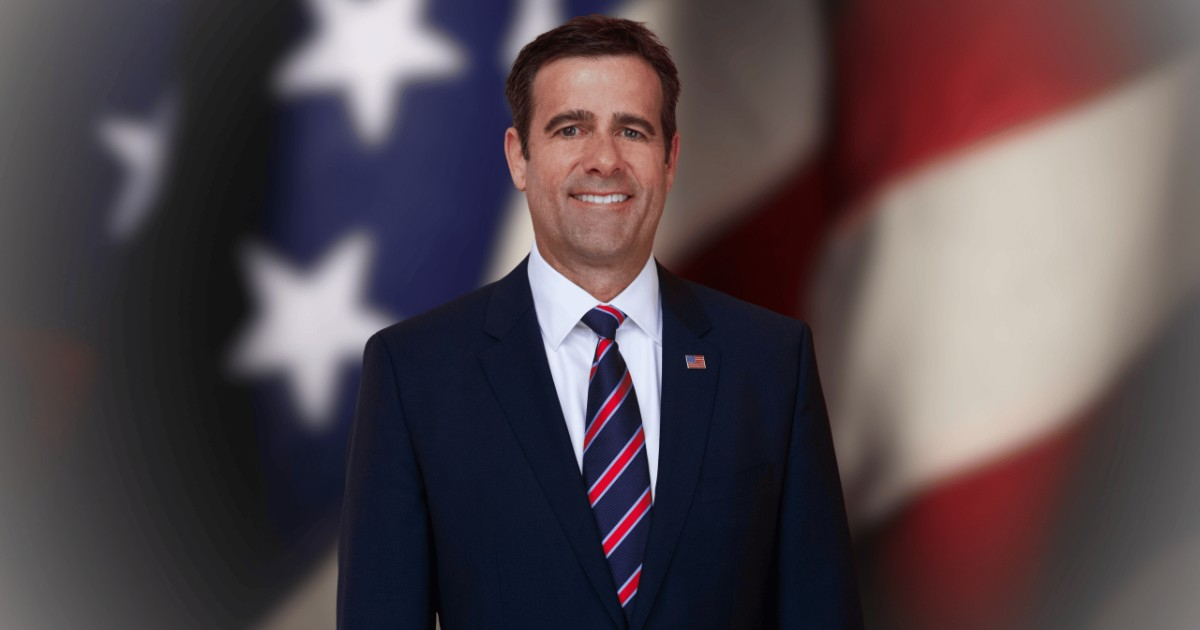
On Thursday, CIA Director John Ratcliffe led a U.S. presidential delegation to Havana, marking one of the highest-level engagements between Washington and the Cuban regime in decades. This visit was confirmed by an official statement from the Cuban government, released via the Communist Party's website.
Prior to the regime's public confirmation, CiberCuba obtained details from two anonymous sources. The news broke with the arrival of a U.S. Air Force aircraft at José Martí International Airport, identified as flight SAM554, a Boeing C-40B Clipper with tail number 01-0040, originating from Joint Base Andrews in Washington.
The designation SAM, or “Special Air Mission,” is used for high-profile U.S. government flights.
Strategic Discussions Amidst Complex Relations
The official statement revealed that “following a U.S. request for a delegation led by CIA Director John Ratcliffe to be received in Havana, the Revolutionary Directorate approved the visit and a meeting with counterparts from the Ministry of the Interior.” The statement described the meeting as occurring “in a context marked by the complexity of bilateral relations, aiming to foster political dialogue between the two nations.”
A central topic was the State Sponsors of Terrorism (SSOT) list, to which the Trump administration had re-added Cuba in February 2025. The Cuban communiqué asserted that discussions “categorically demonstrated that Cuba poses no threat to U.S. national security and there are no legitimate reasons for its inclusion on the list of countries allegedly sponsoring terrorism.”
The regime reiterated that the island “does not harbor, support, finance, or permit terrorist or extremist organizations” and emphasized the absence of foreign military or intelligence bases on its territory. Both parties also expressed a mutual interest in enhancing bilateral cooperation between law enforcement agencies for the security of both nations, regionally and internationally.
Diplomatic Movements and Humanitarian Talks
Ratcliffe's visit coincided with a week of intense diplomatic activity. On May 12, Donald Trump announced on Truth Social: “Cuba asks for help, and we will talk!” The following day, Miguel Díaz-Canel expressed a willingness for dialogue. On the same Thursday, Cuban Foreign Minister Bruno Rodríguez Parrilla softened the country's stance on a $100 million humanitarian aid offer from the U.S., indicating Cuba’s openness to discussing the offer's specifics. This marked a significant shift from his May 9 statement, where he dismissed the proposal as a “$100 million lie.”
Backdrop of Sanctions and Strategic Engagement
This visit followed a secret meeting on April 10, when a State Department delegation, supervised by Marco Rubio, marked the first official U.S. aircraft landing in Cuba since 2016. During this visit, U.S. representatives met with Cuban deputy ministers to discuss issues such as political prisoner releases, internet access via Starlink, and the presence of foreign groups on the island.
Despite these dialogues, the Trump administration has maintained a policy of maximum pressure, with over 240 sanctions imposed on Cuba since January 2026, the interception of at least seven tankers, and a minimum of 25 military surveillance flights near Cuban shores.
Ratcliffe’s history with high-level missions in the region adds significance to his visit. In January 2026, he traveled to Caracas for negotiations that led to Nicolás Maduro's capture, underlining the strategic importance Washington places on its engagement with Cuba.
FAQ on CIA Visit to Cuba
What was the purpose of John Ratcliffe's visit to Cuba?
The visit aimed to foster political dialogue between the U.S. and Cuba, focusing on the State Sponsors of Terrorism list and enhancing bilateral cooperation on law enforcement.
How did the Cuban government respond to the U.S. humanitarian aid offer?
Cuban Foreign Minister Bruno Rodríguez Parrilla expressed openness to discussing the specifics of the U.S. aid offer, marking a shift from previous dismissals.
How has the Trump administration's policy affected U.S.-Cuba relations?
The Trump administration has pursued a pressure-based policy, including over 240 sanctions, to exert influence on Cuba, impacting diplomatic relations.