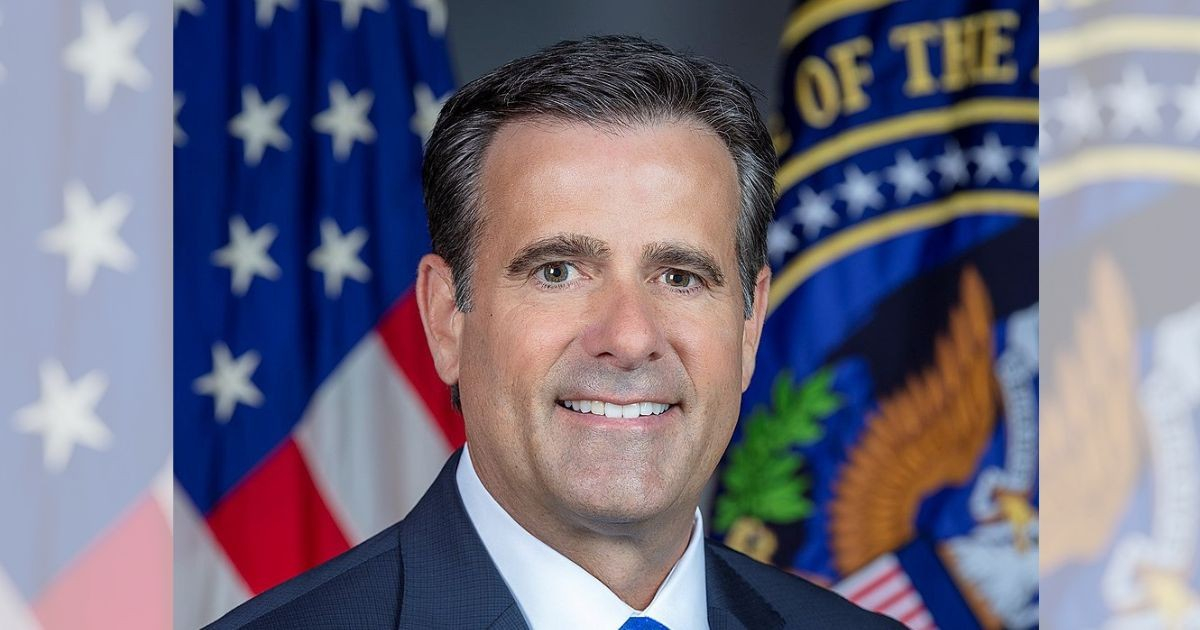
John Ratcliffe, the head of the CIA, made a significant visit to Havana on Thursday, leading a U.S. delegation. This meeting with Cuban Ministry of the Interior officials marks one of the highest-level interactions between Washington and the Cuban regime in recent years.
The Cuban regime confirmed the meeting through an official statement, noting that the U.S. government requested the visit, which was sanctioned by "the Direction of the Revolution."
The central topic of the discussions, according to the official release, was the list of nations labeled as state sponsors of terrorism, commonly referred to by its acronym, SSOT.
The Cuban regime asserted that it was conclusively demonstrated during the meeting that Cuba poses no threat to U.S. national security and that there is no legitimate reason for its inclusion on the list of countries allegedly sponsoring terrorism.
The Cuban delegation reiterated to Ratcliffe that "the island does not harbor, support, finance, or permit terrorist or extremist organizations; nor are there any foreign military or intelligence bases on its soil, and it has never supported any hostile activities against the U.S."
Both parties expressed interest in enhancing bilateral cooperation between law enforcement agencies to ensure the security of both nations, regionally and internationally, as stated in the regime's communiqué.
CiberCuba obtained information about the meeting before it was publicly confirmed by the regime, thanks to two non-citable sources. The news was initially reported following the landing of a U.S. Air Force plane at José Martí International Airport. This was identified as SAM554, a Boeing C-40B Clipper, originating from Joint Base Andrews in Washington.
This visit comes amid heightened pressure from Washington on Havana. Since January 2026, the Trump administration has imposed over 240 sanctions on the regime, signed two executive orders, and intercepted seven tankers bound for the island.
On the same day, Secretary of State Marco Rubio told NBC that "it is impossible to change Cuba's economic course while the current leaders remain in power," although he added, "we have to give it a chance."
A senior State Department official confirmed to NTN24 that Cuba has "a small opportunity to reach an agreement" and that the regime "should stop playing games."
Ratcliffe's visit follows a pattern of direct intelligence diplomacy he previously applied in January 2026, when he visited Caracas to meet with Venezuelan authorities after Nicolás Maduro's capture.
The immediate backdrop includes the first official flight of a U.S. government plane to Cuba since 2016, recorded on April 10. During this visit, State Department officials reportedly delivered an ultimatum to release high-profile political prisoners such as Luis Manuel Otero Alcántara and rapper Maykel Osorbo.
The regime responded with partial pardons, releasing 52 prisoners in March and 2,010 in April, without publicly acknowledging them as part of any negotiation.
Foreign companies with ties to GAESA have until June 5, 2026, to cease operations with sanctioned Cuban entities, marking the next pressure point in a negotiation whose outcome remains uncertain.
Key Questions About U.S.-Cuba Relations
What was the main focus of the CIA director's meeting in Havana?
The central focus was the list of state sponsors of terrorism, with discussions on Cuba's inclusion on this list.
How has the U.S. increased pressure on Cuba since 2026?
The U.S. has imposed over 240 sanctions, signed executive orders, and intercepted tankers destined for Cuba.
What was the outcome of the ultimatum delivered by U.S. officials in April?
The Cuban regime responded with partial pardons for political prisoners but did not publicly acknowledge these as part of negotiations.