The U.S. Department of Labor recently shared a celebratory chart on its official X account, touting "THE TRUMP EFFECT!" for the reduction in prices across 24 categories of goods and services, from eggs to smartphones, attributing these decreases to Donald Trump's administration.
Compiled by the Council of Economic Advisers using data from the Bureau of Labor Statistics, the graphic highlighted year-over-year declines with eggs leading at -39.2%, followed by smartphones at -12.4%, sporting event tickets at -10.0%, men's suits at -7.1%, and health insurance at -6.1%, among other categories.
However, a broader economic portrait painted by the same Bureau just two days prior presents a starkly different narrative. According to official April 2026 inflation data, prices jumped 0.6% on a monthly basis, pushing the annual rate up to 3.8%, the highest since May 2023, surpassing economists' forecasts of 3.7%.
Of particular concern for American households is the fact that, for the first time since April 2023, real wages have turned negative: salaries grew by 3.6% over the year, while prices rose by 3.8%.
Energy Prices Fuel Inflation Surge
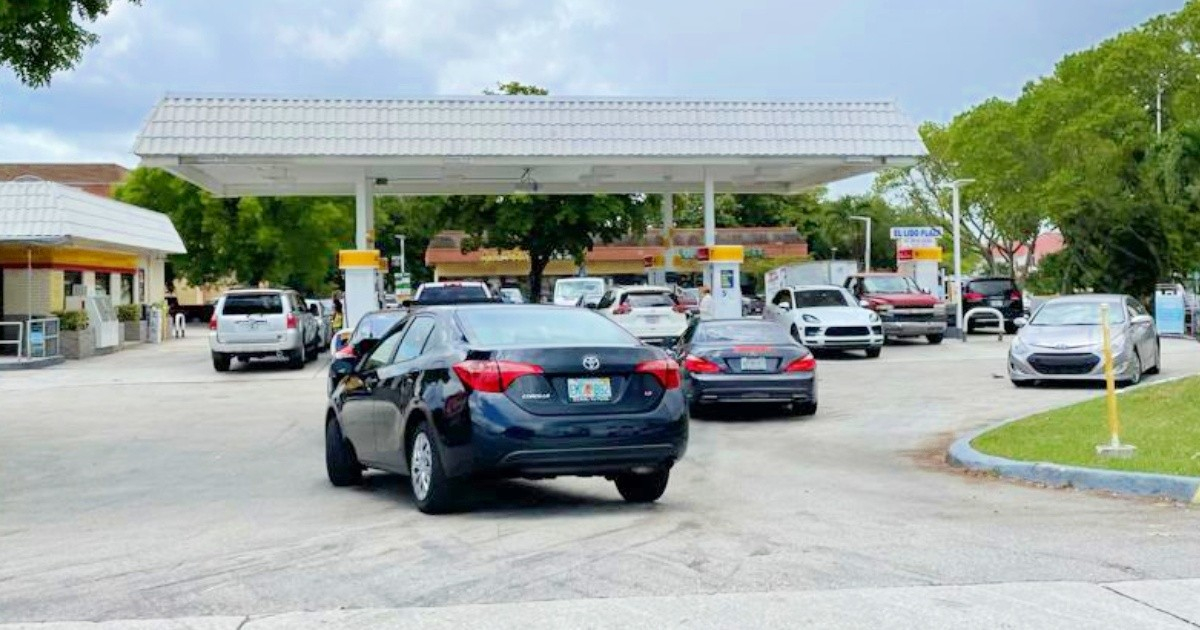
The primary driver of this increase is energy, which soared by 17.9% year-over-year, accounting for 40% of the total monthly rise in the Consumer Price Index for April. Gasoline prices have surged 18.9% annually, and electricity saw a 2.1% increase in April, marking the largest monthly hike in over four years.
Food prices are not immune to this pressure either: overall food costs rose by 3.2% year-over-year, with grocery items climbing 3.6%, and tomatoes skyrocketing over 15% for the second consecutive month.
Selective Messaging from the Government
Independent economists argue that the government's communication strategy involves highlighting specific categories experiencing deflation while ignoring the broader picture. For instance, the 39.2% drop in egg prices is largely due to normalization following the avian flu crisis of 2024-2025, rather than any governmental policy.
"For consumers, this means the cost of living remains uncomfortable. For the Federal Reserve, it implies that interest rate cuts are likely to be postponed," warned Sung Won Sohn, an economist at Loyola Marymount University.
Augustine Faucher, chief economist at PNC Financial Services Group, noted that "consumers were already under pressure" before this latest inflationary spike, amid a slowing job market and rising gas prices.
Geopolitical Tensions Exacerbate Economic Challenges
The energy shock has a clear origin: U.S. and Israeli attacks on Iran in late February 2026 led to the blockade of the Strait of Hormuz, disrupting the flow of oil, fertilizers, aluminum, and helium. Prior to these events, inflation had moderated to 2.4%, a figure politically leveraged by the Trump administration.
Joe Brusuelas, an economist at RSM US, succinctly captured the impact, stating, "The war has come home, and Americans can feel it and see it in their grocery bills."
Oliver Allen, senior economist at Pantheon Macroeconomics, offered a tempered outlook: "I think the situation will be uncomfortable for households over the coming months. But it will not be a repeat of what we saw in 2021 and 2022, when inflation figures kept climbing month after month."
Facing this scenario, the Federal Reserve, which maintained interest rates between 3.50% and 3.75% in March, now confronts the possibility that planned rate cuts might be indefinitely postponed as inflation outpaces wages and shows little sign of abating in the near term.
Frequently Asked Questions on Inflation and Economic Impact
What is causing the current rise in energy prices?
The increase in energy prices is primarily due to geopolitical tensions, specifically U.S. and Israeli actions against Iran, which resulted in the blockade of the Strait of Hormuz, disrupting the flow of essential commodities like oil.
How has inflation affected real wages in the U.S.?
Inflation has caused real wages to turn negative, as the annual increase in salaries (3.6%) is outpaced by the rise in prices (3.8%), reducing purchasing power for American workers.
Why is the Federal Reserve likely to delay interest rate cuts?
The Federal Reserve may delay interest rate cuts because the current inflation rate exceeds wage growth, and there are limited signs that inflation will decrease significantly in the short term.