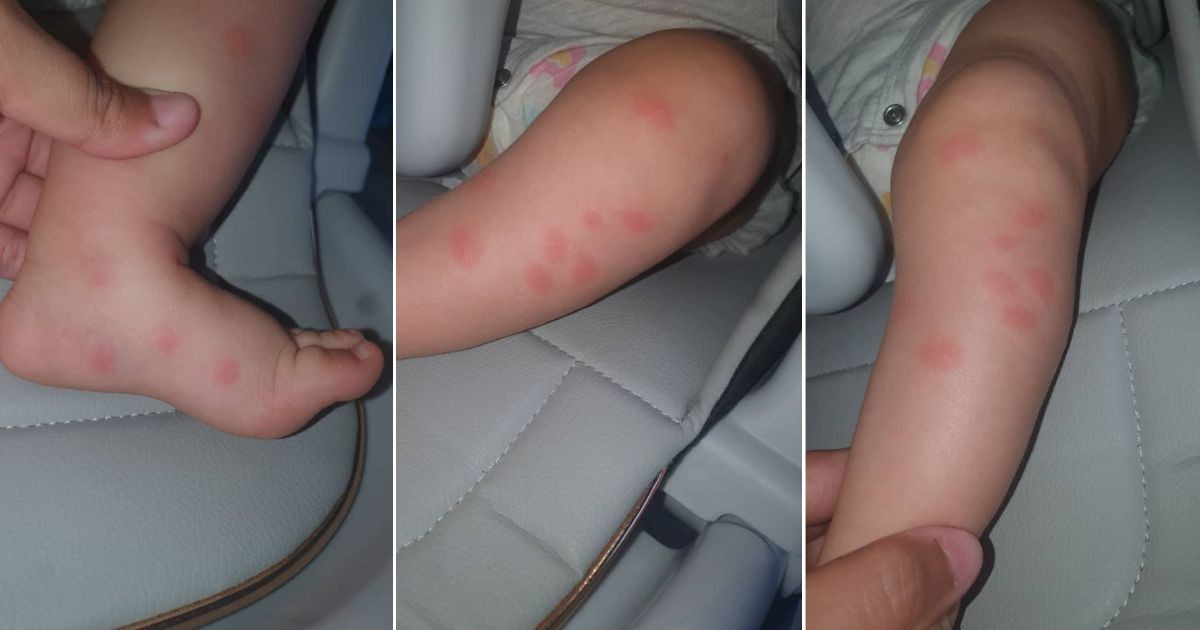
A Cuban mother recently took to social media to share distressing images of her seven-month-old baby, covered in mosquito bites. These bites are a direct result of the power outages plaguing Cuba, which prevent the use of fans or air conditioning at night.
In her powerful statement, the mother directly condemns the regime's leadership: “They should feel ashamed for having seven-month-old babies and children of all ages sleeping without electricity, enduring heat and mosquitoes. Then, when they catch dengue, Zika, or any virus, they want to impose fines, control homes, and start fumigating.”
She continues her criticism: “They should all be embarrassed to sleep with air conditioning and fans while our children suffer through such hardship and need. NO WORDS.”
This message encapsulates the anger of millions of Cubans who observe the ruling elite enjoying uninterrupted electricity, while the general populace—especially the youngest—suffer the health impacts of power cuts.
Cuba's Worsening Power Crisis
The images surface amidst the worst electrical crisis in Cuba in decades. This Thursday, the Cuban Electrical Union predicted that 70% of the country would be without power during peak hours, with a generation capacity of only 976 MW against a demand of 3,150 MW, resulting in a shortfall of 2,174 MW.
Last Tuesday, Cuba experienced a historic record deficit of 2,113 MW at 8:40 PM, surpassing the previous high recorded on March 6, 2026. In Havana, blackouts last between 20 to 22 hours daily, with electricity available for merely one and a half to four hours at a time.
Energy and Mines Minister Vicente de la O Levy described the situation as "acute, critical, and extremely tense."
Healthcare System's Contradictions
The mother's complaint also highlights the hypocrisy of the regime’s health policies. When children contract mosquito-borne diseases like dengue or chikungunya, authorities respond with fines, home inspections, and fumigation campaigns, yet fail to ensure the provision of electricity to protect children at home.
By the end of 2025, Cuba reported at least 65 official deaths from dengue and chikungunya and over 81,900 infected individuals. The Cuban Citizen Audit Observatory noted at least 87 fatalities between October and November of that year alone.
In November, the Ministry of Public Health acknowledged that 34 children were hospitalized in critical condition due to chikungunya, with children accounting for 65% of severe cases in Santiago de Cuba.
Ongoing Public Outcry
This is not the first instance of a Cuban mother speaking out against the situation. In April 2025, another woman shared a video showing her child’s arm covered in bites during a nighttime blackout, despite using a mosquito net.
In September 2025, Miguel Díaz-Canel himself admitted to “disproportions” in the distribution of blackouts, acknowledging that provincial capitals experienced “comfortable” cycles while municipalities suffered cuts lasting up to 25 hours.
The Cuban public's reaction on social media was swift: “There is disproportion in everything: they have electricity, and the people do not.”
The image of the baby with mosquito welts starkly illustrates, without further explanation needed, what 67 years of dictatorship have left Cuban families with: a regime that sleeps under air-conditioned comfort while their children wake up covered in mosquito bites.
Understanding Cuba's Power and Health Crisis
What are the main causes of power outages in Cuba?
Cuba's power outages are largely due to outdated infrastructure, insufficient energy production capacity, and a lack of investment in the energy sector, compounded by economic challenges and mismanagement.
How do power outages affect Cuban families?
Power outages impact Cuban families by preventing the use of essential appliances like fans or air conditioning, leading to increased exposure to mosquito-borne diseases, especially among children. This also disrupts daily life and can lead to health and safety concerns.
What is the Cuban government's response to the health issues caused by power outages?
The government often responds to health issues like outbreaks of mosquito-borne diseases by imposing fines, conducting home inspections, and organizing fumigation efforts, instead of addressing the root causes such as ensuring reliable electricity supply.