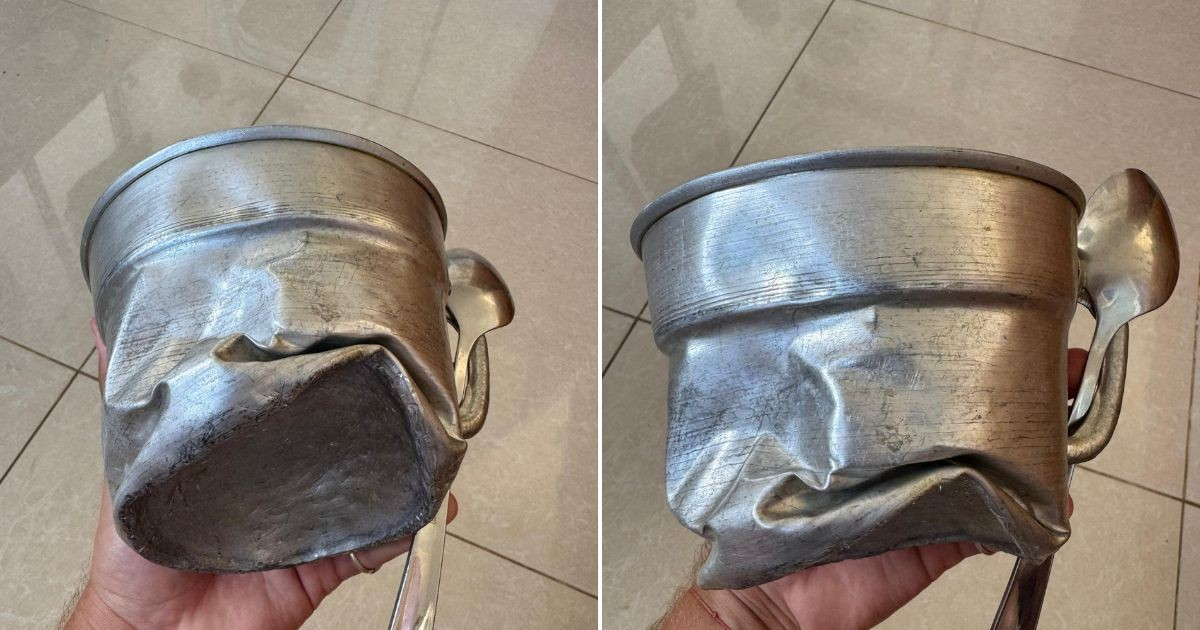
Photographs of a severely dented and misshapen aluminum pot have surfaced, sent by a Cuban citizen to journalist Magdiel Jorge Castro. This pot, battered from participation in Wednesday night's noisy protests in Havana, stands as a testament to its intense use as a tool of dissent.
The images reveal the pot with a collapsed bottom, crumpled metal, and a handle bent outward, clear evidence of the sustained banging it endured during the previous night's demonstrations.
The individual also recounted attempts by regime police to intimidate the neighborhood during the protests.
"He tells me that the regime's police tried to intimidate the neighborhood by revving their motorbikes beneath the buildings," Castro shared on his X account.
Despite this auditory intimidation tactic, the protests persisted that night, and according to Castro, were expected to continue into Thursday.
Protests Spread Across Havana
Wednesday's demonstrations erupted simultaneously across at least ten of Havana's municipalities, including Diez de Octubre, Marianao, San Miguel del Padrón, Nuevo Vedado, Guanabacoa, and Arroyo Naranjo.
In San Miguel del Padrón, residents gathered in front of the municipal government office, chanting demands for "Electricity and food!", while slogans such as "Down with the dictatorship!" echoed in Reparto Bahía.
Meanwhile, Marianao saw residents lighting bonfires into the early hours, and in Nuevo Vedado — mere blocks from the Palace of the Revolution and the Central Committee of the Communist Party of Cuba — protests erupted after 24 hours without power.
Escalating Tensions and Police Repression
Independent journalist José Raúl Gallego depicted the situation's intensity in Santos Suárez: "All of Santos Suárez is out on the streets. I haven't seen anything like this since July 11."
Police repression was also reported in the Playa municipality, where officers allegedly assaulted demonstrators.
This surge of protests began on March 6, 2026, in response to prolonged power outages — some exceeding 20 hours a day — and severe food shortages.
According to the Observatory of Cuban Conflicts, there were 1,245 protests in March and 1,133 in April 2026, marking a 29.5% increase over April of the previous year.
Since the start of these protests, at least 14 people have been detained in Havana. The regime has also resorted to militarizing areas and selectively cutting mobile data.
The dented pot circulating on social media has come to symbolize a resistance that, night after night, spreads across more parts of the capital, undeterred by police intimidation.
Understanding the Recent Protests in Havana
What sparked the recent protests in Havana?
The protests were ignited by long-lasting power outages and severe shortages of food, as residents demand solutions to these critical issues.
How has the Cuban regime responded to the protests?
The regime has responded with police intimidation, detentions, militarization of areas, and selective mobile data cuts to try to suppress the protests.
What role did the aluminum pot play in the protests?
The aluminum pot was used as a tool to make noise during the protests, becoming a symbol of resistance against the regime.