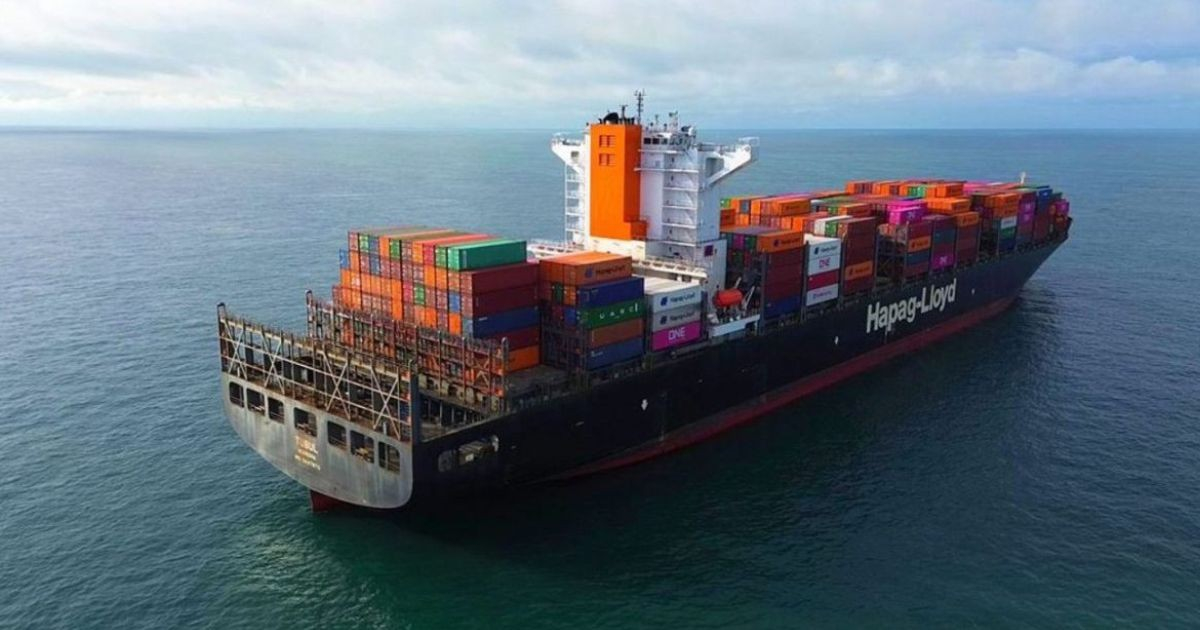
The global shipping giants, Hapag-Lloyd and CMA CGM, have informed their Cuban representative agencies of an immediate "STOP BOOKING" — a complete halt on reservations — for all origins and destinations involved in their regular services to and from the island, according to an urgent communiqué obtained exclusively by this outlet.
Dated May 14, 2026, the document explicitly states: "Yesterday morning, we received an official communication from the Cuban Representation Agencies of Hapag-Lloyd and CMA CGM, notifying us of the application of a STOP BOOKING for all origins and destinations of their regular services to and from Cuba."
Impact of the Sanctions Beyond Shipping
Independent sources have verified the authenticity of the communiqué, further clarifying that this measure extends beyond these two firms: all shipping lines have suspended and rescheduled their shipments to Cuba, affecting both maritime and air transport.
This suspension is intended to be temporary, driven by the need to restructure contracts to exclude GAESA as a counterpart, following sanctions by Washington against the Cuban military conglomerate.
The Catalyst: U.S. Sanctions
The immediate trigger was the sanction package announced on May 7 by Secretary of State Marco Rubio, under Executive Order 14404 signed by President Donald Trump on May 1.
The sanctions effectively designate GAESA — the Grupo de Administración Empresarial S.A., a conglomerate under the control of the Revolutionary Armed Forces — as a blocked entity, freezing all its assets under U.S. jurisdiction and prohibiting any transactions with U.S. persons or companies.
GAESA's Economic Grip
Crucially, the Office of Foreign Assets Control (OFAC) has given foreign companies and financial institutions until June 5, 2026, to cease all operations with GAESA and its subsidiaries, under threat of secondary sanctions.
The structural problem for shipping companies is that GAESA controls approximately 40% or more of the Cuban economy, including ports, maritime terminals, and the Mariel Special Development Zone through its subsidiary AUSA. This means nearly every commercial operation on the island involves some contractual link to the conglomerate, making it exceedingly challenging to conduct business in Cuba without risking sanctions.
Broader Economic Consequences
The State Department has characterized GAESA as "the core of Cuba's kleptocratic communist system," accusing the conglomerate of handling revenues that "likely triple the state budget" and manage up to $20 billion in illicit foreign assets.
GAESA's executive president, Ania Guillermina Lastres Morera, a brigadier general in the Revolutionary Armed Forces, was personally sanctioned on May 7.
This shipping suspension adds to a wave of corporate withdrawals. The Canadian mining company Sherritt International suspended all direct operations in Cuba on the same day, citing the executive order as making it "materially impossible" to maintain normal operations, exacerbating the already dire energy crisis in a nation where blackouts affect more than 55% of the territory for up to 25 hours a day.
Since January 2026, the Trump administration has enforced over 240 sanctions against the Cuban regime and intercepted at least seven oil tankers, slashing the island's energy imports by 80% to 90%.
Rubio warned in his May 7 statement that "further sanctions are expected in the coming days and weeks," signaling that the pressure on the regime and its international business partners has not yet peaked.
Frequently Asked Questions about Sanctions on GAESA
What is the impact of the sanctions on GAESA?
The sanctions have designated GAESA as a blocked entity, freezing its assets under U.S. jurisdiction and prohibiting transactions with U.S. individuals or companies.
Why have shipping companies halted operations with Cuba?
Shipping companies have paused operations to restructure contracts excluding GAESA, following U.S. sanctions against the conglomerate.
How does GAESA influence the Cuban economy?
GAESA controls significant portions of the Cuban economy, including ports and special development zones, which complicates commercial operations without engaging with the conglomerate.