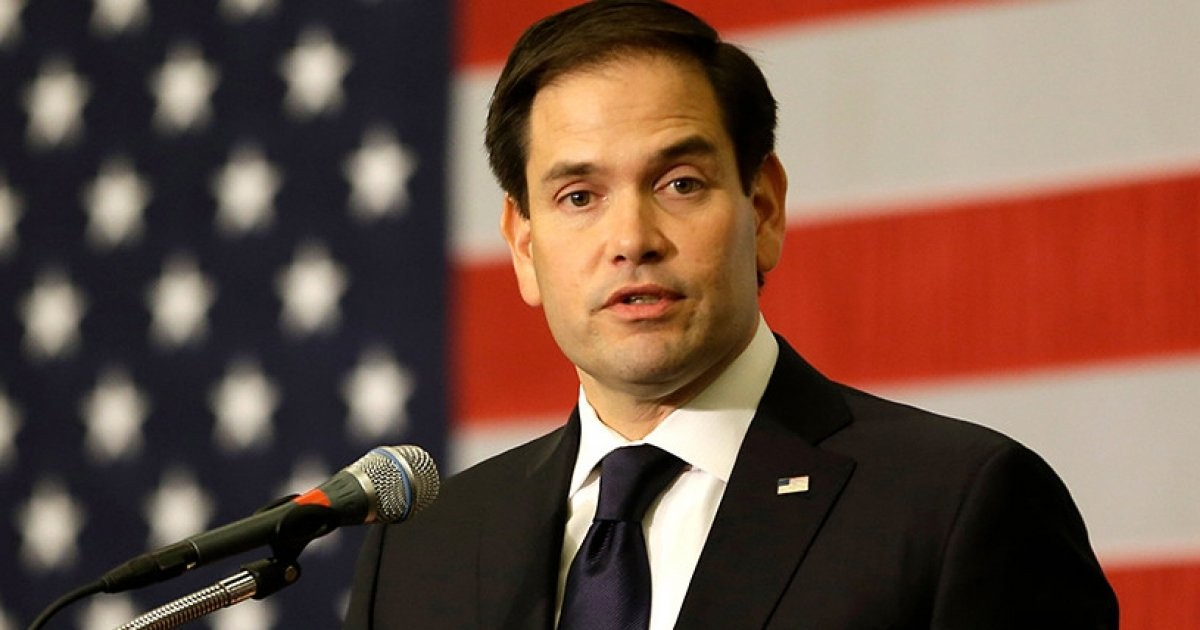
In a recent interview with Fox News, U.S. Secretary of State Marco Rubio declared that "there is no economy" in Cuba, emphasizing that the island's economic trajectory cannot improve as long as the current regime remains in power.
During the broadcast, Rubio described the Cuban economy as "broken and dysfunctional," highlighting that all of the island's wealth is controlled by a business conglomerate owned by military generals. This was a reference to GAESA (Grupo de Administración Empresarial S.A.), a military-controlled enterprise accumulating between $15 and $16 billion.
"The wealth is in the hands of a company owned by military generals. They hoard all the money, sitting on billions. This is a country where people are literally eating garbage off the streets," Rubio asserted.
The Secretary of State was clear in stating his personal view: "I don't believe we can change Cuba's economic path while those currently in charge remain. That needs to change because these individuals have proven to be incapable."
Although Rubio left a window open for potential change, he was firm: "I hope I'm wrong. We'll give them a chance. But I don't think it's going to happen."
His statements align with the Trump administration's ongoing sanction offensive. On May 1st, President Trump signed Executive Order 14404, expanding the national emergency regarding Cuba and enabling new secondary sanctions against third-party entities.
Subsequently, on May 7th, Rubio announced direct sanctions against GAESA, its executive president Ania Guillermina Lastres Morera, and the company Moa Nickel S.A., describing the conglomerate as "the heart of Cuba's kleptocratic communist system."
Foreign companies linked to GAESA were given until June 5th to sever ties or face secondary sanctions.
Rubio's assessment is consistent with the latest economic forecasts. The Economic Commission for Latin America and the Caribbean (ECLAC) predicts a 6.5% contraction in Cuba's GDP by 2026, the worst in Latin America, while The Economist Intelligence Unit forecasts a 7.2% decline.
Economist Pedro Monreal warned last Saturday that the drop could reach 15%, equalling or exceeding the worst year of the Special Period when GDP fell 14.9% in 1993.
Since 2019, the Cuban economy has shrunk by approximately 23%, with power outages lasting up to 25 hours a day, tourism plummeting from 4.7 million visitors in 2018 to 1.8 million by 2025, and over 600,000 Cubans having left the island since 2022.
Rubio summed up his stance decisively: "You can't fix their economy without changing their government system."
Key Questions About Cuba's Economic Challenges
What is GAESA, and why is it significant in Cuba's economy?
GAESA is a business conglomerate controlled by Cuban military generals. It holds significant power over Cuba's economic assets, reportedly controlling billions of dollars in wealth, which makes it crucial to understanding the island's economic structure.
How has the Cuban economy performed in recent years?
The Cuban economy has experienced a decline of about 23% since 2019, with severe power outages, a significant drop in tourism, and massive emigration of Cubans seeking better opportunities abroad.
What are the projections for Cuba's economic future?
Projections suggest a continued decline in Cuba's GDP, with ECLAC estimating a 6.5% contraction by 2026 and The Economist Intelligence Unit forecasting a 7.2% decrease. Some experts warn the drop could be as severe as 15%.