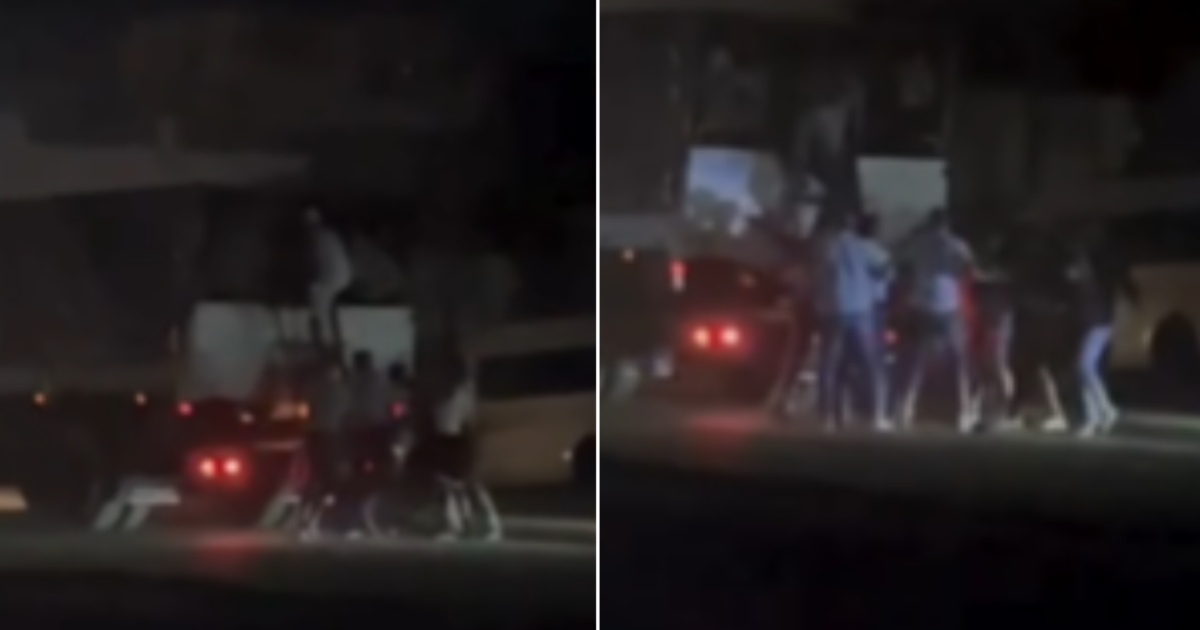
This Thursday, Cuban regime police violently suppressed protesters in the Playa district of Havana, as captured in a video shared on Facebook by journalist Mario J. Pentón using the hashtag #PATRIAYVIDA.
In the 38-second clip, onlookers can be heard exclaiming, "It started, it started, look at the people," as they describe the crackdown unfolding on the streets of Havana.
Power Outages Fueling Unrest
Thursday's events are part of a series of protests that have swept through the capital in recent days, driven by power outages that exceed 20 hours daily in some areas, with an electrical deficit projected to reach nearly 2,000 MW during peak nighttime hours.
Residents of Nuevo Vedado took to the streets after enduring 24 consecutive hours without electricity, joining multiple demonstrations that rocked the capital in a single day.
In San Miguel del Padrón, locals gathered outside the municipal government headquarters, chanting "Power and food!" to demand solutions to a crisis the regime has failed—and seems unwilling—to address.
Escalating Protests Across Havana
On that same day, Marianao residents protested with banging pots, lighting fires, and burning trash to express their frustration over prolonged blackouts suffocating the population.
Earlier, on Wednesday, Luyanó inhabitants staged a pot-banging protest and blocked the Calzada de Concha, adding to the wave of indignation spreading across the city’s districts.
Government's Heavy-handed Response
The documented repression in Playa follows a systematic pattern by the regime: deploying special forces known as "black berets," plainclothes police, military patrols, and cutting internet access in areas where protests occur.
A report by Cubalex on social militarization in Cuba details how Havana's streets, parks, and residential areas remain under constant surveillance by police and military patrols, a strategy the organization deems as social control in response to growing discontent.
Since March 6, 2026, at least 14 individuals have been arrested in Havana for participating in pot-banging protests, according to Cubalex data.
Signs of Persistent Resistance
On Thursday morning, messages with the slogan "Patria y Vida" and criticisms of Díaz-Canel appeared painted on city walls, signaling that popular resistance persists despite the crackdown.
The Cuban Conflict Observatory recorded 1,133 protests in April 2026, a 29.5% increase from the same month in 2025, highlighting the sustained escalation of discontent that the regime attempts to quash with force and arrests but has yet to extinguish.
Understanding the Protests in Cuba
What sparked the recent protests in Havana?
The protests have been sparked by severe power outages, with some areas experiencing more than 20 hours of blackouts daily, alongside a significant electrical deficit during peak hours.
How has the Cuban government responded to the protests?
The government has responded with heavy-handed tactics, deploying military and police forces, cutting internet access, and making arrests to suppress the demonstrations.
Are the protests limited to a specific area in Havana?
No, the protests have erupted across various districts in Havana, including Playa, Nuevo Vedado, San Miguel del Padrón, Marianao, and Luyanó.