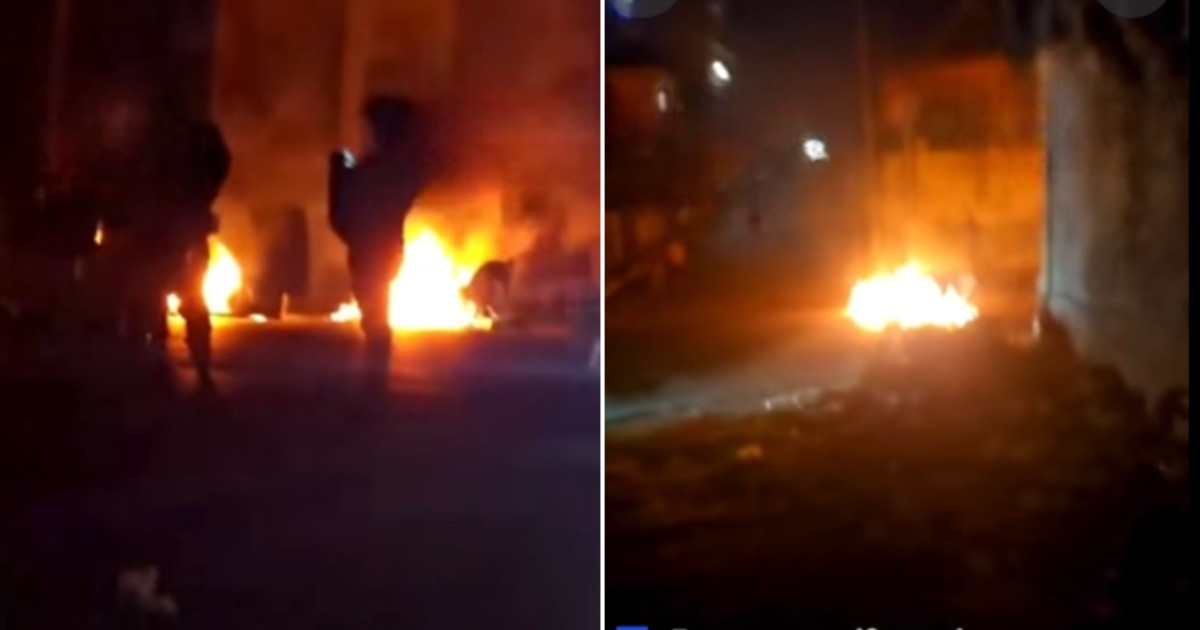
On Wednesday, intense demonstrations erupted in various areas of Havana, characterized by banging pots, anti-communist chants, and roadblocks reported simultaneously across multiple districts of the Cuban capital.
Journalist Mario J. Pentón shared on his social media accounts about nighttime protests occurring in the neighborhoods of Lawton, Luyanó, and Santo Suárez, located within the Diez de Octubre municipality.
Pentón noted, "Strong demonstrations in Diez de Octubre: Lawton, Luyanó, and Santo Suárez, with the sound of pots clanging and anti-communist slogans echoing."
Simultaneously, the same journalist reported protests in Guanabacoa, specifically on Calzada Vieja, where residents also engaged in banging pots and blocking streets.
The unrest on Thursday is not an isolated incident but rather the latest peak in a wave of discontent that has been escalating since March 7, 2026, when these pot-banging protests began spreading across many Havana neighborhoods and other provinces.
Earlier in the week, there were already instances of protests, including one in front of the government headquarters in San Miguel del Padrón, demanding "Electricity and food!", a pot-banging in Reparto Bahía with cries of "Down with the dictatorship!", a blockade of Calzada de Concha in Luyanó, and bonfires in Marianao during the early hours of the same Thursday.
The immediate trigger is the most severe energy crisis of the year. On Wednesday, the Electric Union recorded a record power deficit of 2,113 MW at 8:40 p.m., the largest shortfall seen so far in 2026, surpassing the previous high of 2,075 MW on March 6.
Miguel Díaz-Canel himself acknowledged on his Facebook account that the situation of the National Electric System was "particularly tense," predicting a deficit exceeding 2,000 MW for the evening peak.
In some parts of Havana, blackouts have lasted between 20 and 22 hours a day, as admitted by the Minister of Energy and Mines, Vicente de la O Levy.
The minister also confessed that Cuba had not received any fuel shipments from December 2025 until late March 2026, except for a Russian donation of 100,000 tons of crude oil that only temporarily eased the situation in April.
The neighborhoods where Thursday's protests were concentrated — Lawton, Luyanó, Santo Suárez, and Guanabacoa — are historically impoverished areas, severely affected by deteriorating infrastructure and a lack of essential services.
The regime's response to the rising unrest has included arrests, with at least 14 individuals detained in Havana linked to pot-banging protests since March 6.
The Cuban Conflict Observatory recorded 1,133 protests in April 2026 alone, reflecting a 29.5% increase compared to the same month the previous year, illustrating a consistent upward trend in social unrest across the island.
Understanding the Recent Protests in Havana
What triggered the recent protests in Havana?
The immediate trigger was the severe energy crisis, with a record power deficit of 2,113 MW, leading to prolonged blackouts.
Which areas in Havana were most affected by the protests?
The protests were concentrated in Lawton, Luyanó, Santo Suárez, and Guanabacoa, historically disadvantaged neighborhoods.
How has the Cuban government responded to the protests?
The regime has responded with arrests, detaining at least 14 people in connection with the protests since early March.