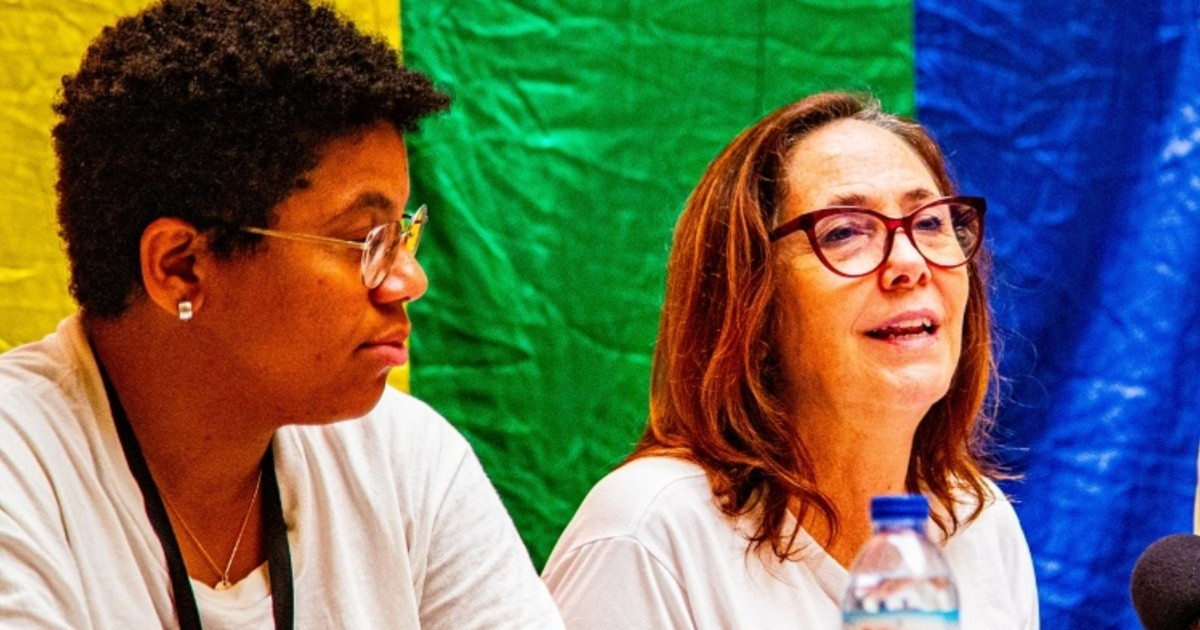
Mariela Castro Espín, who leads the National Center for Sexual Education (Cenesex) and is the daughter of Raúl Castro, utilized a press conference for the Cuban Days Against Homophobia and Transphobia to turn the LGBTQ+ cause into a tool for defending the Cuban regime while criticizing the United States. This was reported by the state-run newspaper, Trabajadores.
During an event held on Wednesday at the Cenesex headquarters in Havana, Castro Espín claimed that "LGBTQ+ activism in Cuba now advocates for the island's right to exist and defend itself from external aggressions, especially those from the United States and its hybrid war," framing the fight for diversity within the context of national sovereignty.
This rhetoric is not new; in 2021, Cenesex had already cited U.S. policies as the reason for the lack of progress in sexual rights, a narrative that is once again being employed in the 19th edition of these Days.
Castro Espín pointed out that the "global regression" in minority rights affects countries like the United States and Argentina, while Cuba, according to her, stands as a "global leader in protecting LGBTQ+ rights, establishing itself as a positive example."
She acknowledged the economic constraints and uncertainties faced by the movement but insisted that the State and the Party provide "austere funding" for these initiatives as an "unwavering political and ideological commitment."
However, this discourse starkly contrasts with documented realities: human rights organizations highlight that gender reassignment surgeries have been stalled for years in Cuba's public system due to lack of resources.
The history of repression against independent LGBTQ+ activism also counters the official narrative. In May 2019, when Cenesex canceled the official Conga, activists organized their own march and faced repression from the Ministry of the Interior, with at least six arrests.
Focus on Educational Efforts in Artemisa
In the press conference, Castro Espín also revealed that this year, Artemisa is a joint host for the Days, specifically because it recorded less favorable votes during the 2022 Families Code referendum, making it a "priority target for educational work."
Among the scheduled activities are the Cuban Gala at the América Theater, taking place this afternoon at 5:00 pm with the presentation of the Cenesex awards, and the traditional Conga and Diversity Festival, planned for Sunday, May 17, marking the International Day Against Homophobia, Biphobia, and Transphobia, with a closing event at the Pabellón Cuba.
There was also an announcement of a collaboration agreement between Cenesex and the Ministry of Justice to address violations of LGBTQ+ rights, as well as an upcoming meeting with the Ministry of the Interior to raise awareness about the treatment of LGBTQ+ individuals in legal proceedings.
Castro Espín concluded her remarks with a statement encapsulating the political tone of the entire event: "The days will be celebrated even if it has to be under tunnels, because the Cuban State's commitment to diversity is unbreakable," referencing what she described as threats of U.S. military aggression against Cuba.
Understanding Mariela Castro's LGBTQ+ Advocacy in Cuba
What is the role of Mariela Castro in the LGBTQ+ movement in Cuba?
Mariela Castro Espín heads the National Center for Sexual Education (Cenesex) and advocates for LGBTQ+ rights within the context of supporting the Cuban regime, using the movement to criticize U.S. policies.
How does Cuba's LGBTQ+ activism relate to its national sovereignty?
Mariela Castro frames LGBTQ+ activism in Cuba as part of the nation's right to self-defense against external aggressions, particularly from the United States, linking it to national sovereignty.
What challenges does the LGBTQ+ movement face in Cuba?
The movement faces economic limitations and a history of state repression, with stalled gender reassignment surgeries and documented crackdowns on independent activism.