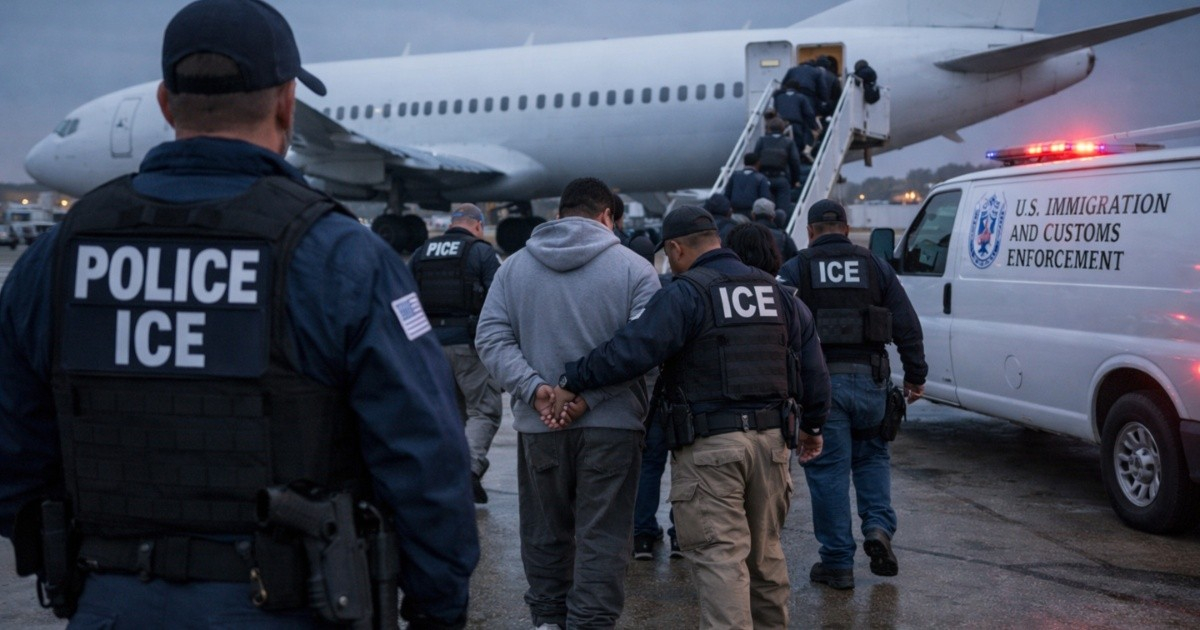
Each month, the Dominican Republic will temporarily host approximately thirty migrants deported from third countries by the United States, as confirmed by Foreign Minister Roberto Álvarez during a press conference on Thursday. This announcement follows a controversial, non-binding migration agreement signed by the two countries.
Álvarez specified that these deportees will stay on the island for "about seven to fifteen days," with the U.S. government covering all operational expenses.
This year-long agreement explicitly excludes Haitian nationals, unaccompanied minors, and individuals with criminal records.
Logistical and Political Considerations
The foreign minister acknowledged that the Dominican government has "yet to determine" the exact location where these deportees will be accommodated. However, he assured that they will be "under constant supervision" and receive support from the International Organization for Migration (IOM).
Álvarez dismissed claims that Santo Domingo succumbed to pressure from Washington: "Our government receives requests from all our partners, but we do not bow to pressure... we sovereignly decide which requests to accept. That's why we have not included the arrival of Haitian citizens in the agreement."
Context of the Agreement
According to Álvarez, the Dominican Republic had no reason to decline a request from its "main" trading partner and political ally. The agreement aligns with the U.S. initiative known as the "Shield of the Americas."
Countries like Costa Rica, Ecuador, Honduras, and Paraguay have entered into similar agreements with the U.S. "These individuals are not criminals; they simply entered the United States irregularly and are not part of its immigration system," Álvarez emphasized.
Regional and Domestic Reactions
The agreement was not submitted to the Dominican National Congress due to its non-binding nature and can be terminated by either party at any time.
The agreement has faced criticism from the opposition and civil society. The Dominican Liberation Party (PLD), through José Dantés Díaz, demanded transparency and full access to the agreement, warning of potential constitutional, migratory, sovereignty, and institutional implications that require careful analysis.
In response to these criticisms, President Luis Abinader announced 15 measures to tackle illegal migration and ordered the establishment of a Citizen Observatory on Migration Policy.
Impact on Cuban Migrants and Broader Implications
This Dominican agreement is part of a regional trend initiated by the Trump administration, which has established deportation agreements with 27 countries and halted asylum applications for citizens from 39 nations, including Cuba, Venezuela, and Haiti.
Paraguay received its first flight with 25 deported migrants from the U.S. on April 22, following a similar memorandum. El Salvador agreed in March 2025 to accept approximately 300 individuals accused of belonging to the Tren de Aragua for $4.76 million.
The impact on Cubans has been notably severe, with deportations to third countries leaving thousands in extreme vulnerability. At least four Cuban nationals have been sent to African countries—South Sudan and Eswatini—without any ties to those nations. In total, 42,084 Cubans have final deportation orders in the United States.
Álvarez concluded by clarifying the scope of the agreement: "We are not talking about permanent settlement or migratory absorption, nor judicial processes in the country. It is a controlled, temporary transit operation conducted under parameters of national sovereignty and international cooperation."
Frequently Asked Questions about the Dominican Republic's Migration Agreement
How long will deported migrants stay in the Dominican Republic?
Deported migrants will stay in the Dominican Republic for approximately seven to fifteen days.
Who covers the expenses for the deported migrants?
The United States government will cover all expenses related to the operation.
Why are Haitian nationals excluded from the agreement?
Haitian nationals are excluded to avoid potential implications related to sovereignty and due to the Dominican government's decision to not include them in the agreement.