On Wednesday, Cuba's Minister of Energy and Mines, Vicente de la O Levy, appeared on television to acknowledge the public's "discontent" over the ongoing blackouts. However, his remarks were met with swift condemnation from Cubans who perceive the situation not as mere discomfort but as an abuse by the regime amidst the ongoing electricity crisis.
During his appearance, De la O Levy attempted to rationalize the power outages with explanations that the populace immediately dismissed. "No electrical system is designed to produce blackouts," he stated, adding that no one plans for seaweed invasions or boiler breakdowns in thermoelectric plants.
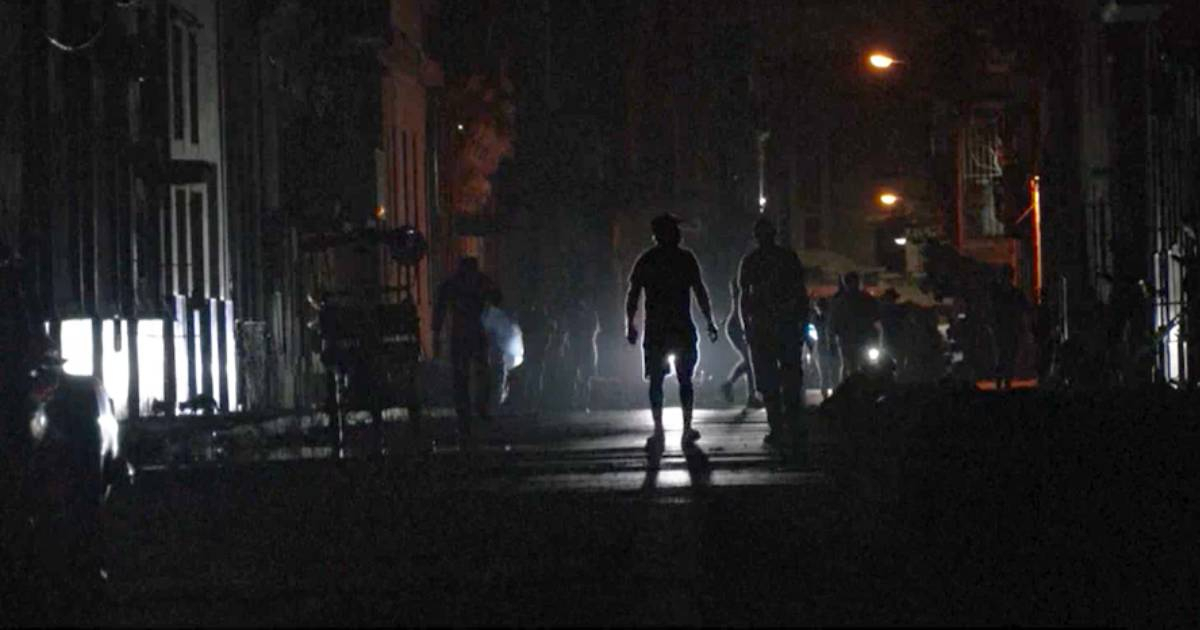
The minister himself conceded that in Havana—the province he described as the most "protected"—power cuts last between 20 and 22 hours daily, leaving just two hours of electricity. "The situation is very tense. The heat continues to rise. We need fuel. Private sources are bringing in fuel, but the volumes are insufficient," he admitted.
The numbers illustrate the severity of what the official refers to as "discontent": On Tuesday, the system's maximum real impact reached 2,113 MW at 8:40 PM, with only 1,230 MW available against a demand of 3,250 MW. Due to fuel shortages, Cuba failed to generate 1,100 MW on Wednesday.
Even President Miguel Díaz-Canel acknowledged the crisis as "particularly tense," projecting a nighttime peak deficit exceeding 2,000 MW. In April, only one of the eight fuel ships Cuba claims to need monthly arrived.
The response from the streets was immediate and strong. On Tuesday night, a cacerolazo erupted in Bahía district with chants of "Down with the dictatorship!" Meanwhile, in San Miguel del Padrón, residents protested in front of the municipal government, demanding "Electricity and food!"
In Marianao, there were cacerolazos, bonfires, and trash burning, and on Sunday, a blockade occurred on the Calzada de Concha in Luyanó.
This is not the first time De la O Levy has faced public backlash for his statements. In April, Cubans questioned the Energy Minister's long tenure without resolving the crisis.
On that occasion, he claimed that without the U.S. embargo, the reduction of blackouts would have been "extraordinary," a justification that Cubans also rejected.
The Cuban Conflict Observatory recorded 1,133 protests in April 2026 alone, a 29.5% increase from the same month the previous year. The regime has responded with militarization and at least 14 arrests in Havana since March 6, linked to cacerolazos.
The United Nations described the situation in April as a humanitarian emergency: over 96,000 surgeries postponed, nearly a million people relying on water tankers, and almost half a million children facing reduced school hours. For Cubans enduring 22 hours without electricity under the heat of May, the minister's words seem like mockery.
Understanding Cuba's Electricity Crisis
What are the main reasons for Cuba's electricity blackouts?
The blackouts in Cuba are primarily due to a lack of fuel, outdated infrastructure, and technical failures in thermoelectric plants. The U.S. embargo is often cited by officials as an exacerbating factor.
How are Cubans responding to the power outages?
Cubans have been staging protests, including cacerolazos and street blockades, to express their frustration and demand solutions from the government.
What impact are the power cuts having on daily life in Cuba?
The power outages are severely affecting daily life, leading to postponed medical surgeries, disrupted education, and increased reliance on alternative water sources due to reduced electricity availability.