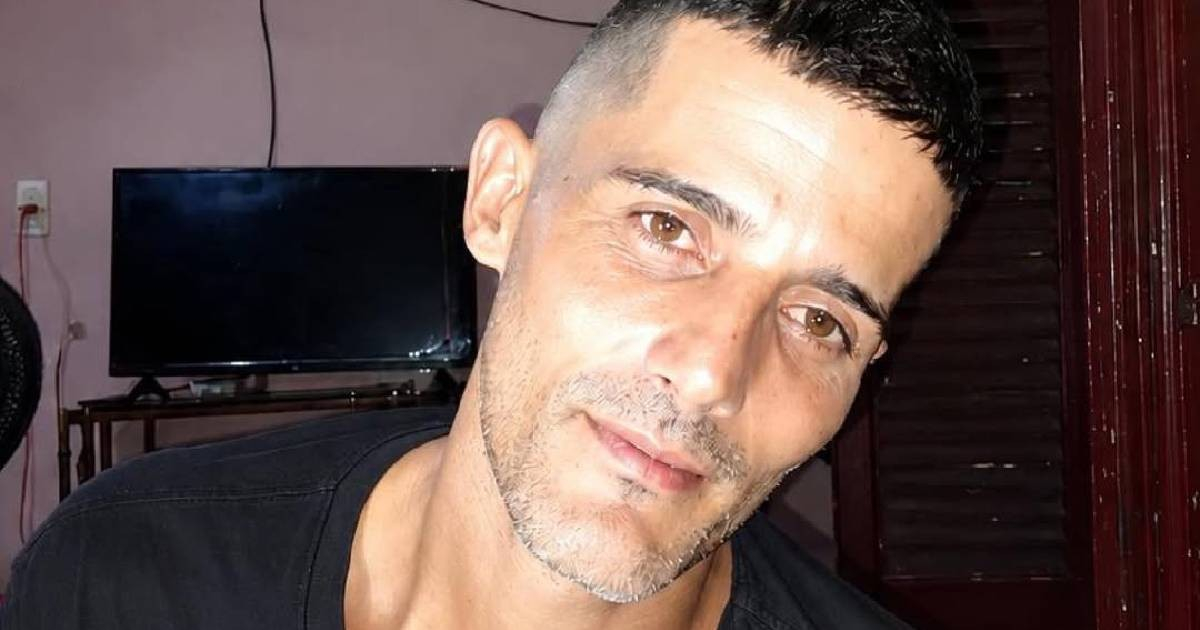
On Tuesday, May 12th, the Cuban government revoked the prison leave of rapper and activist Yasmany González Valdés, sending him back to Company 2 of the Combinado del Este, just eight days after he had his first release in three years of imprisonment.
The Cultural Rights Observatory condemned this action, highlighting that prison officials themselves informed the activist of the reason: a social media post made during his leave on May 4th. In it, he shared comparative photos of his physical state before and after incarceration, showcasing the physical decline he endured.
In his post, Yasmany—known as "El Libre"—criticized the disparity between the Cuban regime's official rhetoric on human rights and the harsh realities within the island's prisons, questioning the international community's silence as well.
The images also revealed tattoos with political messages: "Free or Martyr" and "P11-75," the latter referencing the July 11, 2021 protests and the 75 political prisoners from the so-called Black Spring.
Yasmany had anticipated the consequences of his actions, stating, "If they revoke my leave over this post, it will only make the repression against truth-tellers more evident."
According to the Cultural Rights Observatory, "the revocation of his leave and immediate return to Combinado del Este is a direct punishment for publicly expressing himself about the inhumane prison conditions."
The organization further noted that the "Cuban prison system uses conditional benefits not as tools for reintegration but as mechanisms to enforce obedience and silence dissent."
Born in Artemisa on September 2, 1992, González Valdés is serving a four-year sentence for "propaganda against the constitutional order" under Article 124 of the Cuban Penal Code. He was arrested on April 20, 2023, for allegedly participating in anti-communist graffiti in Havana.
He has been held at Combinado del Este since May 29, 2023, with his health consistently raising alarms.
In September 2025, his wife Ilsa Ramos starkly described his physical state: "He looked like a skeleton, with a sunken face, very thin arms, pants falling due to extreme thinness, and missing dental pieces."
In February 2026, Yasmany sent a letter from prison denouncing the violation of his rights, including the systematic denial of parole.
PEN International has documented his case in its list of imprisoned artists in Cuba for 2026, noting that in 2022 he was fined 3,000 Cuban pesos—about $125—under Decree Law 370 for criticizing the government on social media.
The repression against González Valdés is part of a broader context of widespread oppression: according to Prisoners Defenders, Cuba recorded 1,192 political prisoners in December 2025, a historical high.
"When the voice is silenced, the body becomes an archive," concluded the Cultural Rights Observatory, denouncing the case of an activist whose physical marks have become the pretext for extending his punishment.
Understanding the Repression of Activists in Cuba
Why was Yasmany González Valdés returned to prison?
Yasmany González Valdés was returned to prison after sharing photos on social media that highlighted his physical deterioration following incarceration, which was deemed unacceptable by Cuban authorities.
What was the content of Yasmany's controversial social media post?
The post contained comparative images showing Yasmany's physical state before and after imprisonment, criticizing the Cuban regime's human rights discrepancies and highlighting the international community's silence.
What does the Cultural Rights Observatory say about the Cuban prison system?
The Cultural Rights Observatory criticizes the Cuban prison system for using conditional benefits as tools for obedience and silencing dissent, rather than for reintegration.