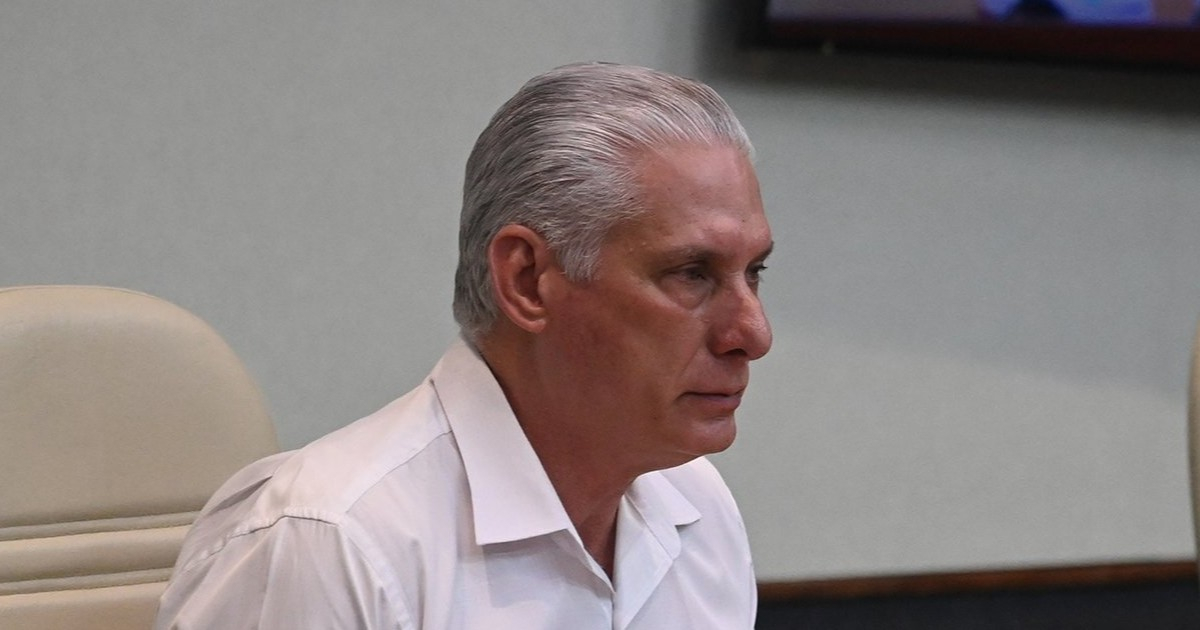
On Wednesday, Miguel Díaz-Canel released a lengthy message on Facebook, holding U.S. sanctions solely responsible for Cuba's severe electricity crisis. He expressed a willingness for diplomatic engagement with the phrase, "always open to dialogue on equal terms."
This message comes at a time when the island faces its worst energy crisis of the year. The Electrical Union predicted a deficit exceeding 2,000 MW during the peak evening hours on Wednesday, a record since 2026, with 1,100 MW not produced due to fuel shortages.
Díaz-Canel blamed the situation on what he termed "the genocidal energy blockade imposed by the U.S. on our country, threatening irrational tariffs on any nation that supplies us with fuel."
The leader highlighted Cuba's need for at least eight fuel shipments monthly. However, in April, only one shipment arrived, providing a temporary improvement in electricity service and a short-term reduction in blackouts.
To support his narrative, Díaz-Canel argued that "what the spokespersons of the U.S. regime try to portray as a consequence of poor Cuban government management is actually the result of a malicious plan aimed at deepening the hardships and difficulties faced by our people."
He went further, describing Washington's strategy as "a nefarious design targeting the suffering of the entire population, using them as hostages to turn them against the Government."
The statement notably omits any mention of internal structural causes of the crisis: an outdated thermoelectric infrastructure aged 40 to 50 years, decades of chronic underinvestment, and a cumulative GDP drop of 23% since 2019—factors independent analysts cite as critical.
Following Donald Trump's social media post stating Cuba "is asking for help" and "we will talk," and his remark to a journalist at the White House labeling the Island as a "failed nation" going "only in one direction: downward," the message was released.
On Wednesday, Trump headed to China for a state visit with Xi Jinping, adding a geopolitical layer to the exchange. On May 5, Beijing urged Washington to lift sanctions against Cuba.
Diplomatic relations remain at a standstill. On April 10, a U.S. delegation traveled to Havana on the first official U.S. plane since 2016. Washington issued an ultimatum for the release of political prisoners like Luis Manuel Otero Alcántara and Maykel Osorbo, which expired on April 24 without a positive response.
In response to this ultimatum, Díaz-Canel was firm: "political prisoners are not on the negotiating table" and "surrender is not an option."
On May 7, Secretary of State Marco Rubio announced direct sanctions against GAESA and 12 regime officials, giving foreign companies until June 5 to sever ties with sanctioned Cuban entities.
Now, with the energy crisis at its peak and Trump sending mixed signals en route to Beijing, Díaz-Canel extends a hand without conceding any of Washington's demands: "we will continue resisting and creating, more convinced than ever that we must overcome immense challenges through our own efforts, united as a nation, and resolute in facing the toughest obstacles."
Understanding Cuba's Energy Crisis and Diplomatic Relations
What is causing Cuba's current electricity crisis?
Cuba's electricity crisis is attributed to U.S. sanctions that restrict fuel imports. Additionally, the country's outdated infrastructure, lack of investment, and economic decline have exacerbated the situation.
How has the U.S. responded to Cuba's energy crisis?
The U.S. has maintained its sanctions against Cuba and issued an ultimatum for the release of political prisoners. Despite these tensions, there have been signals of possible diplomatic dialogue.
What is the significance of Díaz-Canel's message to the U.S.?
Díaz-Canel's message indicates a willingness for dialogue with the U.S., though it comes without agreeing to the conditions set by Washington, demonstrating both openness and resilience.