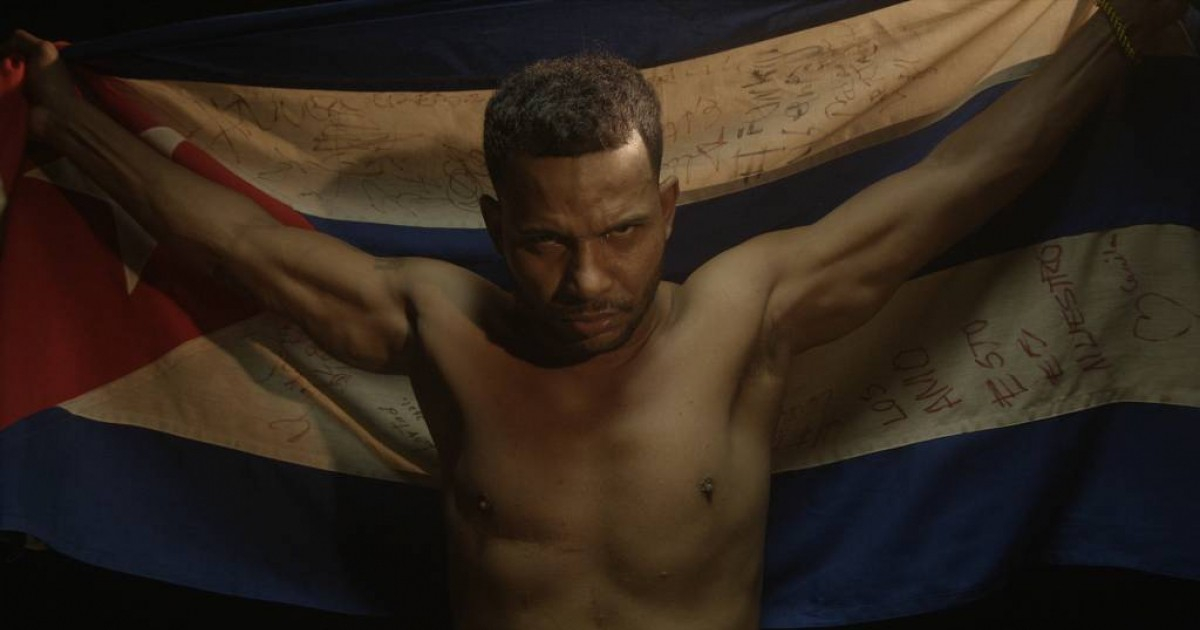
Cuban rapper and political prisoner, Maykel Osorbo, shared with USA Today the ultimatum he received while jailed: leave the country or remain imprisoned until 2030, as delivered by State Security agents.
Osorbo, at the heart of clandestine talks between the United States and Cuba alongside another detained artist, recounted the stark proposition: "State security agents approached me in my cell and asked, 'Do you wish to emigrate? Let us know if you want to leave or continue in your current situation, imprisoned until 2030.'
While acknowledging the human appeal of freedom, Osorbo stated, "Naturally, I need medical care, nobody wants to be incarcerated, I have a music career to pursue, and multiple projects that cannot be realized behind bars."
Nonetheless, Osorbo firmly maintained, "Freedom cannot be traded at any cost. That's clear, and I will always make that known."
Known for co-writing the prominent protest anthem "Patria y Vida," Maykel Castillo Pérez, aka Maykel Osorbo, was arrested on May 18, 2021. In June 2022, he was sentenced to nine years for charges including disrespect to national symbols, contempt, assault, public disorder, and defamation. Amnesty International has declared him a prisoner of conscience.
Since late January 2026, Osorbo has been held in maximum-security prison Kilo 8, Pinar del Río, under heightened surveillance following accusations of planning a riot.
Background of Rising Diplomatic Tensions
The USA Today interview arrives amid escalating diplomatic strains. On April 10, 2026, a U.S. State Department delegation secretly landed in Havana—the first official government flight to Cuba since 2016—for discussions with Cuban vice-ministry officials.
The Trump administration issued a two-week ultimatum, expiring April 24, 2026, demanding the release of high-profile political prisoners, specifically naming Osorbo and Luis Manuel Otero Alcántara, head of the San Isidro Movement.
Cuba's regime publicly rebuffed the ultimatum. A Foreign Ministry spokesperson claimed no deadlines or coercive demands were set, and President Díaz-Canel warned negotiations wouldn't proceed if regime change remained a condition.
Despite the official denial, today's interview uncovers that Cuban security agents indeed approached detainees directly with exile offers, indicating negotiations involve direct, operational engagement with prisoners.
The State Department reiterated its dedication to "freeing all political prisoners, including Alcántara and Osorbo," cautioning that Cuba has "a narrow window to make a deal."
Key Issues in U.S.-Cuba Relations
What ultimatum did Maykel Osorbo receive while imprisoned?
Maykel Osorbo was told by State Security agents that he could either emigrate or remain in prison until 2030.
Why is Maykel Osorbo considered a political prisoner?
Maykel Osorbo is regarded as a political prisoner due to his activism and involvement in the protest anthem "Patria y Vida," along with facing charges that many believe are politically motivated.
What was the U.S. ultimatum to Cuba regarding political prisoners?
The U.S. issued a two-week ultimatum for Cuba to release high-profile political prisoners, specifically mentioning Maykel Osorbo and Luis Manuel Otero Alcántara.