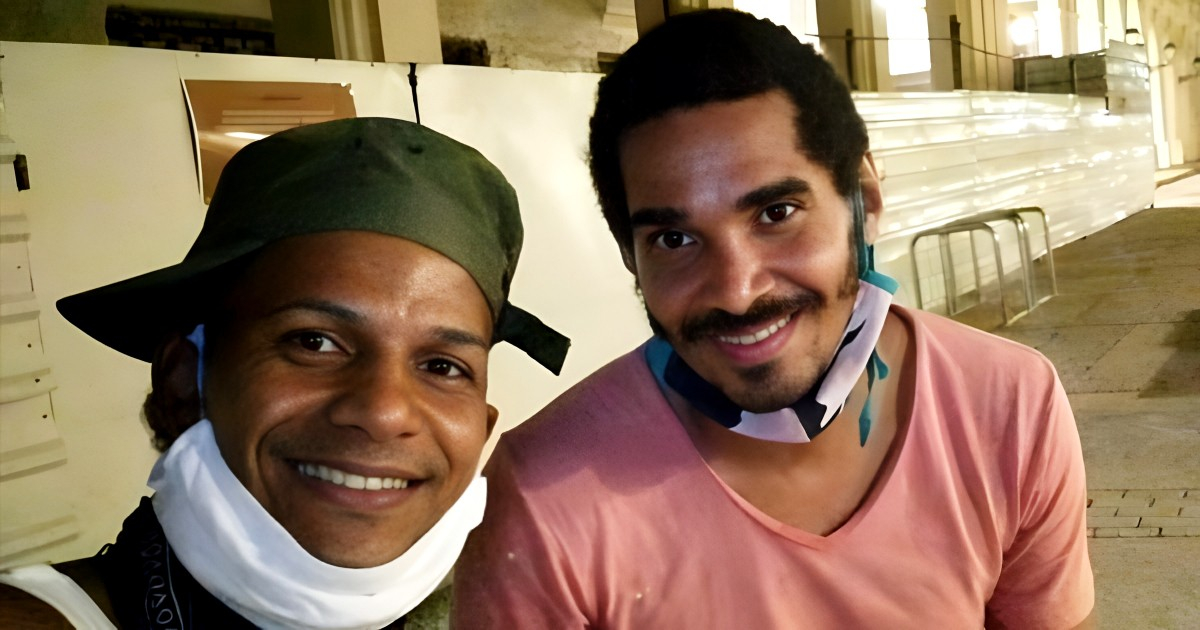
In a clandestine meeting on April 10, 2026, between U.S. and Cuban delegations in Havana, a significant ultimatum was set in motion. Just five days later, two agents from Cuba's State Security visited Maykel "Osorbo" Castillo Pérez at the high-security Kilo 8 prison in Pinar del Río. They gave him a stark choice: exile or remain imprisoned until 2030, as revealed by audio recordings obtained by USA Today.
The following day, the same proposal was extended to Luis Manuel Otero Alcántara in Guanajay prison, located southwest of Havana.
Both artists opted for exile. Nevertheless, the two-week deadline imposed by Washington on Havana expired without either being released. As of May 13, 2026, both remain behind bars.
"Security agents came here and asked me, in these exact words: 'Do you want to emigrate—tell me if you want to emigrate—or do you want to stay in this same situation, imprisoned until 2030?'" Osorbo recounted in one of the recordings.
The 42-year-old rapper agreed to leave Cuba in exchange for his freedom but noted the regime might change its position at any moment.
The Persistent Strategy of Exile
This tactic is not unprecedented. The Cuban government previously attempted to banish Otero and Osorbo in October 2021, but both publicly refused at that time.
Osorbo and Otero are the cofounders of the San Isidro Movement, a group of artists and writers from the modest neighborhood of the same name near Havana's port.
Osorbo gained prominence as a co-author of "Patria y Vida," a song that surpassed a million views on YouTube, became the anthem of the July 11 protests that year, and won two Latin Grammys: Song of the Year and Best Urban Song.
A Legacy of Resistance
Otero, a visual artist, was named one of the world's 100 most influential people in 2021 by Time Magazine and has received multiple international accolades, including the Rafto Prize for Human Rights in Norway, the Prince Claus Impact Award from the Netherlands, and the Václav Havel 2025 for his artistic battle against repression.
Osorbo was arrested on May 18, 2021, and sentenced to nine years for charges of contempt and defamation. Otero was detained on July 11, 2021, and sentenced to five years. Amnesty International has recognized both as prisoners of conscience.
Widespread Impact of "Exile or Imprisonment"
The choice of "exile or imprisonment" has been extended to other political prisoners. Auxiliary Bishop of Havana, Eloy Ricardo Domínguez, visited Félix Navarro, aged 72, and his daughter Saylí Navarro, aged 39, with the same church-mediated proposal, which they categorically rejected.
From his cell in Guanajay, Otero also disclosed being denied basic rights granted to other inmates, such as sentence reductions and home visits. He went on an eight-day hunger strike, ending on April 6, after receiving death threats from State Security agents.
Anamely Ramos, a close friend of both artists, bluntly summarized the situation: "The core issue remains unresolved. Criminalization of individuals persists."
According to Prisoners Defenders, Cuba currently holds over 1,250 political prisoners, a record number. Otero is expected to be released in July 2026, unless an agreement is reached beforehand. From his cell, he has stated he will not leave without the thousands of paintings he has created during his five years of imprisonment: he would rather die inside.
Understanding the Plight of Cuban Political Prisoners
Why were Maykel Osorbo and Luis Manuel Otero imprisoned?
Maykel Osorbo and Luis Manuel Otero were imprisoned for charges including contempt and defamation. Both are considered prisoners of conscience by Amnesty International.
What is the San Isidro Movement?
The San Isidro Movement is a group of artists and writers from the San Isidro neighborhood of Havana, known for their opposition to government censorship and repression.
What recognition has Luis Manuel Otero received for his activism?
Luis Manuel Otero has been recognized as one of the world's most influential people by Time Magazine and has received international awards for his artistic resistance to oppression.