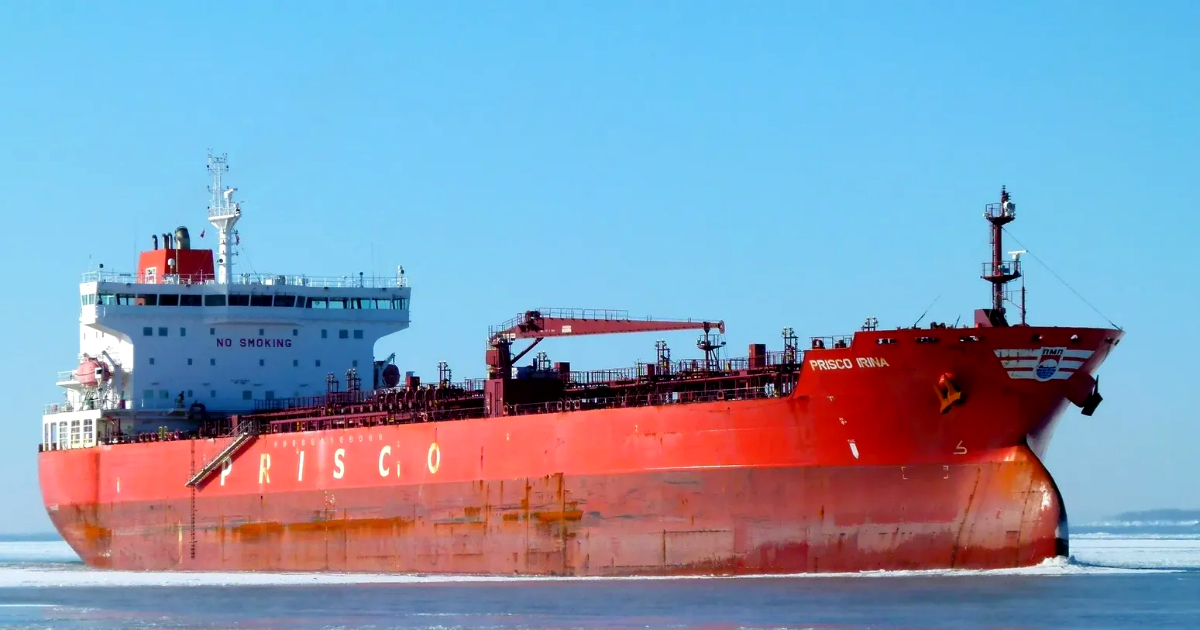
The Russian oil tanker Universal, which has been sanctioned by the United States, the European Union, and the United Kingdom, continues its sluggish journey across the Atlantic. This sluggishness comes amid increasing uncertainty about its eventual destination and the political and operational feasibility of reaching Cuba.
Recent maritime tracking data indicate that the vessel has been moving westward since the last known update, albeit at a very slow pace.
Currently, the Universal is traveling at a mere 1 knot—approximately 1.8 kilometers per hour—heading roughly 309 degrees northwest after several course changes in recent days.
In the previous update, the tanker was moving at 2.2 knots and seemed to be partially correcting its course towards the Caribbean. However, the new turn once again diverts it from a direct path to Cuba, suggesting a cautious and possibly erratic journey influenced by external factors.
Another notable aspect is the significant delay that has accumulated. The estimated arrival date reported by the AIS system has shifted from May 5 to May 15, a ten-day discrepancy that is unusual for a commercial voyage of this type of tanker.
Geopolitical Tensions Surrounding the Universal
Meanwhile, the geopolitical climate surrounding the ship has become more tense. As the Universal remains without a declared destination, the United States is conducting military exercises in the Caribbean, such as FLEX2026. These exercises incorporate drones, artificial intelligence, maritime surveillance, and real-time interdiction capabilities near Cuba.
Analysts suggest that the combination of sanctions, diplomatic pressure, and military presence might be indirectly affecting the ship's behavior, particularly after Washington tightened restrictions on Russian oil operations destined for the island.
Cuba's Escalating Energy Dilemma
This situation unfolds at a particularly challenging time for Cuba. On Tuesday, the government announced that as of May 15, there will no longer be a fixed fuel price in dollars. Each importer will be able to sell gasoline and diesel based on their actual operating costs, including freight, insurance, and risks.
This measure implicitly acknowledges the severity of the energy crisis. Cuba requires approximately 110,000 barrels daily but produces only 40,000. Amidst this shortfall, the delay of the Universal becomes more than just a maritime episode; it highlights the island's growing vulnerability in securing its oil supply under international pressure.
Understanding the Impact of Universal's Delay on Cuba
What is the current speed of the Universal, and how does it affect its journey to Cuba?
The Universal is traveling at a very slow speed of 1 knot, approximately 1.8 km/h. This slow pace contributes to significant delays and uncertainty about its arrival in Cuba.
How have geopolitical factors influenced the Universal's navigation?
Geopolitical tensions, including U.S. military exercises and increased sanctions, may be indirectly impacting the Universal's navigation, making its course appear cautious or erratic.
What changes has the Cuban government made regarding fuel pricing?
Cuba announced that from May 15, there will be no single dollar-based fuel price. Importers will set gasoline and diesel prices based on their actual costs, reflecting the country's energy crisis.