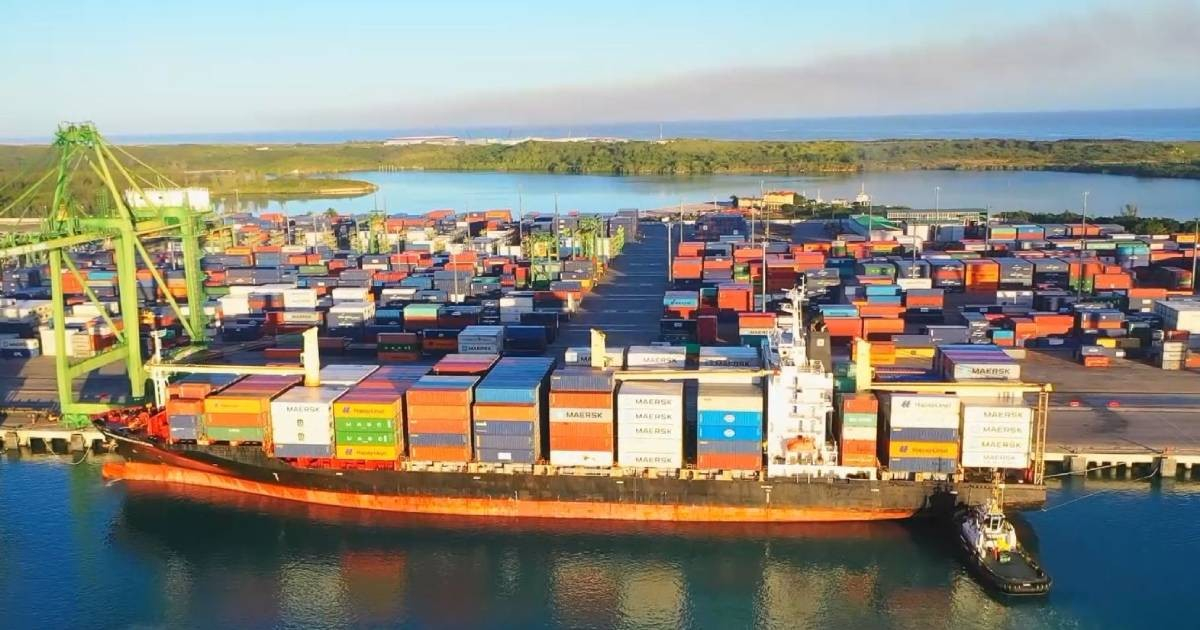
Crowley Maritime Corporation, based in Jacksonville, Florida, has reached a confidential settlement to resolve a lawsuit filed against it under Title III of the Helms-Burton Act for its use of the Port of Mariel, as reported by cubatrade.org, a portal dedicated to U.S.-Cuba trade relations.
The plaintiff, Odette Blanco de Fernandez née Blanco Rosell, claimed that Crowley was "trafficking" in properties seized by the Cuban regime in September 1960, including interests in Marítima Mariel and Azucarera Mariel, by directing container ships to the Mariel Container Terminal within the Mariel Special Development Zone (ZEDM).
Initially filed in December 2020 in the Middle District of Florida, this lawsuit was the 32nd under the Liberty Act and was later transferred to the Southern District of Florida.
An agreement in principle was reached on January 30, 2026, following mediation with retired Judge Michael Hanzman of the law firm Bilzin Sumberg Baena Price & Axelrod LLP.
On February 5, 2026, Judge Darrin P. Gayles administratively closed the case, and on April 28, 2026, he formally dismissed it with prejudice through a paperless order after the parties submitted a joint stipulation of dismissal.
The defendants included Crowley Holdings, Inc., Crowley Maritime Corporation, Crowley Liner Services, Inc., Crowley Latin America Services, LLC, and Crowley Logistics, Inc. The financial terms of the settlement remain confidential.
Crowley is the only U.S. shipping line providing regular service to Cuba, conducting four monthly departures from Port Everglades and additional services from Jacksonville and North Carolina, with authorization from the Treasury Department since 2001.
Founded in 1892 and currently led by Thomas B. Crowley Jr., the third generation of the family, the company boasts revenues of $3.5 billion and is the largest Jones Act shipping company in the United States.
This case resolution occurs amid a flurry of litigation activity under Title III, with recent settlements also involving American Airlines and Spain's Iberostar, while Delta Air Lines is still facing an active lawsuit over operations at Havana’s José Martí International Airport.
Title III of the Helms-Burton Act, enacted in 1996, allows U.S. citizens and their heirs to sue in federal courts those "trafficking" in properties expropriated by the Cuban government without compensation.
After being suspended by all presidents since its inception, the first Trump administration activated Title III on May 19, 2019, and the second Trump administration reinstated it on January 31, 2025, overturning the suspension imposed by Biden.
Since 2019, numerous lawsuits have been filed under this legal mechanism, none of which have gone to trial; outcomes have primarily been dismissals or confidential settlements such as the one that concludes the litigation against Crowley.
Understanding the Helms-Burton Act and Its Implications
What is Title III of the Helms-Burton Act?
Title III of the Helms-Burton Act allows U.S. citizens and their heirs to sue entities that "traffic" in properties confiscated by the Cuban government without compensation.
Why was Crowley Maritime sued under the Helms-Burton Act?
Crowley Maritime was sued for allegedly trafficking in properties seized by the Cuban regime, specifically by directing container ships to the Mariel Container Terminal, a part of the expropriated properties.
What was the outcome of the Crowley Maritime lawsuit?
The lawsuit was settled confidentially, with the case being formally dismissed by the court after a joint stipulation of dismissal was filed by the parties involved.