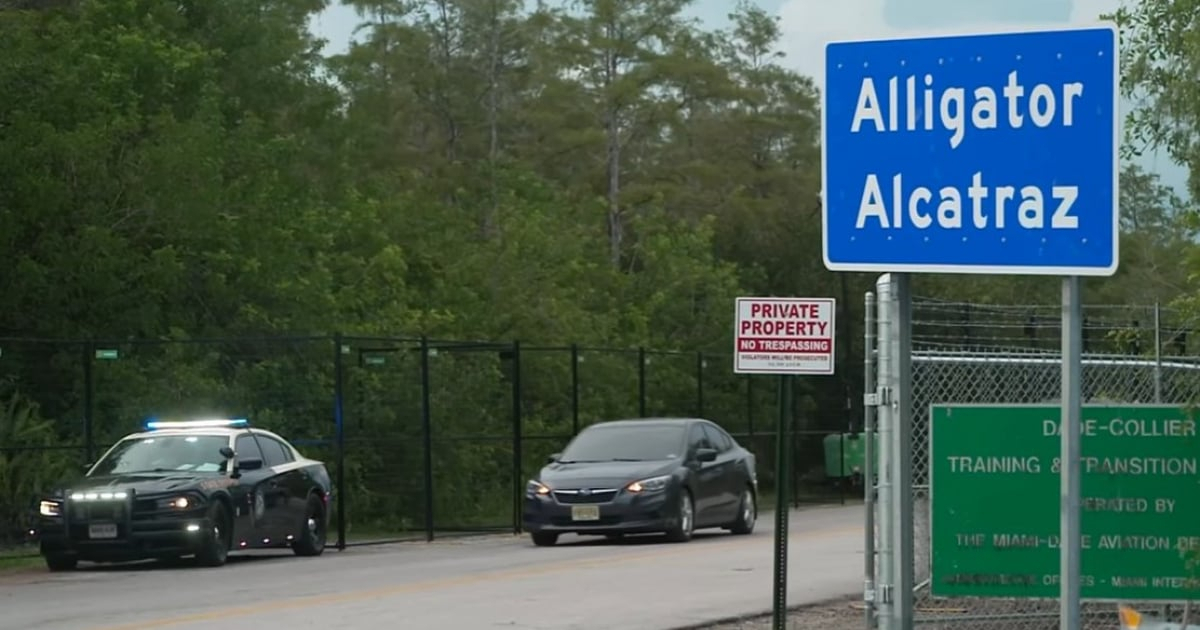
The state of Florida is planning to shut down the controversial Alligator Alcatraz immigration detention center, situated in the Everglades, less than a year after its opening, according to The New York Times. The report cites a federal official and three individuals familiar with the operations of the facility.
On Tuesday, officials informed private contractors that the facility would cease operations, with the relocation of approximately 1,400 detainees expected by June, followed by the dismantling of the structures in the subsequent weeks.
The primary reason for the closure is the exorbitant operational costs: the state spends over a million dollars daily to keep the facility running and has requested a reimbursement of $608 million from the federal government, which remains unpaid.
According to the same sources, the Department of Homeland Security has internally determined that the facility is both inefficient and excessively costly.
Some private contractors hired by the state have not received payments in over 200 days, potentially jeopardizing hurricane response efforts as the season begins on June 1.
Inaugurated on July 1, 2025, by then-President Donald Trump and Republican Governor Ron DeSantis, the center was constructed on an abandoned airstrip within Big Cypress National Preserve in just eight days using state emergency powers.
Although designed to accommodate between 3,000 and 5,000 detainees, the center never operated near capacity and currently houses about 1,400 migrants, based on data from Immigration and Customs Enforcement (ICE).
Among the current detainees, between 700 and 800 are Cubans, with 70% lacking final deportation orders.
Since its opening, the facility has faced allegations of inhumane conditions, including overcrowding, food shortages, inadequate medical care, extreme temperatures, non-potable water, and lack of legal access.
In April, guards allegedly assaulted and pepper-sprayed detainees during a protest over limited phone access, according to a lawyer's affidavit submitted to a court.
Governor DeSantis has consistently dismissed these allegations.
On April 22, the Eleventh Circuit Court of Appeals overturned a previous closure order, allowing the center to continue operating until now.
On Monday, DeSantis told the media that the federal government had not communicated any intent to close the facility, but acknowledged that if detainees were no longer sent there, it would be shut down.
The governor also cautioned his fellow Republicans about the dangers of abandoning immigration policies, stating, "I think it would be a major political mistake to veer away from the deportation mission."
The Department of Homeland Security responded to inquiries from the New York paper with a statement indicating that the agency "continually assesses detention needs and requirements to ensure they meet the latest operational demands."
Following the closure, the site will be repurposed as a small airport for pilot training, while the second state-run center known as "Deportation Depot," located west of Jacksonville with a capacity for 2,000 detainees, will continue to operate, as confirmed by DeSantis.
Understanding the Closure of Alligator Alcatraz Detention Facility
Why is Florida closing the Alligator Alcatraz detention center?
The primary reason for the closure is the high operational costs, with the state spending over a million dollars daily. Additionally, the facility has been deemed ineffective and too costly by the Department of Homeland Security.
What will happen to the detainees currently held at Alligator Alcatraz?
The approximately 1,400 detainees currently housed at the facility are expected to be relocated by June, following the decision to close the center.
What are the allegations against the Alligator Alcatraz facility?
The facility has faced accusations of inhumane conditions, such as overcrowding, lack of food, inadequate medical care, extreme temperatures, undrinkable water, and restricted access to legal assistance.