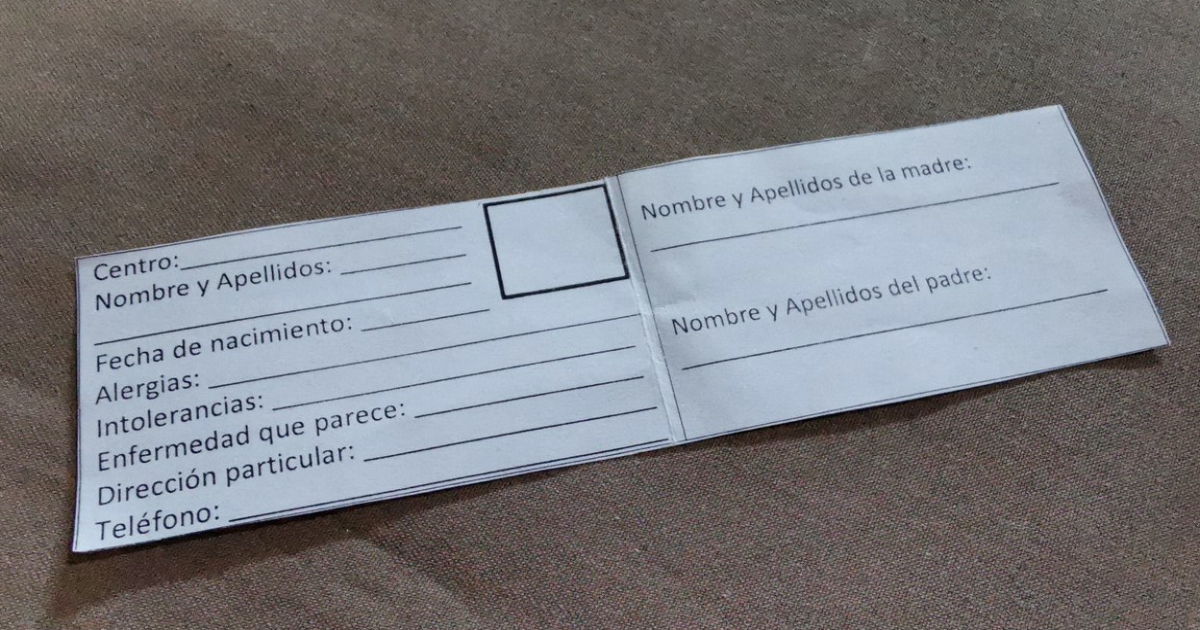
In Santiago de Cuba, parents are raising alarms over some primary schools instructing children to make wristbands containing their personal details, such as their name and ID number. The rationale given for this unusual directive was the hypothetical scenario of "bombs being dropped to oust Díaz-Canel," according to independent journalist Yosmany Mayeta Labrada.
This worrisome information came to light through a message from an outraged mother, which quickly circulated on social media.
The original message stated, "Urgent. They are telling primary school children to make a bracelet with their data, name, and ID number... because bombs are going to be dropped to remove Diaz-Canel."
Such statements have sparked concern, rejection, and anger among parents and citizens, who view it as a political manipulation tactic that could have a damaging psychological impact on young children.
The reporting mother voiced her distress: "Tell me if this isn't manipulation and traumatizing those kids," highlighting the emotional toll such frightening messages could impose on primary school students.
Impact on Children's Mental Health
Many parents find it unacceptable to use language associated with war, explosions, or political violence near children who lack the emotional maturity to handle such information without fear.
A child psychology expert consulted by Mayeta warned that "instilling fear through alarmist narratives can leave emotional scars and foster insecurity in children," particularly in a society already fraught with tension and shortages.
In the comments, Clau Bebesita Kindelan shared, "And it's true, there's a parent meeting tomorrow to discuss this very issue. I'm speechless, and my son is worried that we're going to die. God, please put your hand truly on this country."
Meraida Martín emphasized, "This goes beyond manipulation; I would call it terrorism."
Yisel Fleitas, a Cuban citizen, recalled, "I'm 41 years old, and I remember how they prepared us to hide in tunnels built in the 90s because the Yankees wanted to attack us. This story has been around for years."
Historical Context of Political Indoctrination
This incident is part of a documented pattern of political indoctrination within Cuban classrooms. In March 2026, it was reported that Cuban children were reenacting trials against the United States in Havana schools. Moreover, in April, children were reportedly taken out of schools to participate in the May Day march.
In September 2025, first-grade math books were found to contain images of Fidel Castro in basic exercises, showcasing the deep-rooted ideological propaganda targeting the youngest students.
Mayeta Labrada himself reported last Friday that he received direct threats via WhatsApp from a Cuban number, as a repercussion of his journalistic work, highlighting the pressure faced by independent media on the island.
As Mayeta concluded in his report, "Preparing is one thing. Frightening children is something entirely different."
Frequently Asked Questions about Political Indoctrination in Cuban Schools
What prompted the creation of wristbands in Santiago de Cuba schools?
Schools in Santiago de Cuba instructed children to make wristbands with their personal data, allegedly to prepare for a scenario involving bombs being dropped to remove Díaz-Canel from power.
How have parents reacted to the wristband directive?
Parents have expressed alarm, outrage, and concern, viewing the directive as a form of political manipulation and psychological harm to the children.
What are the potential psychological impacts on children?
Child psychologists warn that such fear-inducing messages can cause emotional distress and insecurity, particularly in an already tense and resource-scarce environment.