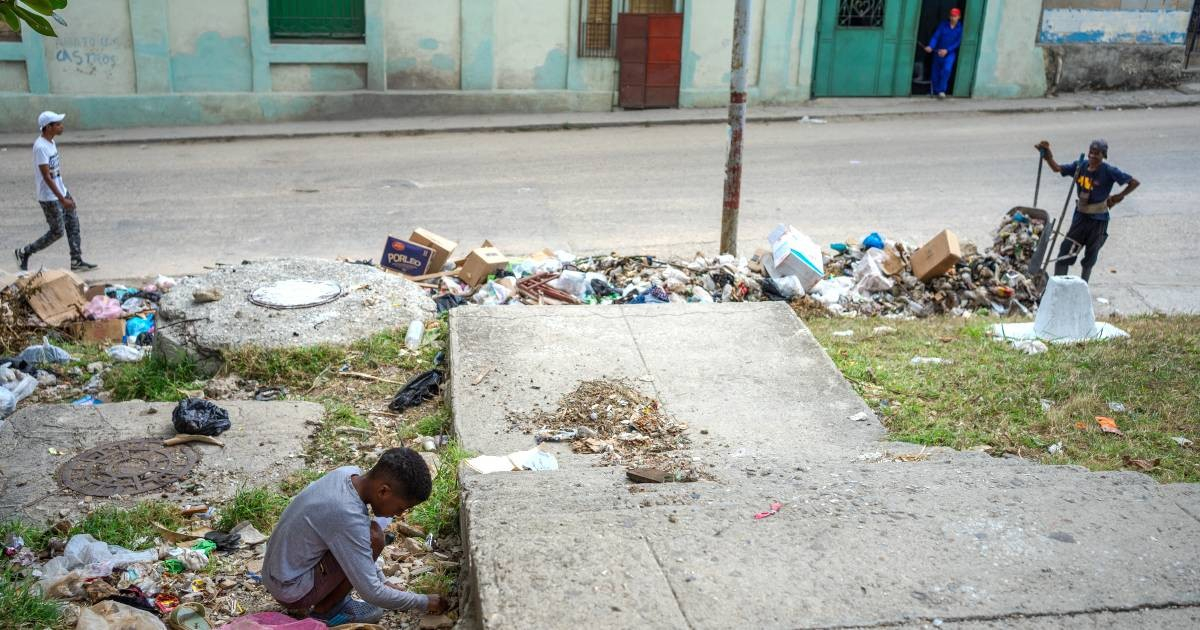
On Tuesday, Cuban photographer Alina Sardiñas shared a compelling narrative on her Facebook page, accompanied by four images that starkly illustrate the crumbling state of Cuban streets. Her journey through these streets is summed up in her own words: "Walking down these streets fills me with a mix of terror and awe."
With over thirty years of experience in documentary photography and living between Havana and Madrid, Sardiñas attributes the decay she captures not to natural disasters.
"It wasn't the relentless winds of a hurricane, the sea flooding the city, nor an earthquake. It's the weight of neglect, hatred towards people, and disdain for beauty," she asserts in her post.
The accompanying photographs depict residential buildings with peeling walls, dangling electrical wires, and vegetation sprouting from cracks. Streets are littered with debris and garbage.
One image captures a child scavenging through trash, while another shows graffiti proclaiming "¡Viva Fidel!" on the façade of a decrepit building, next to a café.
Sardiñas highlights this paradox as evidence of a deliberate choice by the regime: "The slogans of the past remain on crumbling walls, proving that propaganda was chosen over a dignified life."
Regarding the garbage heaps in her photos, the photographer is direct: "These dumps are not temporary leftovers; they are the sediment of neglect turned into state policy."
Sardiñas' testimony reveals a documented urban crisis, acknowledged even by the regime's own officials. Havana produces between 24,000 and 30,000 cubic meters of solid waste daily, yet only 44 out of 106 garbage trucks are operational due to a diesel shortage, leaving up to 23,814 cubic meters uncollected each day.
In September 2025, Minister of Science, Technology and Environment Armando Rodríguez Batista admitted, "That trash is not contained; it's scattered across Havana." By December, the regime conceded its inability to clean or fund the capital's sanitation.
The housing situation exacerbates the issue: around 1,000 buildings collapse annually in Havana, with a housing deficit exceeding 805,000 units, and only 65% of homes are in good condition, according to the Ministry of Construction.
In 2025, several collapses led to fatalities, including a seven-year-old girl in Old Havana and two individuals in Central Havana.
Sardiñas' account adds to a surge of viral complaints from Cubans and tourists documenting the island's urban collapse, including an Italian tourist who described Cuba as the "dirtiest country" she has ever visited.
She concludes her post with a poignant statement: "Cuba is not a romantic ruin; Cuba is what happens when you no longer matter."
Understanding Cuba's Urban Decay
What are the main causes of urban decay in Cuba?
The urban decay in Cuba is largely attributed to neglect and poor maintenance, compounded by a lack of resources and ineffective state policies.
How severe is the housing crisis in Havana?
Havana faces a severe housing crisis, with over 1,000 buildings collapsing annually and a housing deficit of more than 805,000 units. Only 65% of housing is considered to be in good condition.
What impact does waste mismanagement have on Havana?
Waste mismanagement in Havana results in large amounts of uncollected garbage, contributing to the city's unsanitary conditions and further deteriorating urban infrastructure.