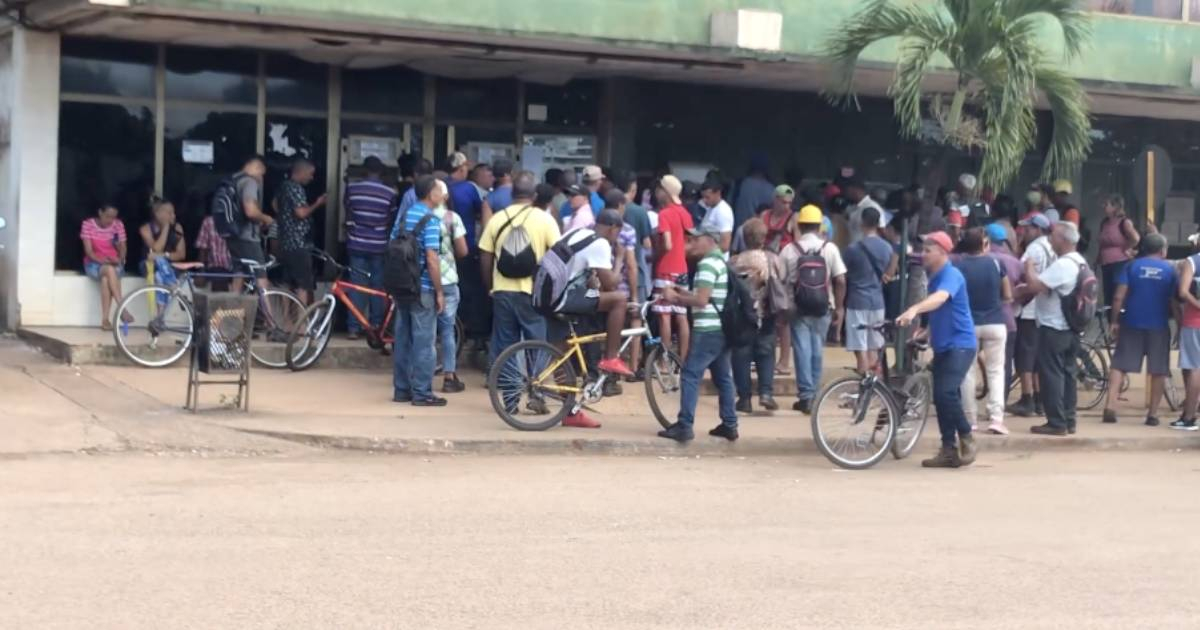
In Santiago de Cuba, the National Revolutionary Police (PNR) apprehended several individuals involved in an unlawful operation where cash was exchanged for electronic transfers at an interest rate ranging from 35% to 50%. This scheme was conducted at ATMs located in the train station of Santiago de Cuba.
During the arrest, authorities seized a significant amount of cash and multiple magnetic cards used to facilitate these transactions, according to a report by the pro-government outlet "Héroes del Moncada" on Facebook.
The post stated, "Believing they could profit endlessly from others' needs and sacrifices, PNR officers caught individuals at the ATMs in Santiago de Cuba's train terminal who offered cash in exchange for transfers, pocketing interest of up to 50%." The account framed the police action as a "notable achievement."
Economic Crisis Fuels Informal Market
The operation involved giving physical Cuban pesos in return for electronic transfers, exploiting the island's chronic cash shortage. This shortage is a direct result of the regime's enforced digital banking policy implemented in August 2023.
This policy mandates digital payments but fails to address the underlying cash scarcity, resulting in a burgeoning informal market where intermediaries demand increasingly high commissions.
Recurring Financial Struggles
Santiago de Cuba is no stranger to such enforcement actions. In September 2025, the PNR detained two men, Leodan and Yunior, for a similar scheme at the ATM of the "18 plantas de Garzón" building, charging a 15% interest rate and confiscating over 250,000 pesos.
The dramatic increase from 15% to as much as 50% in under a year highlights the worsening cash shortage in Cuba, making the informal market more profitable for operators and more burdensome for users.
Digital Payments Exacerbate Issues
Even the state-controlled media admits the digital banking policy is ineffective, with private businesses rejecting transfers due to the need for cash, especially during frequent blackouts. The phrase "transfers ruin business" captures the sentiment of many Cuban entrepreneurs toward digital payments.
The financial outlook is grim: by February, the Cuban peso hit 500 CUP per dollar on the informal market, with the average state salary of 7,000 CUP equating to just $14.
ATMs are often empty, banks set withdrawal limits at 120,000 CUP monthly, and a November 2025 scene in Marianao, where people camped outside a bank to withdraw cash, underscored the collapse of the state financial system.
Cuban authorities label these arrests as part of a wider crime-fighting effort, yet the situation is a direct outcome of the economic devastation caused by 67 years of communist dictatorship.
"Such behaviors should be promptly reported and condemned by the public," the "Héroes del Moncada" post concluded, omitting that the regime itself created the need fueling this informal market.
Understanding Cuba's Cash Crisis
Why were individuals arrested in Santiago de Cuba?
They were detained for running an illegal operation exchanging cash for electronic transfers at high interest rates, exploiting the country’s cash shortage.
What is causing the cash shortage in Cuba?
The shortage is largely due to the regime's enforced digital banking policy, which has not addressed the underlying lack of physical currency.
How has the informal market changed over time?
Interest rates in the informal market have skyrocketed from 15% to up to 50%, reflecting the growing severity of the cash crisis.