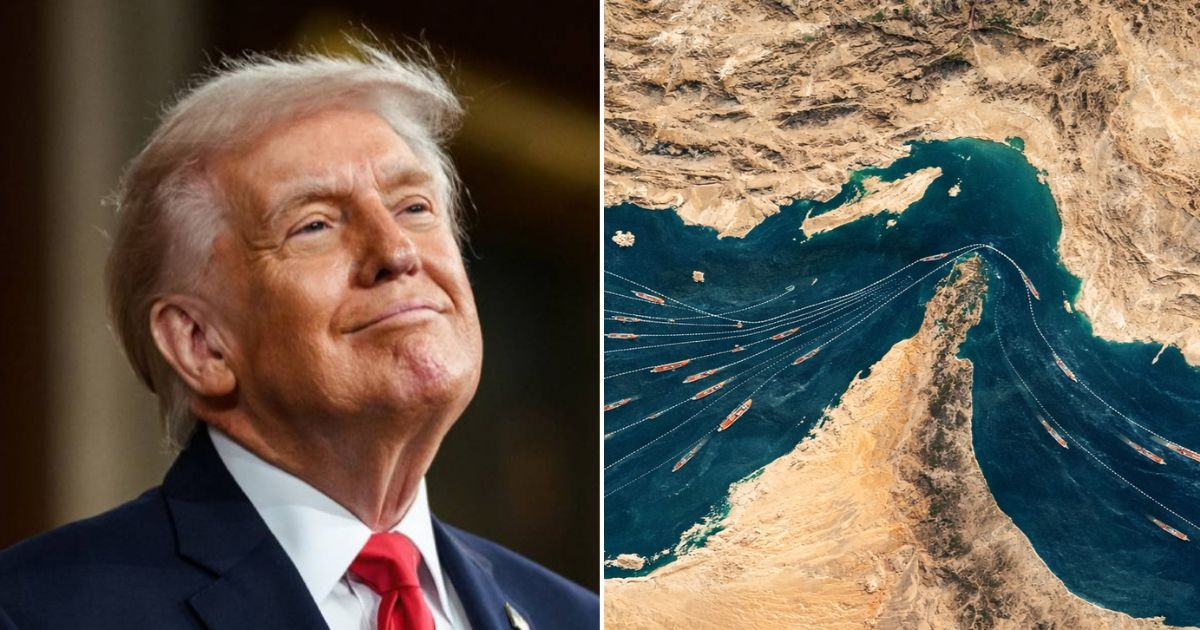
On Tuesday, U.S. President Donald Trump asserted that he does not require NATO's backing to address the conflict with Iran, claiming that Washington has already achieved military victory over the Islamic Republic. This statement was reported by EFE from the White House.
"NATO has let me down profoundly. They were absent when we needed them. We don't need NATO, but if we did, they simply weren't there," Trump remarked to journalists just before departing for Beijing to meet with Chinese President Xi Jinping.
The president emphasized that no "assistance" from allies is necessary in the conflict. "We will prevail one way or another. We'll achieve victory peacefully or through other means," he added.
The conflict with Iran, referred to as Operation Epic Fury, was initiated on February 28 with coordinated airstrikes by the U.S. and Israel targeting Iran's nuclear and military infrastructure, without prior consultation with NATO allies.
No member country of the alliance committed military forces: 22 nations merely signed a diplomatic declaration of support, and conditioned any aid on a ceasefire.
Tensions with European allies intensified after German Foreign Minister Friedrich Merz stated that the U.S. had been "humiliated" by Tehran in peace negotiations, prompting Trump to order the withdrawal of around 5,000 U.S. troops from Germany, a number that could increase.
Merz responded strongly: "If you want our help, call us beforehand."
Spain has also been a target of Trump's criticism for refusing to authorize the use of the Rota and Morón military bases for operations related to the conflict, citing the 1988 bilateral defense agreement.
Trump threatened to impose a trade embargo against Madrid as retaliation, and Spanish Defense Minister Margarita Robles confirmed that it was "clearly" communicated to the American military that the bases and Spanish airspace were not authorized.
Current Status of the Conflict
Regarding the state of the conflict, Trump noted that the ceasefire is at its most fragile after deeming Iran's response to Washington's peace proposal "completely unacceptable."
However, the president indicated he is in no rush to finalize an agreement since the naval blockade of Iran's coasts and ports gives him an advantage in negotiations.
The uncertainty surrounding the conflict was reflected in the markets on Tuesday: Texas crude oil prices rose 4.19% to $102 per barrel due to the lack of agreement between the two parties.
As for his trip to Beijing, Trump dismissed the notion that Iran would be a central topic in his meeting with Xi, scheduled for Thursday and Friday. "We have Iran very much under control. Either we'll reach an agreement, or the Iranians will be decimated; one way or another, we're going to win," he stated.
The visit to China, the first by a U.S. president in nearly nine years, occurs with the backdrop of the Iran conflict, including alleged Chinese arms shipments to Tehran, which Xi denied in what Trump described as a "beautiful letter."
Understanding the U.S. Stance on Iran
What is Operation Epic Fury?
Operation Epic Fury refers to the military campaign initiated by the U.S. and Israel on February 28, involving airstrikes against Iranian nuclear and military infrastructure.
Why did Trump criticize NATO?
Trump expressed disappointment with NATO for not being present when needed during the conflict with Iran, asserting that the U.S. can handle the situation independently.
How did European allies react to the U.S. actions?
European allies, including Germany, expressed dissatisfaction, with Germany's foreign minister stating the U.S. had been "humiliated" in peace talks, leading to U.S. troop withdrawals from Germany.