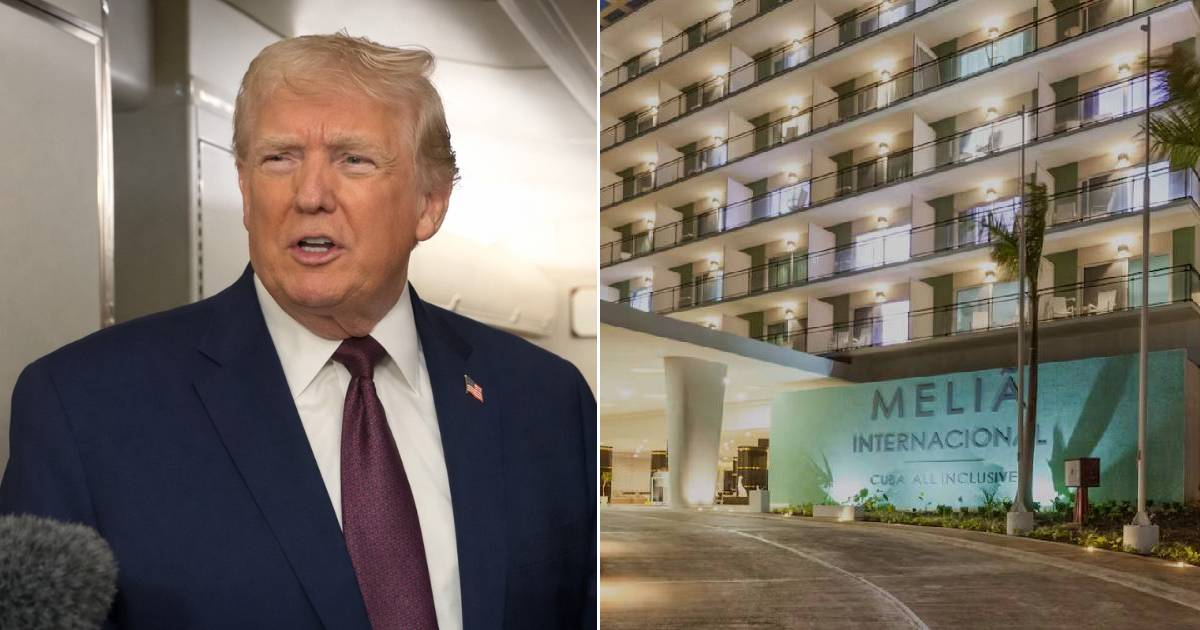
Spanish hotel chains and financial institutions active in Cuba could face hefty fines from the Trump administration as a new sanctions framework targets foreign companies doing business with Cuba's communist regime.
Executive Order 14404, signed on May 1, significantly extends the reach of the U.S. embargo by authorizing the Secretaries of State and Treasury to penalize any foreign entity or individual involved in Cuba's energy, defense, mining, financial services, or security sectors, or conducting transactions with the Cuban government or sanctioned entities, as noted by the international law firm Squire Patton Boggs in a client advisory cited by ABC.
Previously, European businesses without U.S. ties enjoyed considerable protection from direct sanctions. That safeguard is now gone.
On May 7, Marco Rubio formally targeted GAESA, a military conglomerate said by Washington to control 40% of Cuba's economy, along with its CEO Ania Guillermina Lastres Morera and the mining company Moa Nickel S.A.
The Office of Foreign Assets Control (OFAC) has set a deadline of June 5 for foreign companies and financial institutions to end their dealings with GAESA, threatening secondary sanctions.
The Impact on Spanish Businesses
GAESA is crucial for Spanish firms due to its control over Cuba's hotel infrastructure via its tourism division Gaviota, making hotel chains direct partners with the sanctioned conglomerate.
According to ICEX data from May 2025, Spanish tourism companies manage around 30,000 hotel rooms in Cuba, with Spain being the "undisputed leader" in four and five-star accommodations.
Brands like Meliá, Iberostar, Barceló, Roc, Valentín, NH, Blau, Axel, and Sirenis are present. In finance, Banco Sabadell and a company owned by Javier Botín named Alto Cedro also have interests in Cuba.
Meliá has already reduced its operational capacity in Cuba by 50% during the first quarter of 2026, with over 5,000 rooms out of service, an average occupancy of 34.1%, and net profits falling by 68%.
Global Repercussions
Canadian mining company Sherritt International was the first to react internationally, announcing on May 7 the immediate cessation of all direct operations in Cuba and the repatriation of its staff, citing the executive order as making "normal operations in the island materially impossible."
José María Viñals, a partner at Squire Patton Boggs, highlights that "from a legal standpoint, this is a major shift as the U.S. arms itself with a tool it can wield at will," leading many companies to reconsider the viability of continuing operations in Cuba amid increased scrutiny from banks, insurers, and partners.
Legal and Political Challenges
Ignacio Aparicio, responsible for the Cuban Desk at Andersen, outlines specific concerns for companies: "The validity and continuity of contracts with GAESA-linked entities, the personal risk for their executives regarding U.S. visas, and the stance of their banks and insurers on ongoing transactions. This risk is neither hypothetical nor distant, nor legally simple."
Aparicio anticipates a gradual and selective withdrawal of Spanish firms, though not a complete exit, and warns that U.S. pressure "places the Spanish government in an awkward position with Washington, adding a political dimension that companies cannot ignore when assessing their strategy in the island."
Viñals concludes that these new sanctions will "further discourage investment in Cuba" and that "Europe will have to decide whether to protect European companies and confront the U.S.," as legal mechanisms may be available to attempt to block the enforcement of potential sanctions on European firms.
Understanding the Impact of U.S. Sanctions on Spanish Firms in Cuba
What is Executive Order 14404?
Executive Order 14404 expands the U.S. embargo on Cuba by allowing the Secretaries of State and Treasury to impose sanctions on foreign entities involved with Cuba's key economic sectors or those transacting with the Cuban government or sanctioned entities.
How are Spanish businesses affected by these sanctions?
Spanish companies, particularly those in the tourism and financial sectors, face potential penalties due to their dealings with GAESA, which controls significant parts of Cuba's economy. Sanctions could impact their ability to operate and profit in the region.
What challenges do these sanctions pose for the Spanish government?
The sanctions place the Spanish government in a difficult diplomatic position with the U.S., creating political pressure and requiring careful consideration of how to support national businesses while maintaining international relations.