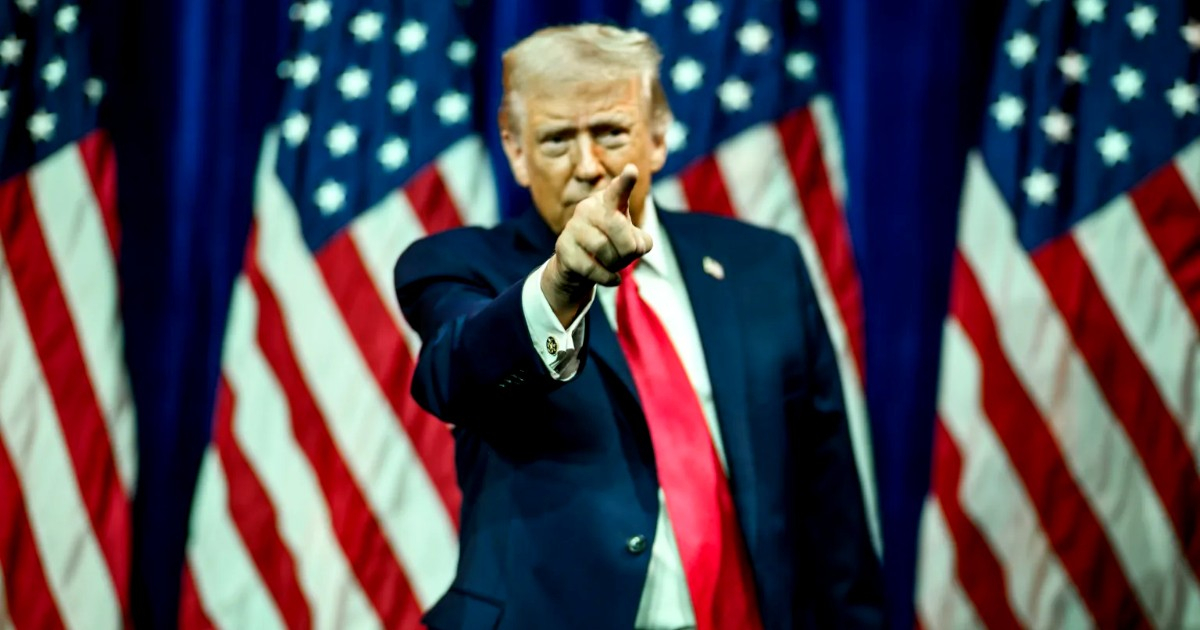
On Tuesday, Donald Trump caused a stir on Truth Social with a message that left many puzzled: "No Republican has ever talked to me about Cuba, which is a failed state only headed in one direction: down! Cuba is asking for help, and we're going to talk!"
This statement came not long after several Republican senators publicly cautioned the former president against any military intervention on the island, according to a report by The Hill. The timing was significant, as Trump's message seemed to dismiss and undermine the warnings from his own party's senators.
Ignoring Republican Senators' Warnings
By declaring that "no Republican" had spoken to him about Cuba, Trump effectively ignored their statements, subtly dismissing their arguments and reinforcing his intent to address the Cuban issue on his own terms.
Who Are the Republicans Trump Overlooked?
The legislators referenced by The Hill are not the Cuban-American congress members—such as María Elvira Salazar, Mario Díaz-Balart, Carlos Giménez, and Nicole Malliotakis—who maintain close dialogue with the administration and share its goals. Instead, Trump was alluding to Republican lawmakers from other regions, who lack ties to the Cuban-American community and are more focused on resolving the conflict with Iran.
Senate Majority Leader John Thune (R-S.D.) stated on Monday that the priority should be "trying to open the Strait of Hormuz." Although he expressed a desire to see the Cuban regime fall, he preferred it happen "organically" through economic pressure and a naval blockade.
Diverse Opinions Among Republican Senators
Senator James Lankford (R-Okla.), vice-chair of the Senate Republican Conference, was straightforward when asked about supporting a military operation against Cuba: "No, I would not." He emphasized that "there is a lot of economic pressure that can be applied to Cuba that alone makes a big difference."
Senator Susan Collins (R-Maine), Chair of the Appropriations Committee, simply said "no" to the same question. Senator Shelley Moore Capito (R-W.Va.) was similarly clear: "It's very low on the list, if it's on it at all. I think we need to focus on what's happening in Iran."
Senator Rand Paul (R-Ky.) stood out by revealing talks with the Cuban ambassador, asserting that Havana "is open to negotiations, better relations, and American investment." He declared, "I want less war, not more."
Paul and Collins were the only two Republicans who supported a Democratic resolution under the War Powers Act of 1973 to prevent military action in Cuba—a resolution blocked by the Senate last month due to an objection from Senator Rick Scott (R-Fla.).
Implications of Trump's Statement
Senator Steve Daines (R-Mont.) expressed trust in Trump and Secretary of State Marco Rubio but preferred "less conflict rather than more, given what's happening in the world."
While Trump's remark wasn't specifically aimed at any of these senators, it effectively erased them from the conversation.
Salazar quickly reframed Trump’s message as a call to action: "Republicans know that you are the only person who can liberate Cuba after 67 years of oppression... We are waiting for you to give the order. And it will happen. With Marco Rubio leading the way."
Trump made the statement just before heading to China for a meeting with Xi Jinping, at a time when Beijing had urged Washington to lift sanctions against Cuba—making the post a multifaceted political gesture.
Understanding Trump's Stance on Cuba
What did Trump mean by his statement on Cuba?
Trump's statement suggested that he hadn't received any input from Republicans about Cuba, which served to dismiss the warnings from several Republican senators and indicate his intent to address Cuba in his own way.
Which Republicans were concerned about military action in Cuba?
Senators such as John Thune, James Lankford, Susan Collins, Shelley Moore Capito, and Rand Paul expressed concerns about military intervention, advocating for economic pressure instead.