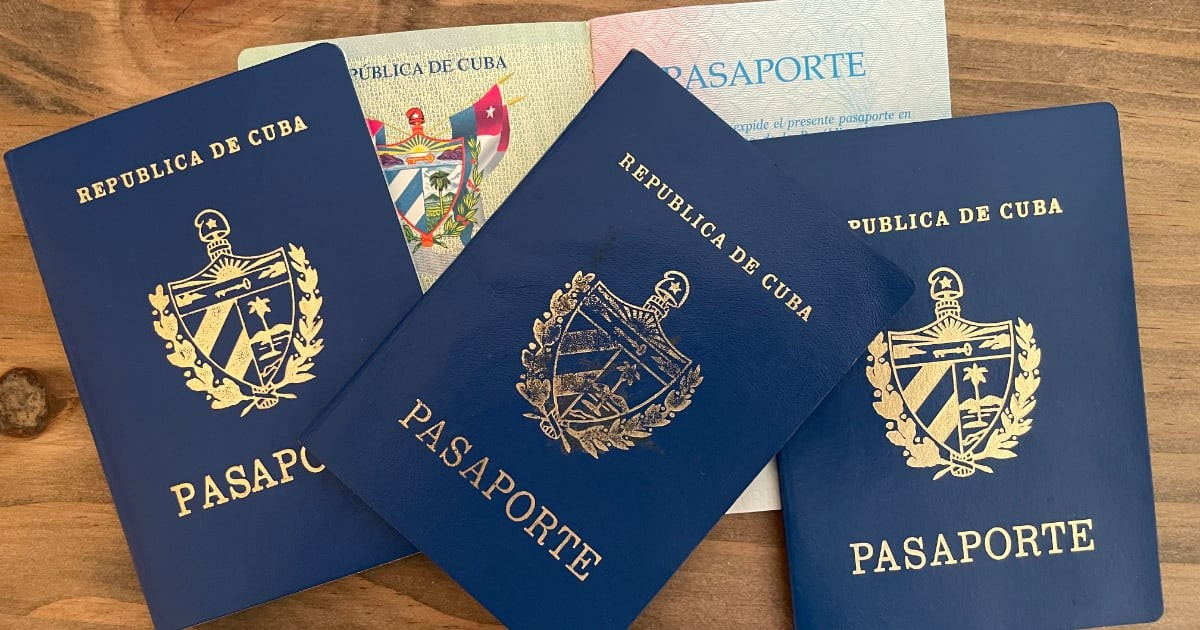
The recent updates to Cuban migration and citizenship laws, published in the Official Gazette on May 5 after nearly two years of delay, bring minimal changes for Cuban-Americans. The legislation continues to require them to travel and identify themselves with a Cuban passport within the nation, and the regime retains broad discretion to deny entry or exit to critics and dissidents.
These laws—Migration (171/2024), Citizenship (172/2024), and Foreigners (173/2024)—were ratified by the National Assembly on July 19, 2024, but remained unpublished until May 5, with no explanation for the delay. They are set to take effect 180 days post-publication, around November 2026.
One of the most contentious restrictions remains unchanged. The citizenship law clearly states: "Cuban citizens, while on national territory, are governed by this status as set forth in this Law and cannot exercise foreign citizenship."
This implies that U.S. citizens born in Cuba will continue to be treated as Cubans while on the island, with no ability to seek consular protection from the U.S. Embassy in Havana, as advised by the State Department's travel guidelines.
The law also dictates that those born in Cuba with another citizenship "do not enjoy, within national territory, the rights, benefits, or protections related to those citizenships."
The only path for a Cuban-American to enter Cuba with only a U.S. passport is to complete the legal process of renouncing Cuban citizenship, newly regulated by this law, though this process won’t be available until November 2026.
Among the legislative changes is the removal of the 24-month limit for stays abroad, which previously automatically classified Cubans as "definitive emigrants," resulting in the loss of property rights on the island. Additionally, the law introduces the concept of "Effective Migratory Residence," recognizing as residents those who spend more than 180 accumulated days per year in Cuba or demonstrate familial, economic, or property ties.
Furthermore, a special migratory status for "Investors and Business" is created for emigrants wishing to engage in the Cuban economy, with a processing fee of 3,500 Cuban pesos and a resolution period of 30 working days. This follows the announcement from Foreign Investment Minister Óscar Pérez-Oliva Fraga that Cubans abroad could own private businesses on the island.
Nevertheless, the new laws expand state control over people's movement, establishing ten reasons to prevent someone from leaving the country, including national security, retention of a "qualified workforce," or "sensitive official information," without requiring a criminal cause.
The law also formalizes the practice of barring entry to activists and government critics for reasons of "national security" or "public order," applicable to both foreigners and Cuban citizens.
The Migration Police is officially recognized as a specialized police body with jurisdiction throughout the national territory, authorized to request identification documents from anyone, anywhere in the country, not just at borders.
The diaspora, estimated at over two million people, remains skeptical of these openings, given the regime's history of broken promises and the backdrop of the worst economic crisis since 1959. Projections indicate a 6.5% GDP decline in 2026, with more than 600,000 Cubans having left the island since 2022.
Laritza Diversent, a lawyer from Cubalex, summed up the risks clearly: "The regime has used criminal law to confiscate valuable properties: they invite investment, then imprison entrepreneurs and seize their businesses."
Key Questions About Cuba's New Migration Laws
What does the new Cuban citizenship law mean for U.S. citizens born in Cuba?
The law specifies that U.S. citizens born in Cuba are treated as Cuban citizens while on the island, preventing them from seeking U.S. consular protection.
When will the new migration laws in Cuba come into effect?
The laws are set to be enforced 180 days after their publication, approximately in November 2026.
What is the "Effective Migratory Residence" introduced by the new law?
This concept recognizes as residents those who stay more than 180 days per year in Cuba or have significant familial, economic, or property ties to the island.
How does the law affect Cuban-Americans wanting to invest in Cuba?
The law creates a special status for investors, allowing emigrants to participate in the Cuban economy, with a processing fee and a specified resolution period.