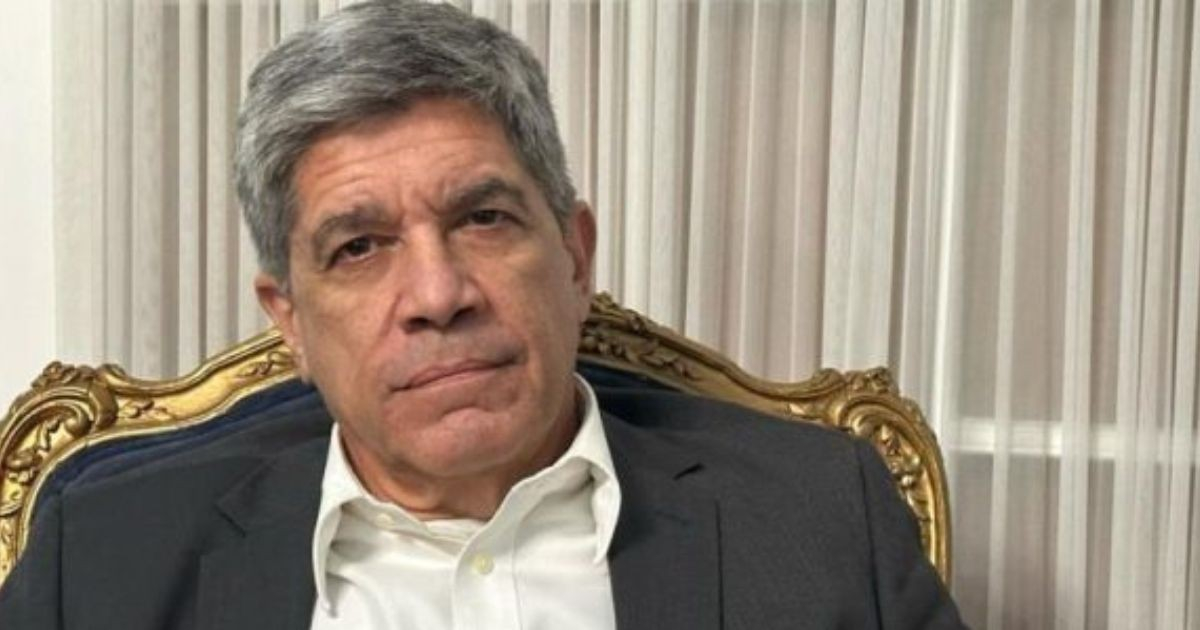
On Monday, Cuban Deputy Foreign Minister Carlos Fernández de Cossío released a statement condemning those he claims are aiding efforts to normalize the threat of U.S. military aggression against Cuba by labeling them as "accomplices."
In a Facebook post, Fernández de Cossío asserted, "The visible effort to normalize the threat of U.S. military aggression against Cuba is part of a coldly calculated communications strategy. This is a criminal act, and those involved would be accomplices to a potential bloodbath."
While the statement doesn't pinpoint specific individuals or groups, it alludes to media outlets, Cuban opposition figures in exile, citizens within the island, and political actors that, according to the regime, might be legitimizing or amplifying the narrative of a possible U.S. military intervention in Cuba.
The use of the phrase "accomplices to a potential bloodbath" marks the harshest language used by a senior Cuban official to address those promoting or supporting such a scenario.
Heightened Tensions Between Havana and Washington
These comments arise amid escalating tensions between Havana and Washington. On May 2, President Donald Trump threatened to deploy the nuclear-powered aircraft carrier USS Abraham Lincoln off the Cuban coast to compel the surrender of the Díaz-Canel government, linking the action to the conclusion of military operations against Iran.
"We'll have it stationed just 100 yards off the coast, and they will say, 'Thank you very much, we surrender,'" Trump reportedly stated during a private dinner in West Palm Beach.
In reaction, Cuban Foreign Minister Bruno Rodríguez Parrilla described these remarks as "a new, clear, and direct threat of military aggression," while Fernández de Cossío had previously labeled naval blockade threats as "an act of war" on March 25.
Rejection of U.S. Humanitarian Aid Proposal
On May 10, Fernández de Cossío also rejected a U.S. offer of $100 million in humanitarian aid, dismissing it as a "dirty political business" tied to justifying "the possibility of military aggression."
The escalation traces back to January 2026, when Trump signed Executive Order 14380, designating Cuba as an "unusual and extraordinary threat" and imposing secondary sanctions on foreign companies and banks operating in key sectors of the island.
Since then, the U.S. has intercepted at least seven oil tankers bound for Cuba, marking the first such incidents since the 1962 Cuban Missile Crisis, exacerbating the island's already dire energy situation.
Cuban Military Preparations and Internal Messaging
On March 23, Fernández de Cossío confirmed that the Cuban military is preparing for the possibility of U.S. military action, albeit describing it as a "remote possibility."
The regime has also intensified its internal messaging: on March 30, the Ministry of the Revolutionary Armed Forces issued calls for armed resistance, warning that any enemy could "be blown up with a mine" or ambushed, in a campaign that even included messages directed at children.
This new accusation of "accomplices" further escalates the regime's rhetorical stance in a context where, according to Trump, the U.S. could "take control of Cuba almost immediately" once military operations against Iran are completed.
Frequently Asked Questions on U.S.-Cuba Tensions
What prompted Fernández de Cossío's recent statements?
Fernández de Cossío's statements were prompted by efforts to normalize the threat of U.S. military aggression against Cuba, which he claims is part of a calculated communications strategy.
How has the Cuban regime responded to U.S. military threats?
The Cuban regime has intensified its rhetoric and military preparations. They have issued calls for armed resistance and warned about potential ambushes, even targeting messaging at children.
What is the significance of Executive Order 14380?
Executive Order 14380, signed by President Trump, declared Cuba an "unusual and extraordinary threat" and imposed secondary sanctions on foreign entities operating in Cuba's strategic sectors.