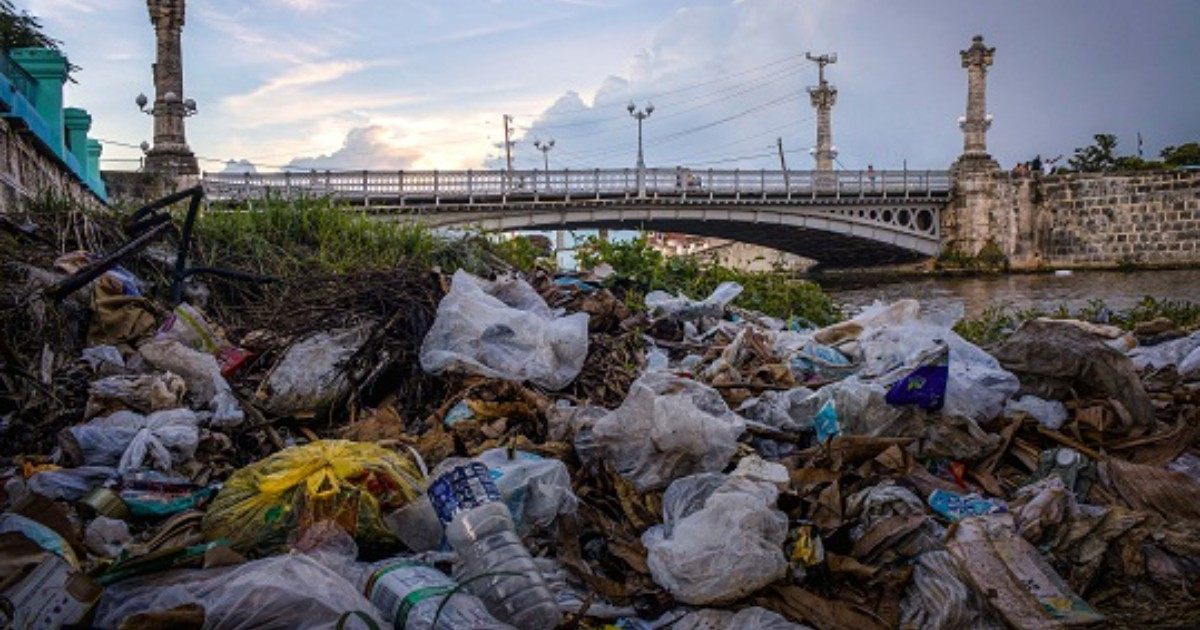
In an unexpected move, the official newspaper of the Cuban Communist Party in Matanzas, Periódico Girón, recently released a photo report vividly depicting the severe trash accumulation in the streets, highlighting how the issue has escalated from an aesthetic concern to a significant health threat for the city's residents.
This level of transparency from a state-backed outlet marks a stark departure from the usual narrative of Cuban state media, which often downplays or ignores such pressing issues. Just days earlier, Girón published another article titled "As the Trash Piles Up…" pointing out that the Municipal Waste Management Company lacks the necessary fuel to collect refuse with even the bare minimum frequency required.
"In Matanzas, trash has evolved from a mere backdrop to a serious health warning. With the onset of the rainy season, each dump site becomes a breeding ground for mosquitoes, rodents, and bacteria that exacerbate the spread of diseases, like hepatitis, which are on the rise due to polluted environments and deteriorating sanitary conditions," the report warns.
The images captured by Raúl Navarro González reveal towering piles of plastic bags, bottles, cardboard, and decaying materials littering the city’s streets, rivers, and channels, starkly contrasted against the backdrop of colonial-era infrastructure. Critical areas identified include Salamanca at the corner of San Carlos, Vía Blanca, Paseo de Martí, and the heights near the Eliseo Noel Camaño Pediatric Hospital.
Public Response to Trash Fires
The state media also notes the increasingly common sight of burning trash in public areas, described as "a growing citizen response" that releases toxic fumes and worsens air pollution. A reader succinctly captured this sentiment in the article's comments: "Setting fire to trash has become the people's rebellious answer to the negligence, abandonment, and apathy of those responsible for maintaining the city's cleanliness and public health."
Girón further emphasizes that "rainwater carries contamination into sewers, rivers, and the bay, degrading ecosystems and jeopardizing vital resources for the city," making the rainy season a multiplier of risk factors.
Historical Context of the Crisis
The situation is not a new one. Back in April 2026, a viral photo showed an improvised dump nearly filling the intersection of Levante and Solís streets. At that time, a resident described the scene: "It's disgusting and terrifying; there hasn't been a trash collection in almost a month, and rodents and flies are rampant."
That same month, health authorities issued a provincial alert for hepatitis A in the municipalities of Matanzas, Cárdenas, and Versalles. In October 2025, the Eliseo Noel Camaño Pediatric Hospital was operating at full capacity with 75 beds occupied by arboviral diseases—dengue, chikungunya, and zika—and over 70% of the population in municipalities like Perico and Cárdenas were affected by these diseases during that year.
The problem extends nationwide. In Havana, as of February 2026, only 44 out of 106 garbage trucks were operational due to a diesel shortage, while the capital generates between 24,000 and 30,000 cubic meters of waste daily with just 10,000 containers available.
Girón concluded its report with a stark warning that implicitly acknowledges the regime's management failure: "The stakes are now not just the image of Matanzas, but the health and future of its residents."
Understanding the Trash Crisis in Matanzas
Why has the trash situation in Matanzas become a health threat?
The accumulation of garbage has created breeding grounds for disease-carrying pests and bacteria, particularly during the rainy season, which can spread illnesses like hepatitis.
What areas in Matanzas are most affected by the trash accumulation?
Critical areas include Salamanca at the corner of San Carlos, Vía Blanca, Paseo de Martí, and the heights near the Eliseo Noel Camaño Pediatric Hospital.
How have residents responded to the trash crisis?
Residents have resorted to burning trash in public areas as a protest against the authorities' neglect, despite the serious health and environmental risks posed by the toxic smoke.