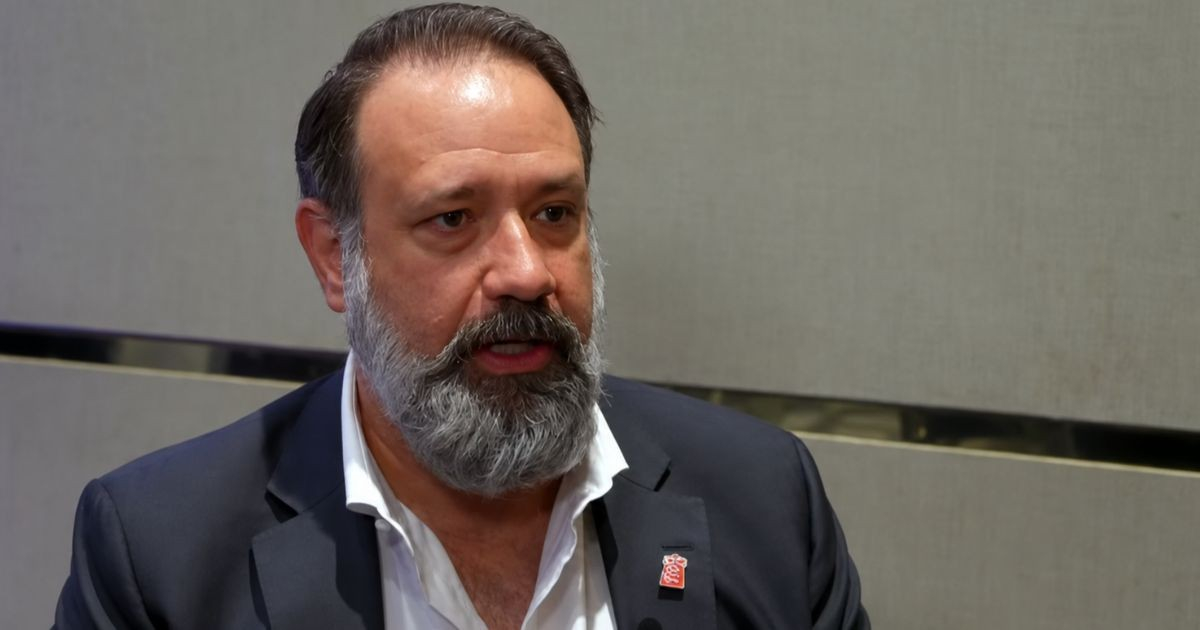
Rick de la Torre, a former CIA operations officer and ex-station chief in Caracas, emphasized in an interview with WPLG Local 10 that the Cuban regime is under "more pressure than at any other time in its history." This is in light of the collapse of the Venezuelan oil subsidy and new U.S. sanctions targeting the military conglomerate GAESA.
De la Torre attended the Hemispheric Security Conference at the Florida International University (FIU) and shared his insights on social media, directly linking Cuba's crisis to the capture of Nicolás Maduro on January 3, 2026, during "Operation Absolute Resolution."
"Cuba's economy has been a failure for six, seven decades. There's nothing new about that. Unfortunately, after the fall of the Soviet Union, the Cuban regime survived long enough to sink its claws into Venezuela," the former analyst elaborated.
According to De la Torre, subsidized Venezuelan oil—between 25,000 and 30,000 barrels daily—was the regime's economic lifeline for years. Now that this flow has been cut off, it has exposed what he describes as "a corrupt system that simply doesn't work."
Sanctions and Economic Impact
The former officer was adamant that the sanctions do not harm the Cuban people but rather highlight the damage inflicted by the regime itself: "All they have done is keep the Cuban people at bay and prolong their pain and suffering. Now we come along and say: something has to give. Something has to change. The status quo cannot continue."
De la Torre's analysis aligns with Secretary of State Marco Rubio's May 7 announcement of new sanctions against GAESA, the military conglomerate controlling 40% to 70% of Cuba's formal economy, with illicit assets estimated at $18 billion to $20 billion.
Rubio characterized GAESA as a "company created by Cuban generals that has generated billions of dollars in revenue, none of which benefits the Cuban people. Not a single penny."
The sanctions stem from an executive order signed by President Trump on May 1, giving foreign businesses until June 5, 2026, to sever ties with the conglomerate or face secondary sanctions.
Canadian company Sherritt International has already halted all its operations in Cuba, and its shares plummeted by 30% following the announcement.
Leadership and Future Prospects
On the regime's leadership, De la Torre was unequivocal: "The octogenarians of a military junta ruling Cuba: it's time for them to relinquish power. It truly is."
However, he acknowledged that they are unlikely to do so willingly: "I don't see them doing it voluntarily. No. I think the pressure has to keep building."
The former analyst highlighted that the pressure must be both economic and diplomatic, warning Cuban leaders that hoarding billions stolen from the people in foreign bank accounts is futile if no one will open their doors to them.
The CEPAL projects a contraction of Cuba's GDP by -6.5% for 2026, the worst in Latin America, with an accumulated contraction of 23% since 2019 and blackouts lasting up to 25 hours a day in various regions.
De la Torre concluded the interview with a hopeful statement: "I not only hope to see a free Cuba, but I also hope to witness the end of Marxism and communism in our hemisphere. This is the closest opportunity we've had in a long time, and I believe we can achieve it."
Cuban Economic and Political Turmoil
What is the main source of pressure on the Cuban regime?
The primary sources of pressure on the Cuban regime are the collapse of the Venezuelan oil subsidy and new U.S. sanctions against the military conglomerate GAESA.
How has the Cuban economy been affected by recent developments?
The Cuban economy is experiencing severe challenges, including a projected GDP contraction of -6.5% for 2026 and widespread blackouts, exacerbated by the loss of Venezuelan oil and international sanctions.
What action has Sherritt International taken in response to the sanctions?
Sherritt International has suspended all its operations in Cuba, leading to a 30% drop in its share value following the announcement of the sanctions.