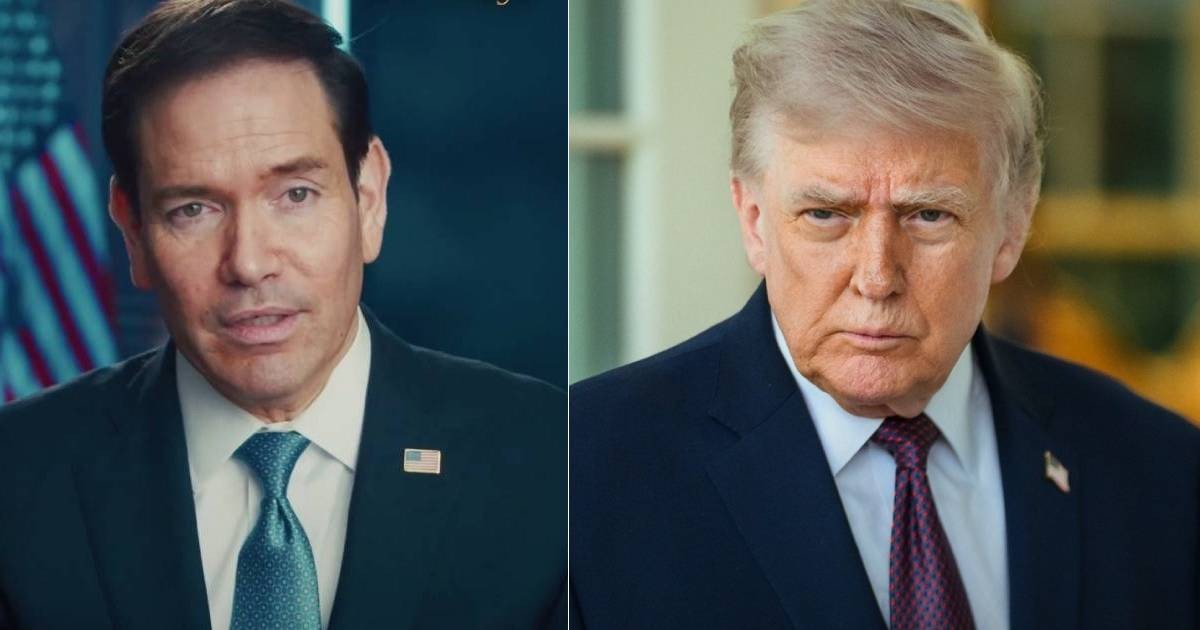
On Monday, U.S. media outlet Axios released an analysis detailing how the sharp rhetoric from Donald Trump's administration regarding Cuba is intensifying fears of potential military intervention on the island. This situation marks the most significant tension between Washington and Havana since the 1962 Cuban Missile Crisis.
Increased U.S. Military Activity Near Cuba
Tensions have grown alongside a surge in U.S. surveillance and reconnaissance flights near Cuban territory. A flight data analysis revealed by CNN indicates that since February, Washington has conducted at least 25 military operations involving P-8A Poseidon aircraft, RC-135V Rivet Joint planes, and MQ-4C Triton drones, operating within 40 miles of Cuba's coastline.
Statements from U.S. Officials Intensify Concerns
Axios referenced a White House official who described Cuba as "a declining nation disastrously governed for many years," noting the regime's setback following Venezuela's withdrawal of support. The official's statement, "As the President said, Cuba is a country in decline. It will soon fall, and we will be there to assist," has sparked unease both within and outside Cuba.
In recent weeks, top U.S. officials have hardened their rhetoric. Secretary of State Marco Rubio criticized the Cuban economic system as "unworkable and beyond repair," adding, "The only thing worse than a communist is an incompetent one."
Speculation on Military Intervention
President Trump further fueled speculation about a military operation by suggesting a returning U.S. aircraft carrier from Iran might be deployed off Cuban shores, claiming it would take just "100 meters off the coast" for Havana to surrender.
Adding to the tension, journalist Katherine Doyle reported on Monday that the Pentagon has begun updating plans for a potential military action against Cuba if ordered by Trump, citing current and former U.S. officials.
Sanctions and International Reactions
Last Thursday, new sanctions targeting GAESA and other Cuban entities heightened the pressure. Cuban Foreign Minister Bruno Rodríguez Parrilla condemned these measures as "a genocidal collective punishment."
Despite the escalating tension, Axios emphasizes there are no definitive signs of an imminent attack. Brazilian President Luiz Inácio Lula da Silva disclosed last Thursday that Trump privately assured him during a White House meeting of no plans to invade Cuba.
Sebastián Arcos, interim director of the Cuban Studies Institute at Florida International University, explained that discussions of intervention began when Cuba was declared an imminent threat to U.S. national security in January. However, the focus shifted to the Middle East due to tensions with Iran.
"Everything took a back seat. Now that the conflict with Iran is in a sort of limbo, I can sense renewed attention on Cuba, not just in surveillance flights but also in the President's statements, Marco Rubio's remarks, and the newly announced sanctions," Arcos said.
While Arcos deems a ground invasion unlikely, he suggests a "remote military action" similar to the recent operation against Iran could "shock the regime" and weaken its leadership. He even pointed to May 20, Cuba's Independence Day, as a symbolically charged date laden with tension and expectation in both Miami and the island itself.
Understanding the Rising Tensions Between the U.S. and Cuba
Why is the U.S. increasing military flights near Cuba?
The increase in U.S. military flights near Cuba is part of heightened surveillance and reconnaissance efforts amid escalating tensions between the two countries, which are fueled by the aggressive rhetoric of the Trump administration.
What are the implications of new U.S. sanctions on Cuba?
The new sanctions against Cuban entities like GAESA increase economic pressure on the island, aiming to weaken the Cuban regime and its financial power, though they have been criticized as collective punishment by Cuban officials.
Could the U.S. launch a military intervention in Cuba?
While there is speculation about possible military actions, experts consider a ground invasion unlikely. However, there is concern over potential remote military actions that could destabilize the Cuban government.