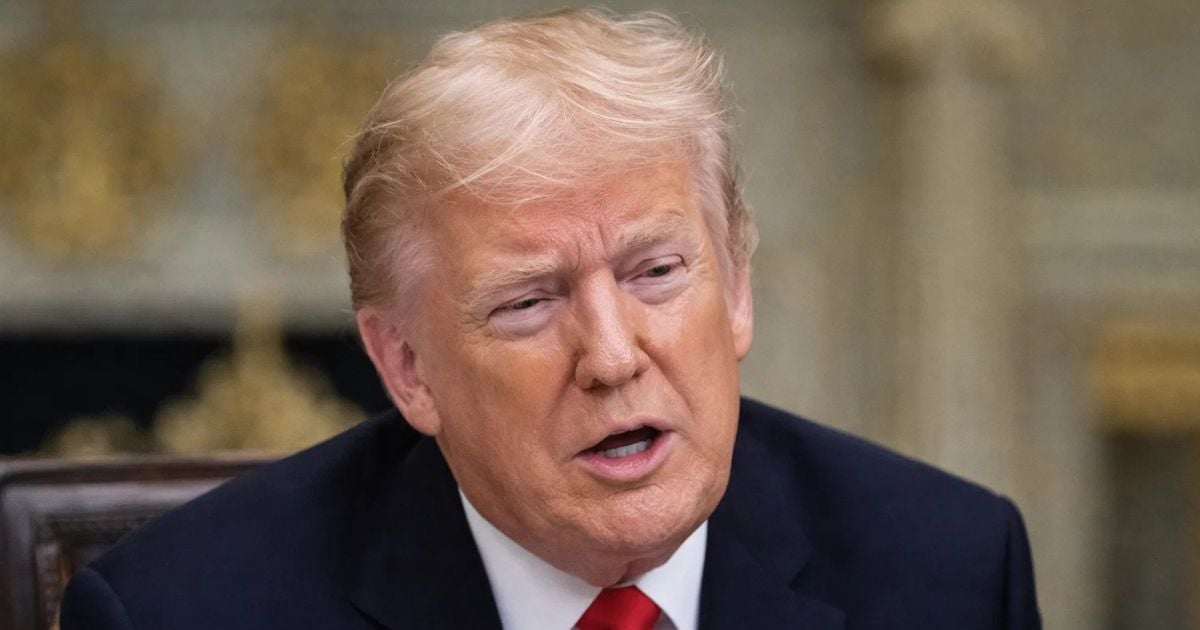
In a recent phone interview with Fox News, President Donald Trump revealed that he is "seriously considering" turning Venezuela into the 51st state of the United States. The statement was reported by congressional correspondent Bill Melugin.
Trump defended his proposal by highlighting Venezuela's vast oil reserves, which he estimated to be worth $40 trillion, and added that "Venezuela loves Trump."
This announcement came shortly after Delcy Rodríguez, acting as the head of the interim Venezuelan government following the capture of Nicolás Maduro, was in The Hague representing the regime at the International Court of Justice.
When questioned by a Telesur journalist after a hearing regarding the territorial dispute over the Esequibo with Guyana, Rodríguez firmly rejected the American president's suggestion.
"It would never be considered because if there's one thing Venezuelans cherish, it's our independence and our independence heroes," Rodríguez declared from The Hague.
This is not the first time Trump has floated this idea concerning Venezuela. On March 17th, after Venezuela's baseball team triumphed over Italy 4-2 in the World Baseball Classic semifinals, Trump took to Truth Social, writing: "Good things are happening for Venezuela lately! I wonder what this magic is about. Statehood, number 51, anyone?"
The geopolitical backdrop is significant: On January 3, 2026, Operation Absolute Resolution led to the capture of Maduro and Cilia Flores by the U.S. Army's Delta Force, with both being taken to a federal court in New York on charges of narcoterrorism.
Since then, Washington has effectively controlled Venezuelan oil exports. On January 7, 2026, Trump announced that Venezuela would deliver between 30 and 50 million barrels of high-quality oil to the U.S., with the revenue managed directly by Washington.
Secretary of State Marco Rubio introduced a three-phase plan for Venezuela to the Senate: stabilization via oil control, economic recovery with a $100 billion investment, and a democratic transition with free elections by the end of 2026.
The rhetoric of the "51st state" is part of a broader pattern in Trump's discourse, having applied similar notions to both Canada since November 2024 and Greenland since 2019.
The central argument remains consistent: Venezuela holds the largest proven oil reserves in the world, with approximately 303 billion barrels, making up 17% of global reserves, primarily located in the Orinoco Belt.
Rodríguez, leading the regime's delegation at the UN's principal judicial body over the Esequibo dispute, also addressed the ICJ on Monday. She warned, "Venezuela will not forsake its history or legitimate rights, recognized and preserved under the Geneva Agreement, just because Guyana now seeks to unilaterally and opportunistically redefine the controversy."
Key Questions about Venezuela's Potential Statehood
Why is Trump considering making Venezuela a U.S. state?
Trump cited Venezuela's significant oil reserves, which he values at $40 trillion, as a key reason for considering the country as the 51st U.S. state.
How has Venezuela responded to Trump's proposal?
Delcy Rodríguez, representing the interim government, firmly rejected Trump's proposal, emphasizing Venezuela's commitment to its independence and historical figures.
What is the current status of Venezuela's oil exports?
Since the capture of Nicolás Maduro, the United States has taken de facto control of Venezuela's oil exports, with agreements for the delivery of millions of barrels to the U.S. under Washington's control.