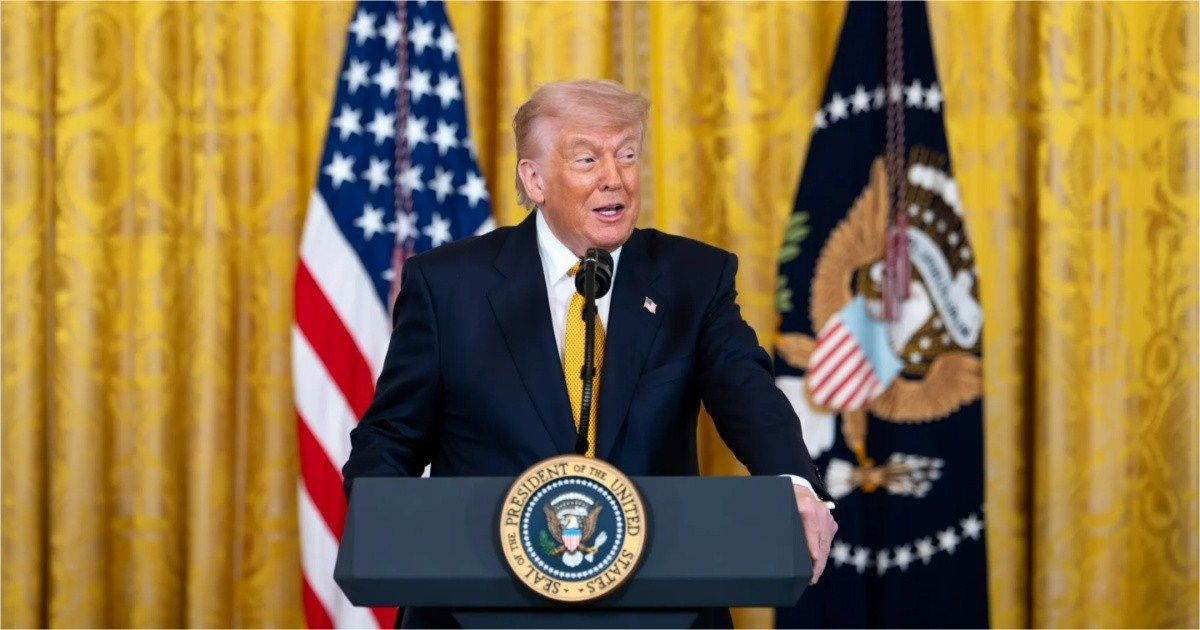
In a statement from the Oval Office on Monday, President Donald Trump expressed concerns about the current truce with Iran, describing it as "incredibly fragile." This comes after he reviewed Tehran's response to the latest American peace proposal, which he dismissed as "a piece of garbage."
"While the ceasefire is technically still in effect, it's hanging by a thread, the weakest it's ever been," Trump told reporters. "This is based on the garbage they sent over. I couldn't even bring myself to finish reading it."
The president mentioned that upon examining the Iranian reply, he felt as though he was "wasting his time," characterizing the ceasefire, in place since April 8, as being on "life support."
"They express a desire to negotiate, yet present us with a foolish proposal—one that nobody in their right mind would accept. Only (Barack) Obama might have agreed to something like this," Trump added, drawing parallels between the proposed terms and the Obama-era nuclear deal.
Despite his harsh rhetoric, Trump emphasized that a diplomatic resolution with Iran remains "very possible," provided Tehran agrees to Washington's non-negotiable stipulation that the Islamic Republic never acquires nuclear weapons.
The crisis escalated on Sunday after Iran delivered its formal response through Pakistani mediators, which Trump promptly rejected as "entirely unacceptable."
According to the Wall Street Journal, Iran's proposal demanded the cessation of the U.S. naval blockade, the release of frozen assets, an end to regional conflicts—including in Lebanon—and limited nuclear concessions: halting uranium enrichment for less than the 20 years demanded by Washington, without dismantling any facilities.
Iran labeled its terms as "reasonable and generous," refusing any "capitulation or surrender," and maintained they were negotiating from "a position of strength."
Pakistan, a key intermediary in the conflict, confirmed receipt of Iran's response and its transmission to Trump administration officials.
Tensions further escalated due to an Iranian drone attack on a commercial vessel 23 nautical miles northeast of Doha, in Qatari waters, resulting in a minor fire without casualties.
The Qatari Ministry of Foreign Affairs described the incident as a "dangerous and unacceptable escalation that threatens the security of maritime routes and vital supplies."
The United Arab Emirates intercepted two drones attributed to Iran, and Kuwait reported hostile drones in its airspace, underscoring the fragility of the ceasefire.
The conflict stems from Operation Epic Fury, a joint U.S.-Israeli air offensive launched on February 28, 2026, which decimated over 90% of Iran's missile capabilities and nuclear facilities in Natanz, Isfahan, and Fordow, resulting in the death of Supreme Leader Ali Khamenei.
Trump reiterated that his administration has a "clear plan" and that preventing Iran from obtaining nuclear weapons is non-negotiable, lamenting that this point is absent from any of Tehran's proposals.
Understanding the Fragile Truce with Iran
What is the current status of the ceasefire with Iran?
The ceasefire with Iran remains in place but is described by President Trump as "incredibly fragile" due to the unsatisfactory response from Tehran to the U.S. peace proposal.
What were Iran's demands in their proposal?
Iran's proposal included ending the U.S. naval blockade, releasing frozen assets, stopping regional conflicts, and agreeing to limited nuclear concessions without dismantling any facilities.
How did the U.S. respond to Iran's proposal?
President Trump immediately rejected Iran's proposal as "entirely unacceptable," criticizing it as a piece of garbage and not in line with U.S. demands.