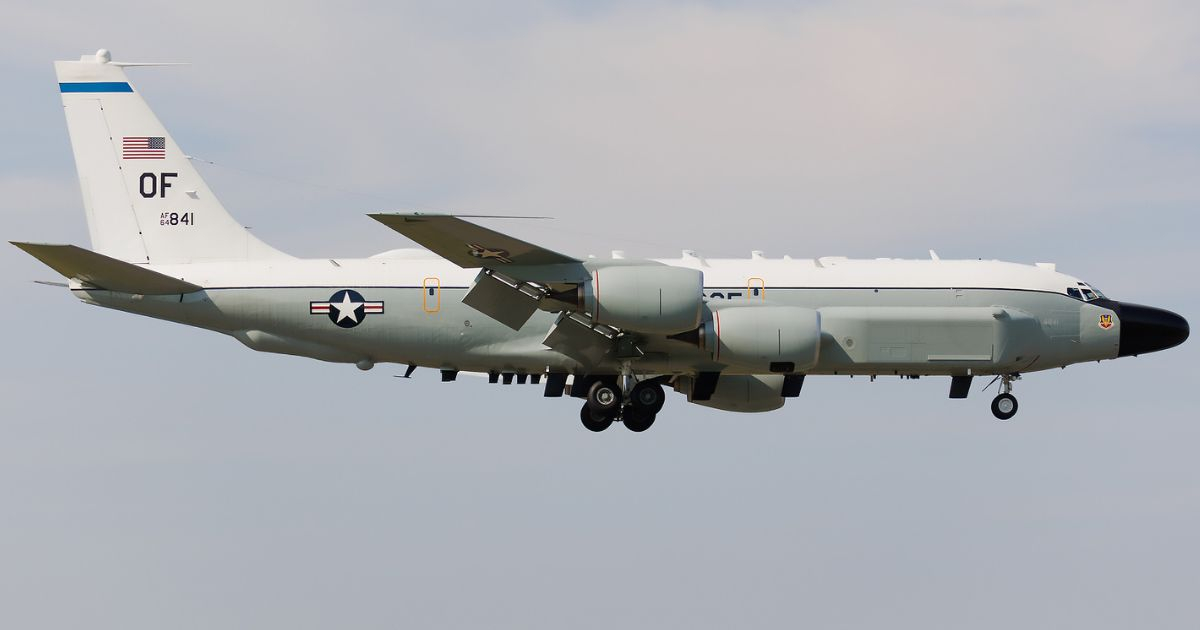
Since February 4, the United States Navy and Air Force have conducted at least 25 military intelligence flights close to Cuba's shores.
CNN's analysis, which draws on publicly available data from Flightradar24 and ADS-B Exchange, reveals that these missions predominantly targeted areas near Havana and Santiago de Cuba. Some aircraft ventured within 40 miles of the coast, entering the operational range for signal intelligence collection.
Aircraft Deployed for Surveillance Missions
The U.S. utilizes several aircraft for these operations, including the P-8A Poseidon maritime patrol plane, the RC-135V Rivet Joint specialized in signal intelligence, and the high-altitude MQ-4C Triton drone. The Triton, with a unit cost of approximately $240 million, can operate for over 24 continuous hours at altitudes exceeding 50,000 feet.
The drone, identified by the call sign BLKCAT5, completed its fourth documented flight around Cuba last Thursday. It took off from Naval Station Mayport in Jacksonville, Florida, and maneuvered over the Gulf of Mexico, the Yucatan Channel, and eastern and southern parts of the island at an altitude of 46,950 feet and a speed of 580 knots.
Such publicly visible operations were, according to CNN, "extremely rare" in the area near Cuba prior to February.
Heightened U.S. Pressure on Cuba
The Pentagon has refrained from commenting on the analysis findings. The increase in flights aligns with Washington's sustained pressure on the Cuban regime. On May 1, Trump signed Executive Order 14404, expanding sanctions against Cuba's energy, defense, mining, and financial sectors.
Secretary of State Marco Rubio announced new sanctions on Thursday against the Grupo de Administración Empresarial S.A. (GAESA), a military conglomerate controlling 40% to 70% of Cuba's formal economy. He set a June 5 deadline for foreign companies to cease operations with GAESA under the threat of secondary sanctions.
Since January 2026, the Trump administration has imposed over 240 sanctions on Cuba.
Parallels with Venezuela and Iran
The CNN article notes that a similar pattern—heightened governmental rhetoric alongside increased visible surveillance flights—preceded U.S. military operations in Venezuela and Iran.
In Venezuela, surveillance flights began a week after the first U.S. attack on a narcotics-linked vessel and persisted until days before Maduro's capture in his Caracas residence. In Iran, an extensive intelligence aircraft operation monitored the southern Iranian coast before joint attacks with Israel. The same aircraft currently observed near Cuba—the P-8A Poseidon, RC-135V Rivet Joint, and MQ-4C Triton—were active in these conflicts.
These aircraft can conceal their presence by deactivating their location beacons, raising the question of whether Washington is deliberately sending a signal to the regime.
"Whether this signal is intentional or not by the U.S. military or government, it likely causes significant unease for Cuban officials," concludes the analysis.
Understanding U.S. Surveillance Flights Near Cuba
What types of aircraft are used for U.S. surveillance near Cuba?
The U.S. employs aircraft such as the P-8A Poseidon, RC-135V Rivet Joint, and the MQ-4C Triton drone for intelligence operations near Cuba.
What is the significance of these surveillance flights?
These flights are part of heightened U.S. pressure on the Cuban regime, potentially signaling a strategic position similar to past actions in Venezuela and Iran.
How does the MQ-4C Triton contribute to these missions?
The MQ-4C Triton can fly for over 24 hours at altitudes over 50,000 feet, providing extensive surveillance capabilities.