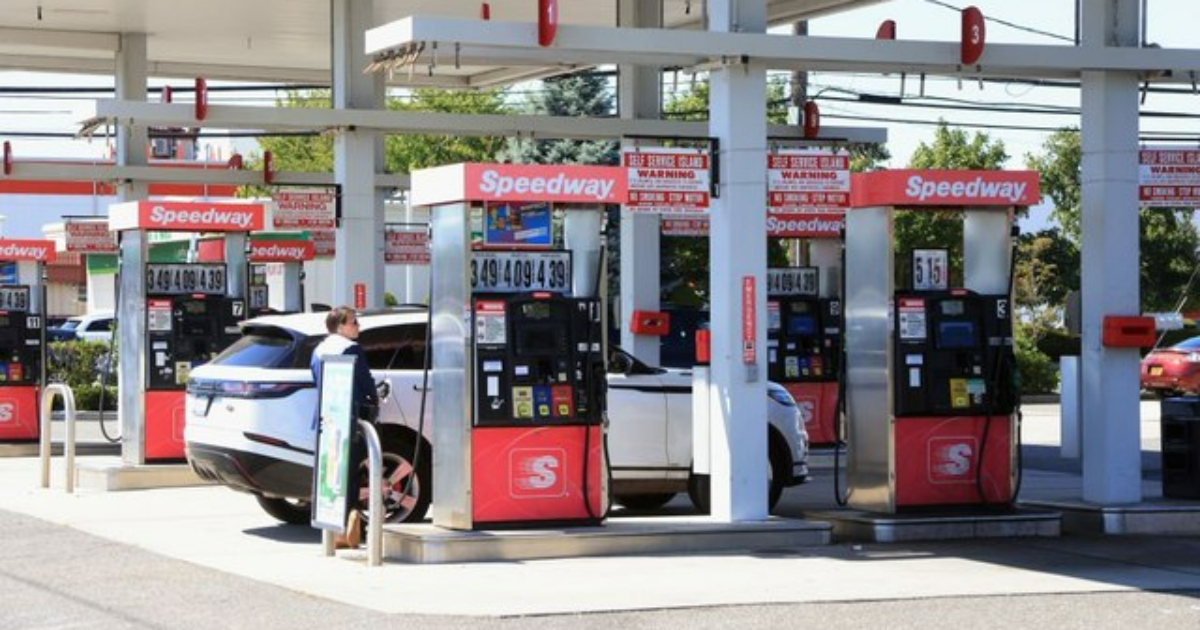
On Sunday, U.S. Energy Secretary Chris Wright announced that the White House is contemplating a temporary suspension of the federal gas tax due to a dramatic rise in fuel prices triggered by the ongoing conflict with Iran.
During an interview with NBC, Wright emphasized that "any actions that can help lower prices at the pump and reduce expenses for Americans have the full backing of this administration."
The national average price for gasoline hit $4.52 per gallon on Sunday, according to AAA, marking a more than 50% increase since the conflict with Iran began.
The Impact of Operation Epic Fury
Gas prices in the U.S. skyrocketed over 50% following the commencement of Operation Epic Fury on February 28, 2026, when the U.S. and Israel launched over 1,700 airstrikes targeting Iran's nuclear facilities.
In retaliation, Iran closed the Strait of Hormuz on March 4, causing a dramatic 97% drop in naval traffic and stranding more than 2,000 vessels in a channel through which approximately 20% of the world's oil is transported.
Implications of the Federal Gas Tax Suspension
The federal gas tax, unchanged since 1993, stands at 18.3 cents per gallon and 24.3 cents per gallon for diesel, with an additional 0.1 cent per gallon levy for both fuels allocated to the leaking underground storage tank trust fund.
The Trump administration acknowledged potential further increases in gas prices in previous weeks, amid internal cabinet tensions over energy forecasts.
Wright himself had admitted on CNN on April 19 that prices were unlikely to drop below three dollars per gallon until 2027, a statement President Trump publicly dismissed as "entirely inaccurate."
Regional Price Hikes and Consumer Impact
In Florida, gas prices jumped 40 cents, reaching $4.34 per gallon in early May, marking a 37% increase since the conflict began.
Consumers are feeling the pinch: a Washington Post survey in late April revealed that 44% of U.S. adults have cut back on driving, 34% have altered travel or vacation plans, and 42% have reduced other household expenses to afford fuel costs.
The war with Iran has not only fueled gas price hikes but also pushed inflation to 3.3% year-over-year in March 2026, the highest in two years.
Efforts to Mitigate the Crisis
To address the crisis, President Trump authorized the release of 172 million barrels from the Strategic Petroleum Reserve in March, the largest withdrawal in U.S. history, coordinated with the International Energy Agency for a global release of 400 million barrels.
Despite these efforts, the move failed to sustainably curb rising prices, with oil and gas costs reaching high levels in the U.S. by early May.
The suspension of the federal gas tax requires Congressional approval and would cost an estimated $30 billion annually, according to the University of Pennsylvania. However, the actual savings for the average consumer would be less than eight dollars a month.
Treasury Secretary Scott Bessent forecasted a potential drop in gas prices to three dollars per gallon by summer 2026 if the Strait of Hormuz reopens, though Wright cautioned that "everything comes with tradeoffs."
FAQs on U.S. Gas Price Surge
What has caused the recent surge in U.S. gas prices?
The recent surge in U.S. gas prices is primarily due to the conflict with Iran, which included the closure of the Strait of Hormuz, a crucial oil transit route.
How much would consumers save if the federal gas tax is suspended?
If the federal gas tax is suspended, the average consumer would save less than eight dollars a month.
What is the current federal tax on gasoline and diesel?
The federal gas tax is 18.3 cents per gallon for gasoline and 24.3 cents per gallon for diesel, with an additional 0.1 cent per gallon for both fuels earmarked for the leaking underground storage tank trust fund.