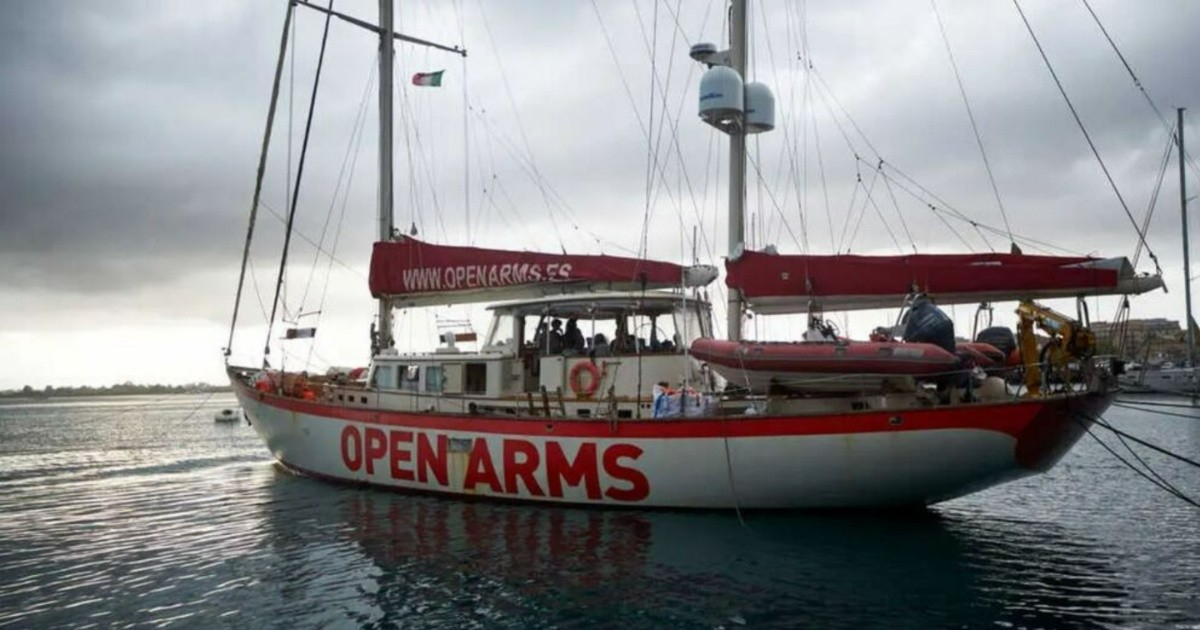
The sailing vessel Astral, operated by the NGO Open Arms, set sail this past Sunday from Barcelona's port, bound for Havana. It carries solar panels intended for the Juan Manuel Márquez Pediatric Hospital as part of a mission called "Rumbo a Cuba," which also includes medical supplies and food.
Open Arms and the Cooperative Ecooo Solar Revolution are spearheading the initiative, with explicit support from over 20 social and political organizations. These include Podemos, Izquierda Unida, Compromís, Comuns, Bildu, and Ecologistas en Acción. Notably, none of these groups have publicly addressed the fact that Cuba holds 1,250 political prisoners—a historic high according to Prisoners Defenders as of March 2026—including 31 minors.
Óscar Camps, the director of Open Arms, defended the mission as a reciprocal gesture acknowledging the Cuban medical brigades, whom he praised as professionals partaking in a longstanding tradition of international solidarity, consistently present in demanding situations beyond media attention.
Camps stated that “the time has come to reciprocate” by offering a fraction of that solidarity wherever it's possible, while making no mention of the island's political repression or the July 11 protesters still imprisoned.
The vessel plans to stop in Valencia on May 13, Málaga on May 19, Cádiz on May 22, and Las Palmas de Gran Canaria on May 28 before crossing the Atlantic. At each stop, cultural figures, public representatives, and influencers will board to "raise awareness" about the cause. The journey is expected to last about a month.
As of May 4, their fundraising campaign had raised 63,609 euros—64% of their 100,000-euro goal—from 1,031 donors.
Recent Aid Missions to Cuba
The "Rumbo a Cuba" flotilla is not an isolated effort. In March, the ship "Nuestra América"—dubbed "Granma 2.0"—arrived in Havana from Mexico with 14 tons of humanitarian aid and 73 solar panels, with Pablo Iglesias participating. President Díaz-Canel applauded this on social media, even as the nation faced power outages lasting up to 20 hours a day.
Iglesias downplayed Cuba's crisis from a luxury hotel in Havana, sparking protests from Cuban exiles outside Podemos’ headquarters in Madrid. On March 31, Cuban exiles gathered there, reading the sentences of July 11 political prisoners and accusing the Podemos leader of downplaying the political crisis.
Deep-Rooted Energy Issues in Cuba
The electrical collapse these aid missions aim to address is deeply rooted in decades of regime mismanagement, not the U.S. embargo. As of March 2026, 76% of Cuba's electricity generation relied on imported oil derivatives, with nine of the 16 thermoelectric units out of service, and restoring the system would require between 8 and 10 billion dollars.
The Cuban Observatory for Human Rights reported 366 repressive actions in April 2026 alone, and the regime's Easter pardon explicitly excluded political prisoners, opposition members, and July 11 protesters. Camps, however, expressed his hope to "personally deliver all photovoltaic materials to ensure, at the very least, that the intensive care unit at the hospital can serve neonates and vulnerable populations in need of healthcare."
Cuba's Humanitarian and Political Challenges
What is the purpose of the "Rumbo a Cuba" mission?
The mission aims to deliver solar panels, medical supplies, and food to the Juan Manuel Márquez Pediatric Hospital in Havana, as a gesture of solidarity and support for Cuba's healthcare system.
Why is Cuba facing an energy crisis?
Cuba's energy crisis stems from decades of inadequate management by the regime, with heavy reliance on imported oil and significant portions of its thermoelectric units out of service.
How have international organizations responded to Cuba's political climate?
While some international organizations focus on aid and solidarity, many avoid addressing Cuba's human rights issues, such as the high number of political prisoners and ongoing repression.