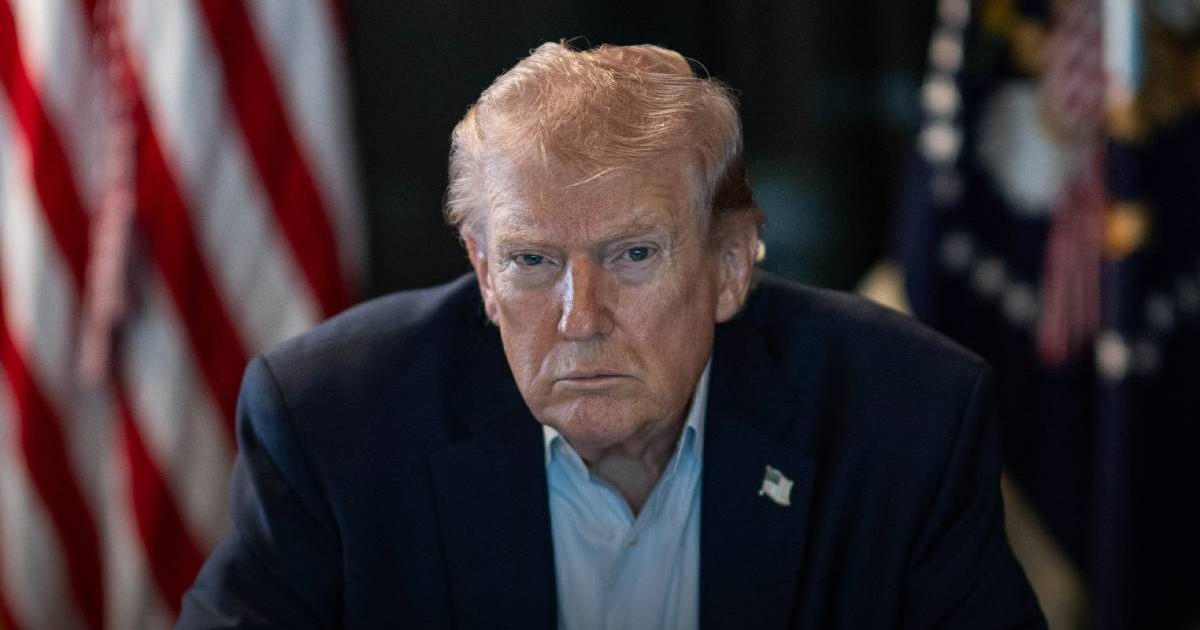
On Sunday, Donald Trump issued a stern warning to Iran via Truth Social, declaring that the country, which he claims has been "battering" the United States for 47 years, will no longer get away with it. This statement came just as Tehran confirmed its response to the latest U.S. peace proposal.
Trump wrote, "For 47 years, Iranians have been 'battering' us, making us wait, killing our people with roadside bombs, crushing protests, and recently annihilating 42,000 innocent, unarmed protesters, laughing at our newly great country."
The Republican leader concluded, "They won't be laughing anymore!"
In the same message, Trump criticized former Democratic President Barack Obama, accusing him of giving Iran a "new lease on life" through financial means—referring to the 2015 nuclear deal and unfrozen assets—and also took aim at his predecessor Joe Biden's policies.
Recently, the TV program Full Measure aired a pre-recorded interview with Trump, where he claimed Iran has been "defeated" militarily but clarified, "that doesn't mean they're finished."
"We could go on for another two weeks and achieve each and every one of our objectives. We've probably met 70% of our goals, but there are other targets we could hit," Trump told journalist Sharyl Attkisson.
Trump also warned that Washington will "eventually" seize Iran's enriched uranium reserves, stating, "If anyone comes near the site, we'll know it and blow them up."
The remarks coincided with Pakistan's confirmation of receiving Iran's official response to the U.S. proposal. Pakistani Prime Minister Shehbaz Sharif announced during a speech in Islamabad, "The field marshal just told me Iran's response has been received. I can't disclose further details."
Iran's response, relayed through Pakistan as a mediator, suggests focusing the initial phase of negotiations on ending regional conflict, without providing further specifics. Sharif withheld the document's content "due to diplomatic security reasons."
Negotiations are unfolding amid heightened tensions. On Sunday, Kuwait reported hostile drones in its airspace, the United Arab Emirates intercepted two drones allegedly launched from Iran, and Qatar reported an attack on a commercial cargo vessel in its territorial waters, marking the first escalation since the ceasefire began on April 8.
The conflict erupted on February 28, 2026, with Operation Epic Fury, a joint U.S.-Israel attack that destroyed Iranian nuclear facilities and eliminated Supreme Leader Ali Khamenei. Iran retaliated by closing the Strait of Hormuz, causing Brent crude prices to soar from $67 to over $126 per barrel.
After 39 days of war, both sides agreed to a ceasefire mediated by Pakistan. Direct negotiations in Islamabad failed after 21 hours without an agreement, and indirect exchanges have continued since. Iran proposed a 14-point peace plan in late April, calling for an end to the war, withdrawal of U.S. forces, and $270 billion in reparations.
Last Tuesday, Trump issued a prior warning to Iran, threatening "much greater" bombings if Tehran rejected the deal. On Sunday, Iranian President Masud Pezeshkian responded that "Iran will never bow to the enemy" and that "negotiations do not mean surrender or retreat."
Iran's enriched uranium remains a major sticking point: Iran insists on its right to enrich it, while the U.S. demands guarantees on its control and final destination.
Key Issues in U.S.-Iran Relations
What was Iran's response to the U.S. peace proposal?
Iran's response, communicated through Pakistan, suggested focusing the first phase of negotiations on ending regional conflict without providing further details.
What are the main points of contention between the U.S. and Iran?
The primary issues include Iran's right to enrich uranium and the U.S.'s insistence on guarantees regarding its control and final use.
How has the conflict between the U.S. and Iran affected global oil prices?
The conflict led to a spike in Brent crude prices from $67 to over $126 per barrel after Iran closed the Strait of Hormuz in retaliation against U.S. actions.