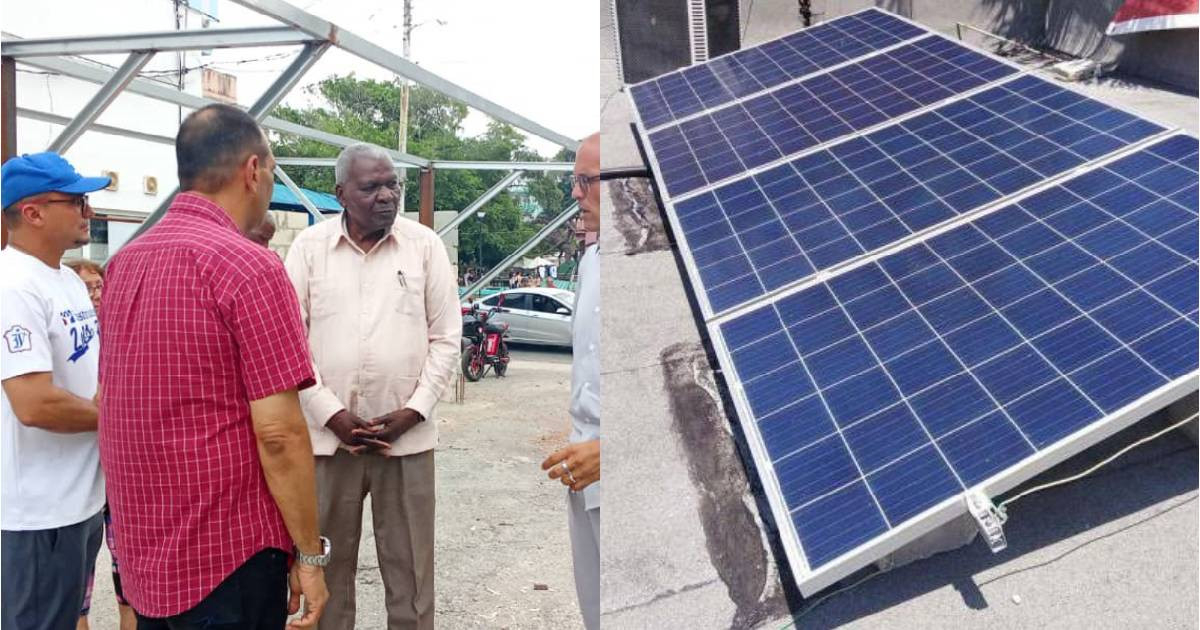
In the bustling district of Plaza de la Revolución in Havana, a new solar charging station, colloquially termed a "solinera," is set to open soon. This innovative facility will be strategically located at the intersection of 23rd Avenue and J Street, directly across from El Quijote Park in Vedado, as reported by Canal Habana on Facebook this past Saturday.
The station is currently undergoing preparations and has already been visited by prominent government officials, including Esteban Lazo Hernández, President of the National Assembly of People's Power; Liván Izquierdo Alonso, the first secretary of the Communist Party's Provincial Committee in Havana; and Governor Yanet Hernández Pérez.
Enhancing Urban Cleanup Efforts
According to the report, the station is designed to service at least 30 electric tricycles used for collecting solid waste in 14 constituencies within the Rampa Popular Council. This initiative aims to bolster cleaning and hygiene efforts in the Vedado area.
These vehicles will be able to recharge their batteries using solar panels installed at the station, enabling them to make multiple trips throughout the workday. Additionally, the solinera will offer charging services to the general public and nearby local businesses, the source elaborated.
A Response to the Energy Crisis
The push for this project comes amid a critical situation, as only 44 out of 106 garbage trucks were operational in Havana as of February 2026. This shortage necessitated the redeployment of 72 electric cargo tricycles to substitute for them in waste collection tasks.
The 23rd and J solinera is part of a growing trend across the island, serving as a decentralized solution to the collapse of the National Electric System (SEN).
Origin and Expansion of "Solineras"
The term "solinera" merges "solar" and "gas station," highlighting the severity of Cuba's energy crisis. The country's first solinera debuted on April 5 in the Virginia neighborhood of Santa Clara, managed by the Gomate Local Development Project. It features 56 solar panels, providing 30 kW of photovoltaic power and 60 kW of battery storage, and was impressively constructed in just nine days.
In early May, officials in Matanzas announced plans to establish nine solineras in various locations across the province, allowing residents to charge devices and even cook.
The Larger Energy Picture
The energy crisis driving these solutions has intensified since January 2026, following Venezuela's suspension of crude shipments and Mexico's cessation of oil exports. The SEN has suffered eight total collapses in just 18 months, with blackouts exceeding 24 consecutive hours in several provinces.
Cuba requires between 90,000 and 110,000 barrels of crude oil daily, yet domestic production only reaches about 40,000—an imbalance no single solinera can rectify.
As one Santa Clara resident remarked after the opening of the first station, the need to charge phones or cook outside the home is both real and pressing. "It's an important step, but much remains to solve the energy problem in the neighborhood. Hopefully, this is the start of more projects like this, as the need is great and the blackouts remain quite bothersome," he expressed.
Understanding Havana's Solar Charging Stations
What is a "solinera"?
A "solinera" is a solar charging station for electric vehicles and devices, combining the words "solar" and "gas station." It reflects Cuba's response to its ongoing energy crisis.
Where will the new solinera be located in Havana?
The upcoming solinera in Havana will be situated at the intersection of 23rd Avenue and J Street, across from El Quijote Park in the Vedado district.
What prompted the development of solineras in Cuba?
The creation of solineras is largely driven by Cuba's severe energy crisis, exacerbated by the suspension of oil shipments from Venezuela and Mexico's halt on oil exports.