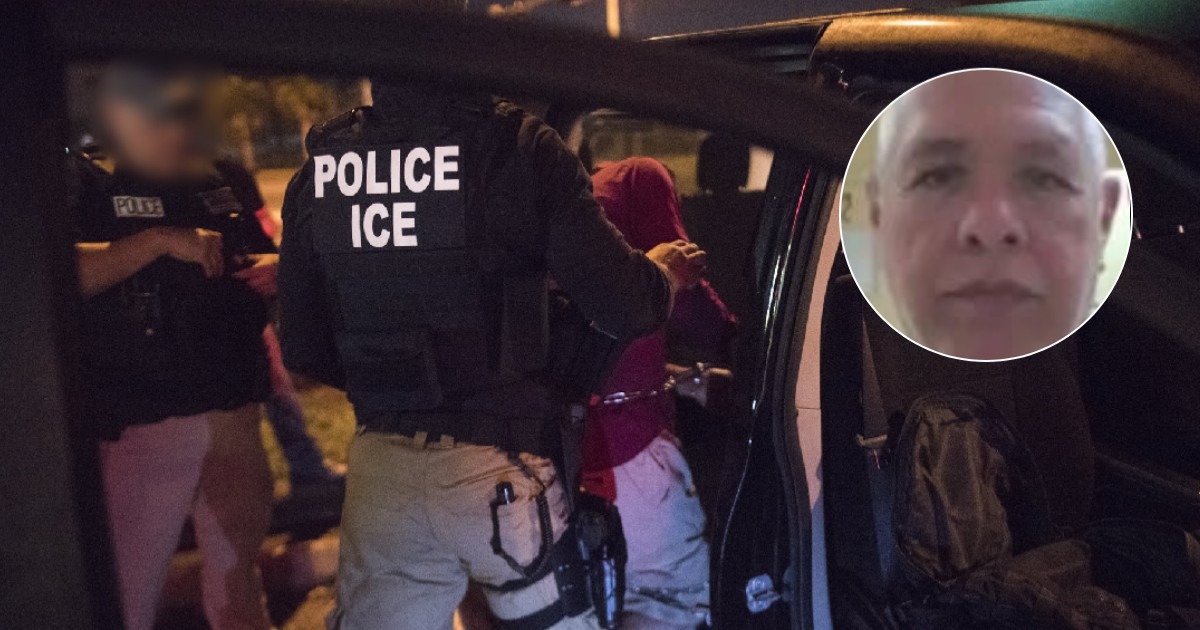
This week, U.S. Immigration and Customs Enforcement (ICE) agents detained Pedro Fernández, an undocumented Cuban national previously convicted of cocaine trafficking in Hialeah, Florida.
Fernández's arrest was part of a broader ICE operation conducted on May 7, which targeted undocumented immigrants with serious criminal convictions. These offenses included sexual abuse of minors, assault on a pregnant woman, and conspiracy to distribute methamphetamine, as reported by the Department of Homeland Security (DHS) in a statement released Friday.
Acting DHS Undersecretary Lauren Bis emphasized that ICE will persist with its operations. "Under President [Donald] Trump and Secretary [Markwayne] Mullin, ICE will continue to apprehend and deport undocumented criminal immigrants who should never have been in our country. If you enter illegally and violate our laws, we will find you, arrest you, and ensure you never return," she stated firmly.
The authorities did not disclose specifics about Fernández's arrest, which adds to the increasing number of detentions involving Cuban nationals with criminal records in the U.S., a trend that has sharply risen since 2026.
Surge in Cuban Arrests by ICE
ICE detentions of Cubans surged by 463% between October 2024 and January 2026, according to a Cato Institute report based on official data from the federal agency and the U.S. Citizenship and Immigration Services (USCIS).
In recent months, ICE apprehended a Cuban with a final deportation order and convictions for multiple thefts and drug-related offenses, as well as another individual for sexual abuse of minors, both in New Jersey. In Pennsylvania, another Cuban national was arrested for aggravated assault with a deadly weapon.
The DHS categorizes these arrests under the "worst of the worst" label, a term the Trump administration uses to describe undocumented immigrants with serious criminal convictions, regularly publishing such cases to justify their deportation operations.
The Impact of ICE Operations in Florida
Between January 21, 2025, and January 31, 2026, ICE conducted approximately 392,619 arrests of undocumented immigrants nationwide, with less than 14% having convictions or charges for violent crimes, according to an internal DHS document obtained by CBS News.
Florida ranks among the states with the highest number of detainees, with 5,281 individuals in custody as of April 2026, amid operations resulting in the detention of numerous undocumented immigrants across various state locations.
Hialeah's Drug Trafficking History
Hialeah, where Cuban Pedro Fernández was convicted, boasts the largest concentration of Cubans and Cuban-Americans in the U.S., with 84.1% of its 223,109 residents being of Cuban descent, as per the 2020 Census.
The city has a long-standing history with drug trafficking. Recently, a Cuban resident there pleaded guilty in federal court to possessing over 100 kilograms of marijuana and five firearms to facilitate drug trafficking.
Meanwhile, in February, a multi-agency operation led to 14 arrests at a popular bar-café in western Hialeah. Authorities claimed it served as a front for a wide-ranging criminal network involved in the illegal sale of alcohol, drugs, and underground gambling. In past years, authorities dismantled a gang engaged in cocaine trafficking and money laundering in the city.
Frequently Asked Questions about ICE Operations and Cuban Detentions
What triggered the increase in ICE arrests of Cubans?
The surge in ICE arrests of Cubans is linked to a broader crackdown on undocumented immigrants with criminal records, which has been intensifying since 2026.
How does the DHS categorize these arrests?
The DHS categorizes these arrests under the "worst of the worst" label, referring to undocumented immigrants with serious criminal convictions.
What is the significance of Hialeah in this context?
Hialeah is significant as it has the highest concentration of Cubans and Cuban-Americans in the U.S. and a notable history of drug trafficking activities.