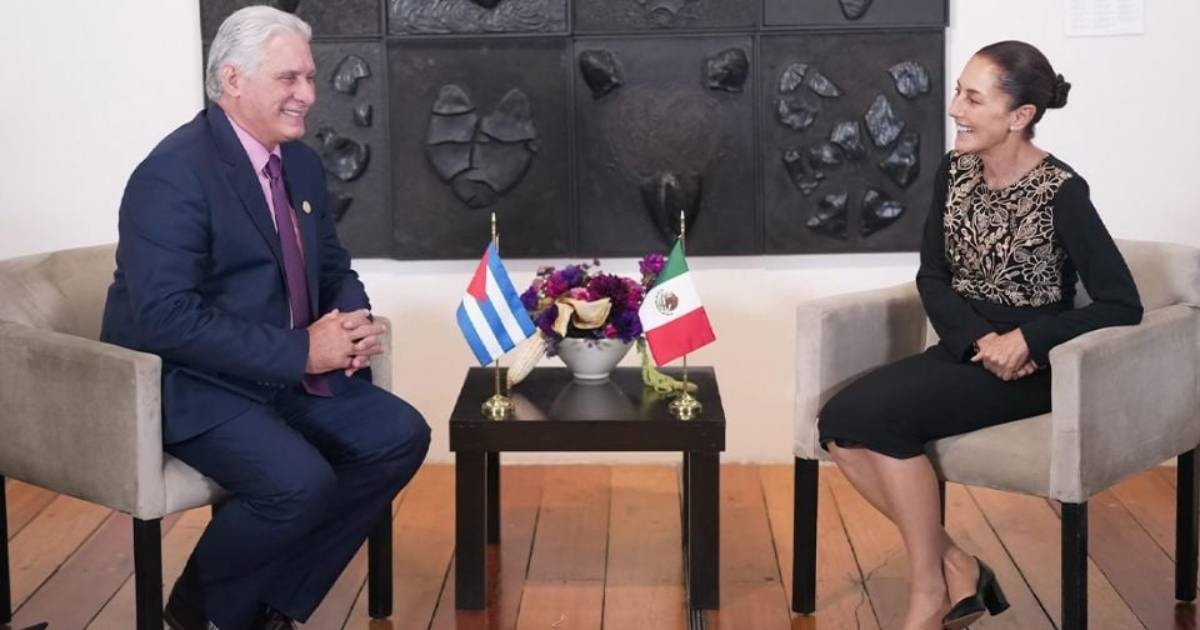
An official document from Mexico's Ministry of Foreign Affairs has unveiled that the Mexican Agency for International Development Cooperation (AMEXCID) has sanctioned 588 million pesos—exceeding $34 million—to fund the second phase of the "Sembrando Vida" initiative in Cuba. This finding was made public by the media outlet Información Privilegiada and widely shared on Saturday.
Dated March 31, 2026, document ECI/0472/2026 formalizes a "Resource Donation Contract" between Bancomext, the Ministry of Foreign Affairs, AMEXCID, and Banco del Bienestar. The contract aims to support the "Second Phase of Sembrando Vida in the Republic of Cuba."
According to the document, the approval was granted on February 25, 2026, during the First Extraordinary Session of the Technical Committee of the Trust Fund.
The same document authorizes additional payments to Dragon Charge, S.A. de C.V., totaling 1,479,600 pesos, to be deposited in a Banorte account. These payments correspond to two invoices.
The investigation suggests that Dragon Charge might be linked to operations involving the Chinese brand BYD, a manufacturer of electric vehicles active in Mexico and Latin America.
This association with Chinese capital has sparked concerns about potential circumvention of the economic sanctions that Washington has imposed on Cuba, especially amid the Trump administration's intensified pressure.
Guacamaya Leaks, a social media account on platform X, leaked the document, labeling it as "a 588 million peso gift to Cuba, disguised as the Sembrando Vida resource diversion," and accused the Ministry of Foreign Affairs and President Claudia Sheinbaum of "giving away Mexican heritage."
This revelation comes at a time of escalating tensions between the United States and Cuba. Starting in January, the Trump administration has increased pressure on Havana with oil restrictions, and on May 1, it signed a third executive order expanding sanctions on Cuba's energy, defense, mining, and financial sectors.
Although Mexico halted its crude shipments to Cuba in January—which accounted for 44% of Cuba's imports—the Sheinbaum administration has continued and expanded humanitarian support to the island, sending at least five ships with over 3,100 tons of aid since February 2026.
The Mexican leader has consistently stated that her country is "a free and sovereign nation" and will persist in delivering humanitarian aid to Cuba despite Washington's warnings. Meanwhile, Díaz-Canel has responded to Trump's threats by asserting that he will not allow U.S. intervention in the island.
The disclosure of this funding has reignited criticism within Mexico over allocating public resources to international programs while domestic issues like insecurity, medication shortages, and inadequate infrastructure remain unresolved. This has fueled an ongoing debate about Sheinbaum's foreign policy toward Cuba.
The document bears the signatures of José Martín Rivera, Administrative Director of AMEXCID, and Flavio Alejandro Martínez Castañeda, General Director of Special Projects and International Cooperation Funds at the same agency, confirming the official nature of the leaked document.
Frequently Asked Questions about Mexico's Funding to Cuba
What is the purpose of the funds Mexico is sending to Cuba?
The funds are intended to support the second phase of the "Sembrando Vida" program in Cuba, as part of a formal agreement between Mexican financial and foreign affairs entities.
Why is there concern over the involvement of Dragon Charge, S.A. de C.V.?
Dragon Charge's connection to Chinese capital, specifically the electric vehicle manufacturer BYD, raises concerns about potentially circumventing U.S. economic sanctions on Cuba.
How has the Mexican government responded to criticism about funding Cuba?
Despite criticism, the Mexican government, led by President Claudia Sheinbaum, insists on its commitment to humanitarian aid to Cuba, citing Mexico's sovereignty as a basis for its actions.