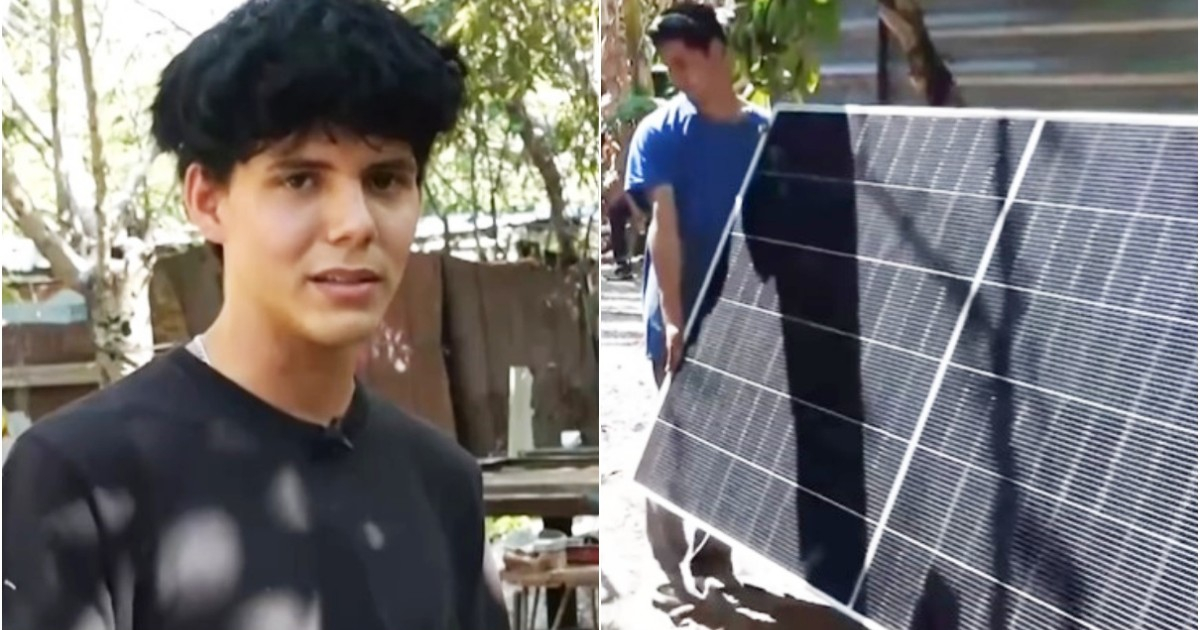
At just 21 years old, Yadán Pablo Espinosa from Havana has launched a home-based workshop in the Arroyo Naranjo municipality, where he fits solar panels onto electric tricycles. This innovative solution has already been applied to over 15 vehicles, providing a lifeline for numerous Cuban workers amidst the island's severe energy crisis.
This project, initiated just weeks ago, operates without any state funding, subsidies, or formal technical training. Espinosa collaborates with his father, three brothers, and a friend to craft iron mounts that hold the panels while also offering protective cover for drivers, as he explained in an interview with EFE.
How Does the Solar System Work?
The solar panels, with a capacity ranging from 550 to 650 watts, can generate nearly 2,600 watts during peak sunlight hours, depending on the model. Espinosa describes their function to EFE: "Our setup allows the panel to provide a steady flow of energy directly to the tricycle's motor while in motion, aided by the battery. Once stopped, the energy from the panel charges the battery."
The inspiration for this came from a simple question, according to Espinosa: "I wondered, how much autonomy should a tricycle have? With a panel, autonomy increases significantly since it provides about five peak hours of sunlight, roughly 2,600 watts depending on the panel type. The tricycle's motor consumes more watts, but the panel supplies a consistent energy source directly to the motor during movement."
The Impact on Cuban Workers
For those who rely on tricycles to make a living, the addition of a solar panel can mean the difference between maintaining or losing their monthly income. Joanis Castro, a client involved in goods transport, shared her experience with EFE: "When asked about installing a solar panel roof, I told my husband, yes, yes, when we have more tricycles, we'll install solar panels on them too."
Orlando Muñoz, a 62-year-old passenger transporter at the bustling intersection of Havana's 100 and Boyeros avenues, also appreciates the system: "It helps me keep the battery alive and extends its charge while I work," he told EFE. Similarly, Yoandis Castro, 47, who transports goods to markets, plans to expand his fleet of solar-equipped electric tricycles through Espinosa's initiative.
A Crisis Fueling Grassroots Ingenuity
Since January 2026, Cuba has faced its worst energy crisis in decades, with blackouts exceeding 20 hours daily in some provinces, alongside gas stations ceasing fuel sales. The island's oil needs hover around 100,000 barrels a day, yet domestic production barely reaches 40,000, according to EFE.
The sole external relief came on March 31 from the Russian tanker Anatoli Kolodkin, delivering approximately 100,000 tons of crude, enough for just 15 days. The previous foreign tanker had docked on January 9.
The Díaz-Canel regime promoted electric tricycles as an alternative to gas-powered transportation, only to create a new paradox: the national grid also fails to reliably recharge batteries. On March 18, Transport Minister Eduardo Rodríguez even suggested that dialysis patients use taxis or electric tricycles for transportation.
A Workshop with a Waiting List, Not Support
Espinosa's venture operates without institutional backing, relying solely on word of mouth among transporters. Each time a solar-equipped tricycle is seen, neighbors inquire about its installer. Other Cuban entrepreneurs charge up to $800 for solar panel installations on tricycles, including materials, placing Espinosa's effort in a burgeoning market with high demand.
In February, the government passed Resolution 41/2026 by the Ministry of Finance, granting up to eight years of tax exemptions for private investments in renewable energy and customs exemptions for importing solar panels. However, access to these materials remains scarce on the island.
While the regime struggles to address the structural crisis decades of communist dictatorship have fostered, Cubans turn to solar solutions to survive. A 21-year-old, armed with handmade iron mounts and photovoltaic panels, is achieving what official measures have not—keeping his community's livelihoods in motion.
The Role of Solar Power in Cuban Transport Solutions
How are solar panels benefiting Cuban tricycle users?
Solar panels provide a consistent energy source that powers tricycle motors directly while in motion and recharges the battery when stationary, offering significant autonomy and reducing dependence on the unreliable national grid.
What challenges do Cuban entrepreneurs face in implementing solar solutions?
Cuban entrepreneurs like Espinosa face limited access to materials, lack of state support, and a challenging economic environment, yet they rely on ingenuity and community demand to drive their initiatives forward.