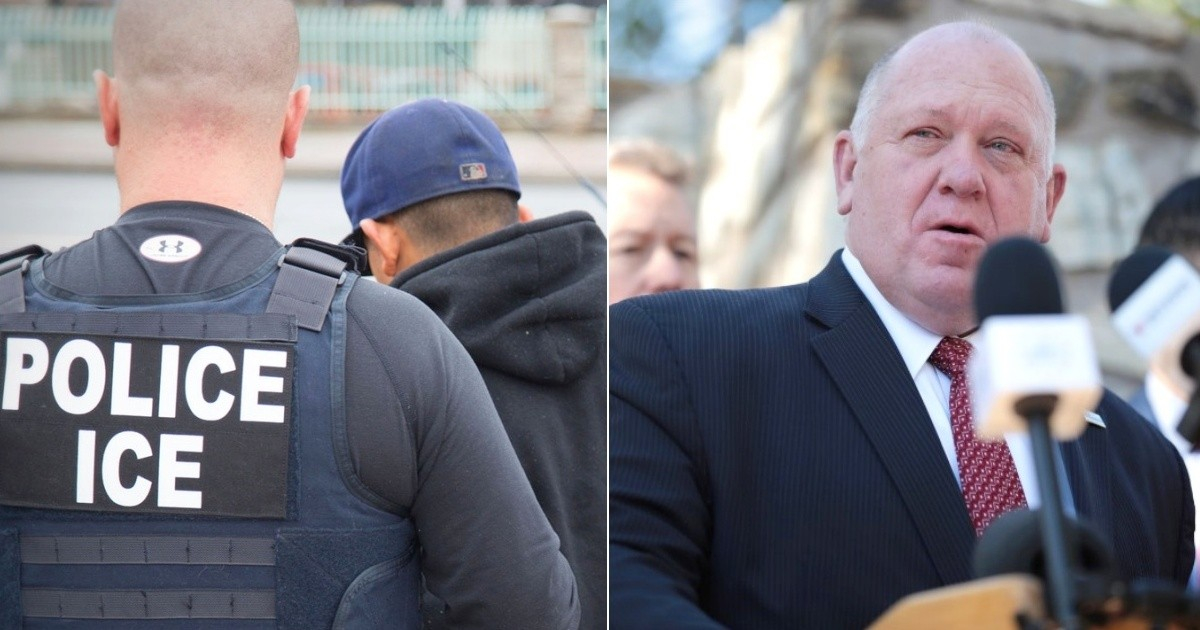
White House Border Chief, Tom Homan, offered a succinct response on Thursday when asked how many more deportations are necessary to reestablish the United States as a nation of lawful citizens: "millions."
During a conversation with Will Cain on Fox News, Homan firmly dismissed claims suggesting the Trump administration was easing its stance on immigration enforcement. He emphasized that deportation figures are expected to rise as border crossings decline.
"Look... I see this all the time, there are 12 million undocumented immigrants in the country; we used that number 25 years ago. I believe it's well over 20 million now. So, we're going to do everything we can to apprehend as many people as possible," Homan stated.
Logistical Challenges and Determined Responses
When questioned about the logistical feasibility of operations on such a large scale, Homan replied with resolve: "I'll try with all my might."
His remarks came just two days after he announced plans for mass deportations in Phoenix, Arizona, during the Border Security Expo. At the event, he declared, "Mass deportations are on the horizon. This is going to be a good year."
Homan also addressed critics from the hardline MAGA faction who argue that current deportation efforts fall short. He labeled them "keyboard warriors" and cautioned, "For those saying President Trump is easing up on mass deportations, they have no clue what they're talking about. They haven't seen anything yet."
ICE Presence and State Resistance
Homan threatened to "flood the zone" with Immigration and Customs Enforcement (ICE) agents in states that refuse to cooperate with the federal government. "What's going to happen with places like New York where people pass this ridiculous legislation to not cooperate with us? We're going to flood the zone. You'll see more ICE agents than ever," he warned.
New York Governor Kathy Hochul responded by reminding that Trump himself promised not to send agents en masse to her state without her request: "I'm not asking for it."
Controversial Detentions and Operational Expansion
Simultaneously, Homan acknowledged outside the White House that ICE has detained U.S. citizens during operations, though he clarified they are not deported. "Have U.S. citizens been briefly detained on suspicion? I'm sure. But we do not deport U.S. citizens," he asserted.
This admission occurs amid growing controversy. In March, Representative Pramila Jayapal presented four citizens to the House Judiciary Committee who recounted being detained by ICE without charges. According to a University of California, Berkeley analysis, street detentions surged by 1,000% during the first year of Trump's second term.
To boost operational capacity, the administration is hiring 10,000 new immigration enforcement agents, with roughly 7,000 already active and 3,000 in training, instructed to focus the "vast majority" in sanctuary cities. Additionally, the government purchased 11 warehouses nationwide to expand detention capacity to 100,000 spaces, investing $45 billion.
The Cuban community has been particularly affected: ICE detentions of Cubans increased by 463% from late 2024 to late 2025, with lawyers warning of implications for Cuban migrants as operations intensify. At least 530 Cubans have been repatriated on direct flights to Havana so far in 2026.
The MAGA movement introduced a 21-point plan in March demanding the deportation of at least one million people annually, a target the Trump administration aims to achieve in the current and upcoming fiscal years.
Understanding the Impact of Immigration Enforcement
What is Tom Homan's stance on immigration enforcement?
Tom Homan advocates for aggressive immigration enforcement, emphasizing the need for millions of deportations to restore the U.S. as a nation of legal citizens.
How has the Cuban community been affected by recent immigration policies?
The Cuban community has experienced a significant increase in ICE detentions, with a 463% rise between late 2024 and late 2025, and over 530 Cubans repatriated to Havana in 2026.
What actions are being taken to expand ICE's operational capacity?
The administration is hiring 10,000 new enforcement agents, with plans to focus on sanctuary cities, and has invested in expanding detention capacity to accommodate 100,000 individuals.