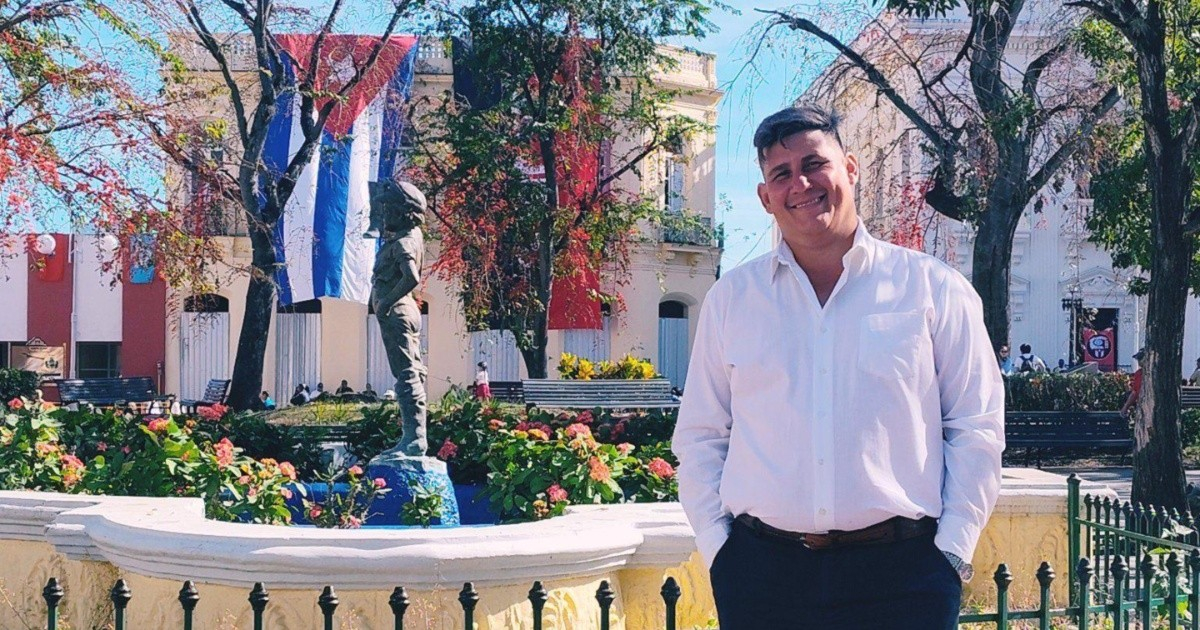
On Saturday, Henry Omar Perez, a journalist affiliated with the state-run Cuban News Agency (ACN) in Villa Clara, took to Facebook, sharing an image with a bold red background and white text declaring, "I am Cuban and I oppose a military intervention in Cuba." This post ignited a storm of reactions, highlighting the significant divide among Cubans both on the island and abroad.
The post garnered over 1,092 reactions, 508 comments, and 15 shares, becoming a digital battleground where many users swiftly questioned the journalist's credibility and the consistency of his message.
Perez himself commented, criticizing those calling for intervention: "I find it interesting that everyone asking for military intervention in Cuba lives outside the island with their families. It's shameless to demand bombs for a country while watching from afar in air-conditioned comfort."
Responses from users were strong. Several directly questioned where Perez's own children reside, suggesting he might live outside Cuba himself.
One commenter labeled him a "snitch," while another bluntly stated, "As a Cuban journalist tied to the regime, you have to post what you're told."
The most compelling counter to Perez's argument came from Cubans claiming to live on the island who also support intervention.
One such individual wrote, "I live in Cuba and believe a military intervention is the only way to free us from the communism that has brought nothing but hunger, misery, and destruction to this island. Cuba is in ruins without bombs, and its leaders watch from their air-conditioned offices."
Others pointed out the political contradictions in Perez’s stance. "You oppose the same thing Raúl Castro opposes," one critic noted.
Another was more succinct: "Better say, 'I'm a communist and oppose intervention.'" A third posed an unanswered question: "Would you dare to oppose the PCC's perpetuity in power, or condemn sentencing a young mother to 15 years for posting a video online while a murderer gets eight years and is out in five?"
Some, while not advocating for intervention, firmly rejected the journalist's stance.
"I'm Cuban and don't want military intervention in my country, but I do want radical change for a people who can no longer endure, as things are worsening," one user wrote. Another captured the sentiment of many with a single phrase: "But we're already dead, what are you talking about?"
One comment reflected the oppressive atmosphere in Cuba: "I don't want war but I want better; I don't comment because they’ll imprison me."
Perez's profile as a government-aligned journalist is well-documented: in November 2025, he labeled the independent outlet El Toque as "terrorist" and insulted its director. In April 2026, he posted his ballot marked for Díaz-Canel, stating, "I voted for Miguel Díaz-Canel Bermúdez and would do it again."
This publication comes at a time of heightened tension between Cuba and the United States.
President Donald Trump has threatened to deploy the USS Abraham Lincoln aircraft carrier near Cuban shores, claiming the U.S. could "take Cuba almost immediately" and hasn't ruled out using the same strategy that led to Nicolás Maduro's capture.
Cuban Foreign Minister Bruno Rodríguez warned of a potential "bloodbath" if military action were taken, while the Pentagon and the Speaker of the U.S. House of Representatives dismissed the likelihood of an imminent intervention.
One user summed up the essence of the debate with irony: "Cuba has been militarily intervened for 67 years."
Questions About Military Intervention in Cuba
Why are some Cubans supporting military intervention?
Some Cubans support military intervention as they believe it is the only way to end the communist regime that has resulted in widespread poverty and destruction across the island.
What are the potential consequences of a military intervention in Cuba?
A military intervention could lead to significant violence and instability, possibly resulting in a "bloodbath," as warned by Cuban Foreign Minister Bruno Rodríguez. It could also escalate tensions between Cuba and international powers like the United States.