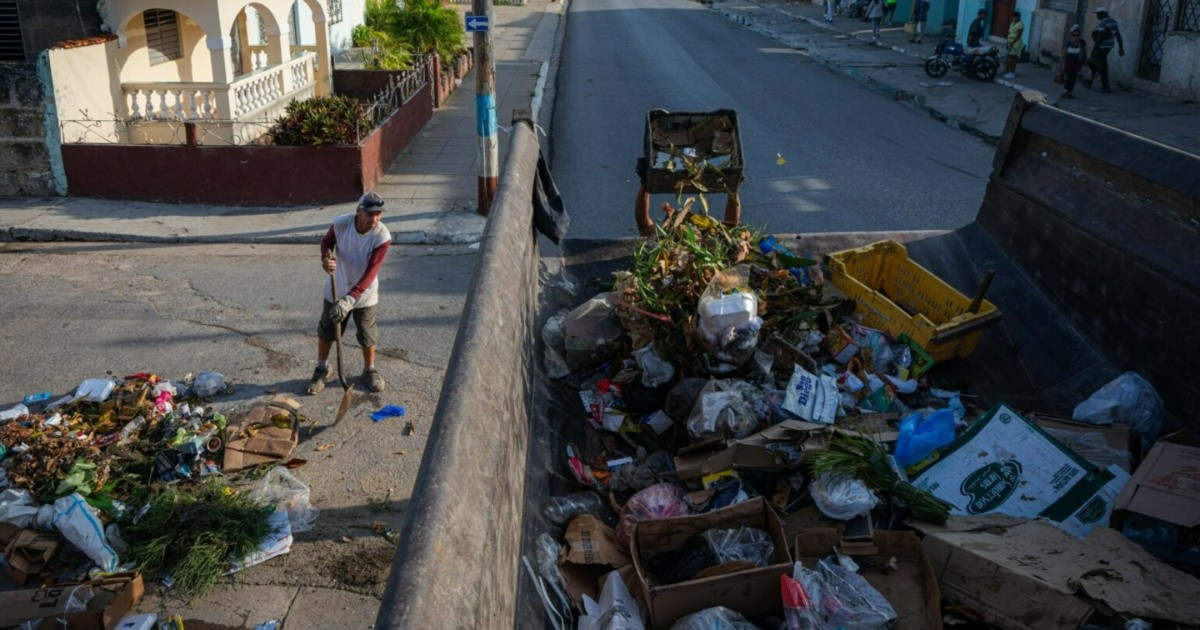
In Matanzas, overflowing dump sites are being set ablaze by arsonists, releasing toxic smoke that permeates homes. The local waste management company struggles to maintain even minimal garbage collection due to a severe fuel shortage. This grim scenario was detailed in an investigative report by the Periódico Girón, notable for its unusually candid tone for a state-run publication. The report describes the situation with stark imagery: "Like a putrid tumor on the sidewalk, the garbage overflows, taking over the street. Waste, bacteria, and stench run rampant. Vultures feast on the carrion buffet at ground level, showing no sense of urgency."
The authorities attribute the crisis to a lack of fuel, a direct consequence of the Cuban dictatorship's economic collapse after decades of mismanagement.
Michel León Rodríguez, the municipal mayor and leading authority on waste collection, disclosed that daily diesel allocations range from 300 to 550 liters, falling short of the ideal 112 liters per vehicle needed for two daily rounds.
Strained Resources and Personnel Shortages
Reynol Valdés García, director of the Municipal Waste Company, confirmed the operation of only about 11 trucks, compared to the 24 or 25 available when collaborating with the Ministry of Construction.
The situation is exacerbated by a staff shortage: out of roughly 1,400 workers, only about 930 are active, with over half of the street sweepers missing.
Neighborhoods at Breaking Point
Versalles, one of the hardest-hit neighborhoods, suffers from trash piling up at every corner and clogged drains worsened by rain. Ironically, the idea of using animal-driven carts is unfeasible here due to the steep hills.
Residents have been voicing their frustrations on social media for weeks. Jorge Jiménez posted on Facebook about the mounting trash heaps at Salamanca and Dos de Mayo, noting how delivery trucks can't park and flies infest goods inside the local market.
Liset Silverio highlighted a particularly galling inequality: "Some places haven't seen a collection in over a month, like the military district behind the terminal, while others get pickups every day or every few days."
Barbara Marilyn Rodríguez Castañeda echoed the sentiment with a devastating comparison: "During the Special Period, they collected trash with horse-drawn carts, and the streets were never like this."
Health Risks and Widespread Impact
The accumulation of trash is worsening a multi-faceted health crisis: over 300,000 residents lack consistent water supply, there are active hepatitis A alerts in several municipalities, and overflowing dumpsters have become breeding grounds for Aedes aegypti mosquitoes, fueling dengue and chikungunya outbreaks just as the rainy season begins.
This situation isn't unique to Matanzas. A fuel shortage had already left Havana drowning in garbage in January, with only 44 of 106 garbage trucks operational. By March, Prime Minister Manuel Marrero Cruz admitted defeat in the fight against waste accumulation in the capital, previously urging citizens to handle garbage collection as if the solution lay in public will rather than state failure.
In Matanzas, public outrage over the trash crisis peaked in April when a photo surfaced of an ad-hoc dump nearly blocking the intersection of Levante and Solís streets. A local resident described it bluntly: "It's disgusting and terrifying. Almost a month has passed without garbage collection. Rats and flies own the place. No one offers a solution."
Matanzas journalist Yirmara Torres Hernández summed up the situation this Saturday with a phrase that captures the collapse's extent: "Cuba has endured tough times, but never with so much chaos, so much neglect... so much trash."
Addressing the Waste Crisis in Matanzas
What is causing the garbage crisis in Matanzas?
The crisis is primarily due to a severe fuel shortage, which limits the operation of garbage collection vehicles. This shortage is tied to the broader economic collapse resulting from decades of mismanagement by the Cuban regime.
How are residents reacting to the garbage situation?
Residents are expressing their frustration and concern on social media, highlighting the health risks and daily inconveniences caused by the uncollected waste and the spread of disease.
What health issues are linked to the overflowing garbage in Matanzas?
The garbage buildup contributes to a sanitary emergency, with increased risks of hepatitis A, and it provides breeding grounds for mosquitoes that spread dengue and chikungunya.