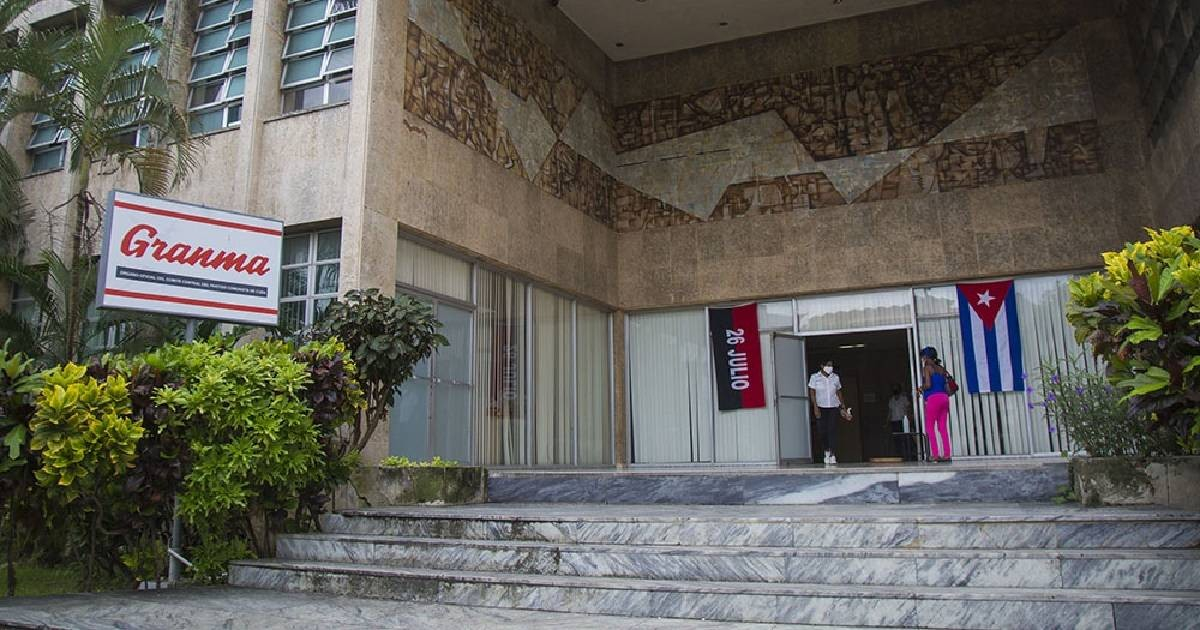
The Granma newspaper, the official publication of Cuba's Communist Party, released an editorial on Friday titled "No Forgiveness, No Forgetting," warning that Cuba will not absolve nor overlook those advocating for military intervention against the island.
The editorial specifically calls out Cuban-American officials from the Trump administration as the chief instigators of potential armed conflict. It names Congress members Mario Díaz-Balart, Carlos Giménez, and María Elvira Salazar, along with Secretary of State Marco Rubio and former official Mauricio Claver-Carone.
"They are the primary war promoters, those who fabricate lies to justify and unleash a war with unimaginable consequences," the editorial states.
The article accuses these individuals of concocting reasons to persuade President Donald Trump, the Pentagon, and the public that Cuba poses a threat to the United States, holding them accountable for any casualties resulting from a possible attack, including those of civilians, women, children, and the elderly.
The editorial also references the January 3, 2026, attack in Venezuela, where 32 Cuban soldiers and agents perished while guarding Nicolás Maduro. It rhetorically questions the "share of responsibility" that these war promoters bear for those deaths.
The remains of those soldiers were returned to Havana on January 15 with an official Communist Party ceremony.
Mounting Tensions and Military Threats
The editorial comes amid an unprecedented escalation of rhetoric and military threats. Trump has issued numerous public threats against Cuba in recent weeks: on March 16, he declared, "I think I'll have the honor of taking Cuba"; on March 27 in Miami Beach, he said, "Cuba is next, but pretend I didn't say that"; and on May 5, he again threatened to deploy the USS Abraham Lincoln aircraft carrier off the Cuban coast until the regime surrenders.
On May 2, Trump signed an executive order declaring Cuba an "unusual and extraordinary threat" to U.S. national security, to which Díaz-Canel responded by stating, "No aggressor will subdue Cuba."
Meanwhile, Rubio appeared before a map of Cuba during a key meeting at the Southern Command headquarters in Doral, Florida, under the slogan "Peace Through Strength!" He told Fox News in April that he anticipates "Cuba will fall soon."
This week, the United States deployed additional personnel to the Southern Command amid rising tensions, while Washington maintains all options on the table, not ruling out military action.
Cuban Foreign Minister Bruno Rodríguez warned on Friday that an attack on Cuba would result in a "bloodbath," echoing the tone of Granma's editorial, which concludes: "The statistics of the silent genocide of the blockade and economic war against Cuba will never account for all the human damage caused by a collective punishment now threatening to become a massive bloodbath."
Understanding the Rising Tensions Between the U.S. and Cuba
What prompted Granma's editorial warning?
Granma's editorial was prompted by heightened rhetoric and military threats from the U.S., particularly from officials in the Trump administration, advocating for military intervention in Cuba.
Who are the main figures accused of promoting conflict with Cuba?
The editorial accuses Cuban-American officials such as Mario Díaz-Balart, Carlos Giménez, María Elvira Salazar, Marco Rubio, and Mauricio Claver-Carone of being primary proponents of conflict with Cuba.
How has the U.S. escalated tensions with Cuba recently?
Recent escalations include public threats from Trump, an executive order declaring Cuba a security threat, and additional U.S. military deployment to the Southern Command, with all options on the table.