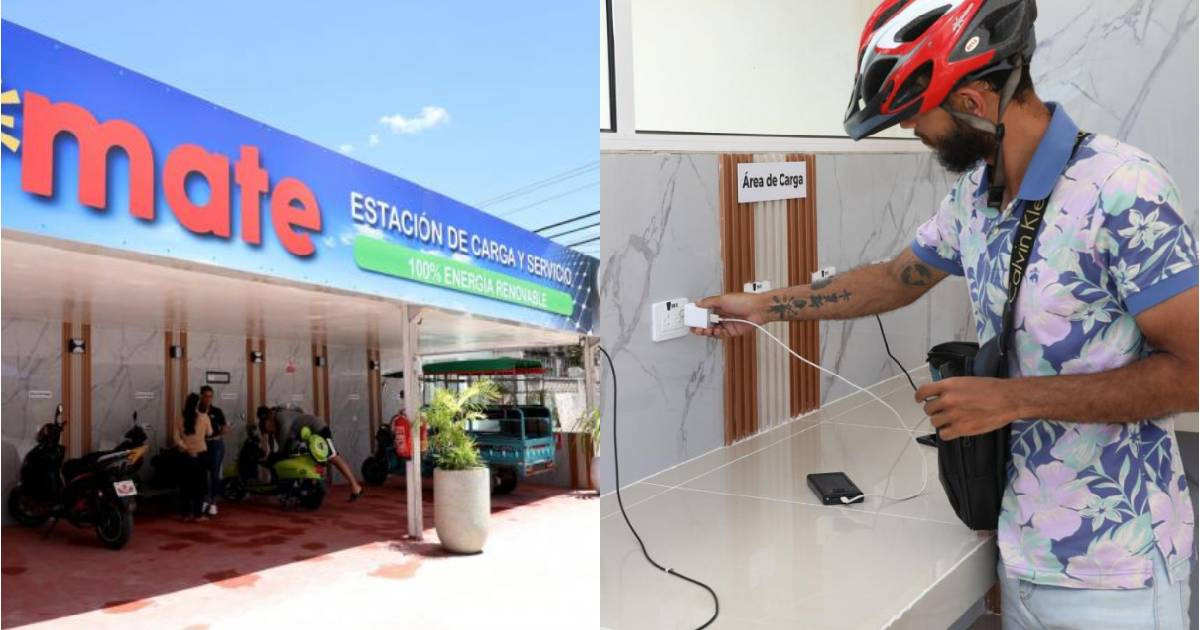
In the neighborhood of Virginia in Santa Clara, Villa Clara's inaugural solar-powered energy station—dubbed a "solinera"—has recently opened its doors. This facility allows local residents to cook, charge their phones, and recharge electric scooters for free amidst an ongoing energy crisis that subjects the province to blackouts lasting up to 20 hours each day.
Operated by the Local Development Project (PDL) Gomate Technical and Commercial Services, this station was officially launched on April 5 on Prolongación de Marta Abreu Street, nestled between Silverio and Circunvalación. It functions entirely independently of the National Electrical System, as highlighted in a report by the state-run newspaper Granma on Friday.
Equipped with 56 solar panels, the station boasts 30 kW of photovoltaic power and 60 kW of battery storage, ensuring complete autonomy even during hurricanes or extended emergencies.
Community Benefits and Operations
The facility can accommodate up to six electric vehicles at once and offers 26 double outlets, allowing up to 52 cooking devices to be plugged in simultaneously. Residents are encouraged to bring their own rice cookers, electric pots, or pressure cookers to prepare meals at no charge, while also having the option to charge mobile phones and lamps.
Although the cost for charging electric scooters and tricycles has yet to be determined, this fee aims to recoup the investment and sustain the operator's salary.
Alina Izquierdo García, a local resident caring for two young children and her 81-year-old father, shared her thoughts on the station's impact. "This has been a blessing for the community. Not having to deal with the smoke from burning charcoal indoors and being able to cook multiple dishes after work is invaluable," she remarked.
Addressing Energy Challenges
Julio Ernesto Gomate Morales, the 29-year-old director of PDL, commented on the project's rationale. "Most people today rely on wood or charcoal for cooking, costing 2,000 pesos per sack and depleting quickly. However, many families own a rice cooker or an electric pressure cooker, which they can bring here to solve their cooking needs," he explained.
In essence, "solineras" are energy service stations powered by solar panels, operating independently from the National Electrical System (SEN). The term combines "solar" and "gas station," emerging as a decentralized response to the collapse of the state-run electrical grid.
Constructed in just nine days, the Santa Clara facility operates daily from 8 a.m. to 5 p.m. The Virginia neighborhood is one of the most frequently disconnected circuits in Santa Clara, based on local testimonies gathered by the official newspaper.
Expanding the Network of Solineras
Roberto Fuentes, another neighborhood resident, noted that people from other areas also utilize the station. "Folks from the neighborhood come to cook and charge their devices, and even individuals from other places, like the José Martí area, come to benefit from this project," he stated.
The PDL Gomate has plans to install rapid and ultra-rapid charging equipment and build another solinera near kilometer 270 of the National Highway, which would extend services to additional communities.
This innovative model is spreading to other provinces as well. On May 3, Mario Sabines Lorenzo, the Communist Party's first secretary in Matanzas, announced the installation of nine solineras in that province to allow the public to charge devices and even cook.
The growing presence of these stations underscores the severity of Cuba's energy crisis. The National Electrical System has experienced eight total collapses in the last 18 months, with various regions suffering blackouts lasting up to 24 hours daily.
Understanding Cuba's Energy Innovation
What is a "solinera" in Cuba?
A "solinera" is a solar-powered energy station in Cuba designed to provide services such as cooking and charging electronic devices, independently of the National Electrical System.
Why are solineras important in Cuba?
Solineras are crucial due to Cuba's severe energy crisis, offering a decentralized solution to frequent blackouts and providing essential services to residents.
How do solineras help Cuban communities?
Solineras enable communities to cook, charge phones, and power electric vehicles, thus alleviating reliance on traditional energy sources and reducing the impact of energy shortages.
What future plans exist for solineras in Cuba?
Plans include expanding the network to other provinces, installing rapid charging equipment, and building additional stations to serve more communities.