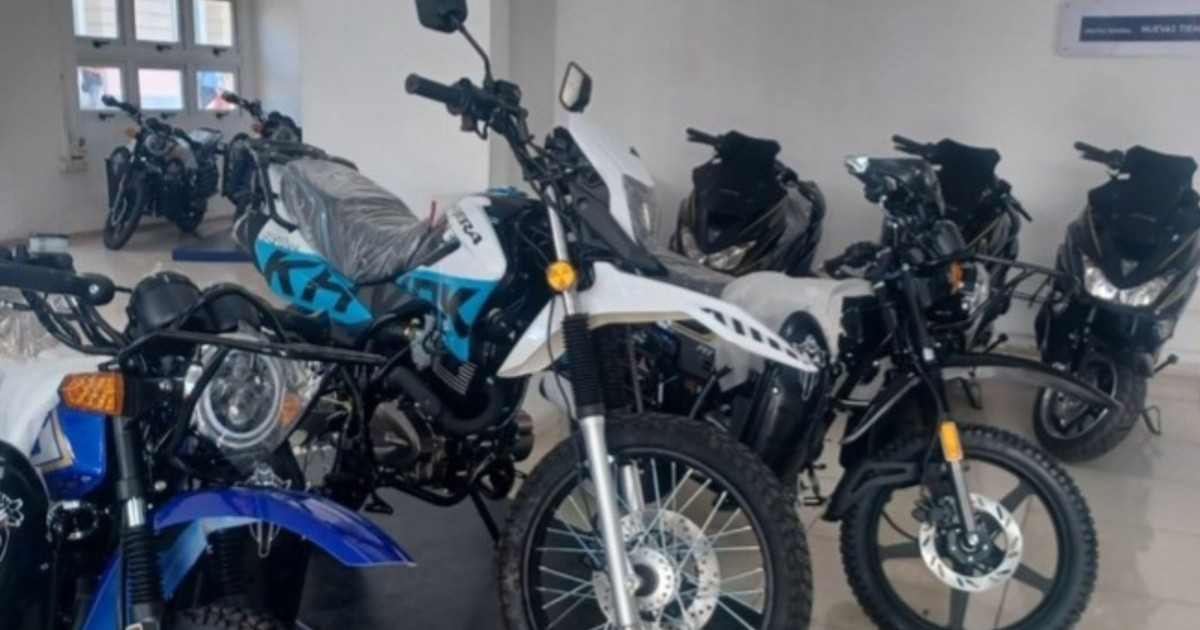
This week, CIMEX's branch in Cienfuegos unveiled a Mother's Day promotion on Facebook, offering combustion engine motorbikes at its Juraguá Store with prices ranging from $1,950 to $2,550, in a nation where the average monthly salary barely reaches $13 when converted at the informal rate.
The advertisement, which carries the slogan "Surprise Mom with a Gift That Gives Her Wings!", highlights three models: the Ava Deer 250cc priced at $2,550, the Nipponee 150cc at $2,010, and the Vera Khavak 175cc for $1,950. It encourages the gifting of "freedom and adventure" to Cuban mothers this May 10th.
Fuel Crisis Overshadows Promotions
The stark contrast is evident: As of 2026, Cuba is enduring its most severe fuel crisis in recent memory, having received no Venezuelan supplies since December 2025 nor Mexican ones since January 2026. At CUPET gas stations, wait times stretch from 15 to 24 hours.
In the informal market, a liter of gasoline has skyrocketed to 5,000 Cuban pesos, with the government admitting that the nation can only function at 50% of its energy capacity.
Public Backlash and Criticism
The promotion quickly sparked a flood of ironic and critical comments on social media. One user quipped, "Quite the surprise, but what about the gasoline? Just bring in electric bikes already."
Another user was blunt: "That's not a gift for a mother, it's a headache, a frustration when she can't buy gas because someone decided to price it in the enemy's currency, as you say, and limit CUPET stations to small private businesses."
Critics also targeted the steep prices. "Great idea, thanks. Now when I get paid in dollars, I'll be sure to go... wait for me," one user sarcastically remarked. Another added, "So affordable for the working people. I assume it comes with 100 liters of gasoline."
Economic Disparity and Government Policies
The sarcasm is grounded in reality: In 2025, the average monthly wage in Cuba was 6,930 Cuban pesos, roughly $13 at the informal exchange rate. The cheapest model in the promotion costs over 130 times that monthly wage.
The contradiction deepens as the Cuban government itself halted the import of internal combustion vehicles on February 19, 2026, favoring electric and hybrid models, while state entities like CIMEX continue to market gasoline-powered motorcycles.
CIMEX has faced criticism for similar promotions in the past. In March 2025, the corporation advertised Cuban-assembled Diana motorbikes at nearly $2,840, drawing similar backlash. Later that year, in September, a network of resellers charging between $200 and $500 for a spot in line to purchase motorbikes was dismantled in Cienfuegos.
Motorbike sales in Cuba are conducted exclusively in foreign currency at stores that do not accept Cuban pesos, making them virtually unattainable for the vast majority of salaried workers. "It's gasoline you need to ensure," one internet user succinctly summarized the sentiment shared by many Cubans regarding this campaign.
Challenges Facing Motorbike Ownership in Cuba
Why is the fuel crisis in Cuba particularly severe?
Cuba's fuel crisis is exacerbated by the cessation of Venezuelan and Mexican supplies since late 2025 and early 2026, respectively, resulting in extreme fuel shortages and long queues at gas stations.
How does the current economic situation affect the affordability of motorbikes in Cuba?
With an average monthly salary equivalent to around $13, the high cost of motorbikes, priced in foreign currency, makes them largely unaffordable for the average Cuban worker.
What has been the public reaction to CIMEX's motorbike promotions?
The public has reacted with irony and criticism, pointing out the impracticality and high cost of gasoline-fueled motorbikes amidst the ongoing fuel crisis and economic challenges.