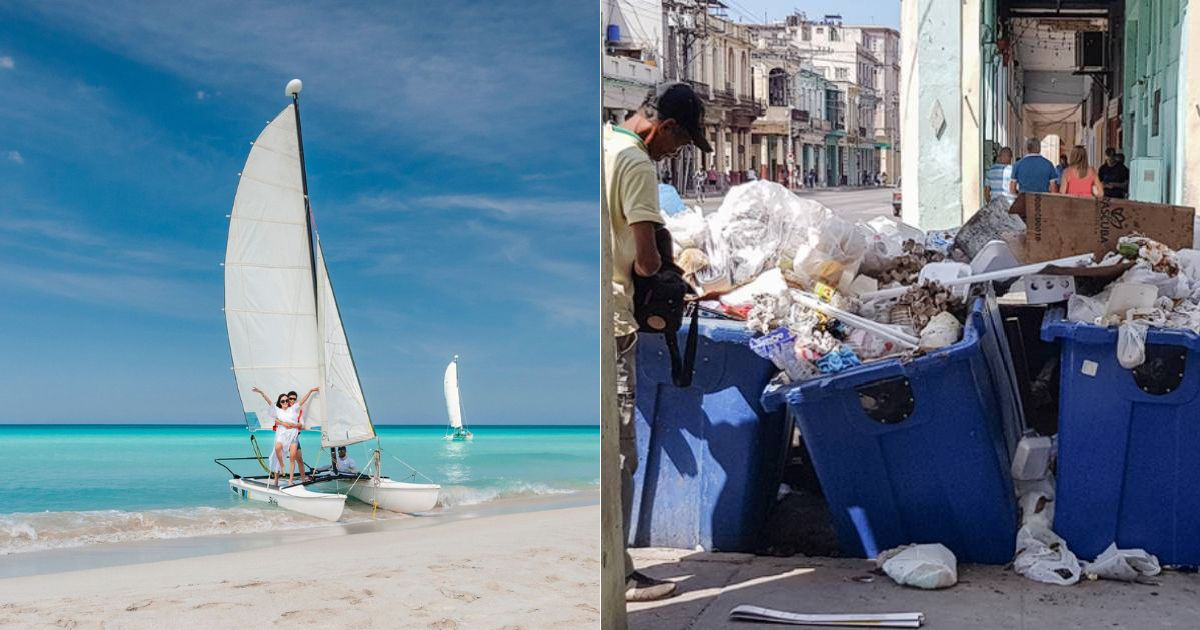
The official Cuban media is covering the last day of the 44th International Tourism Fair, FitCuba 2026, with the optimistic slogan "Cuba is more than just a sun and sand destination." However, this claim comes at a time when the country is experiencing its worst tourism decline in over two decades, with more than a third of its families facing hunger.
This year, the event was held primarily in a virtual format on May 7th and 8th, concluding today with an in-person gathering at Josone Park in Varadero—the same beach resort town that the fair focused on—featuring a grand awards ceremony for cocktail-making, culinary arts, and social communication, as reported by the Cuban News Agency (ACN). It is a celebration that seems fit for a thriving sector, if not for the stark contrast painted by the actual data.
A Digital Shift Amid Power Outages
While approximately 900 participants and exhibitors from Colombia, Spain, Argentina, Canada, and other countries attended, the turnout was significantly lower than previous years; for instance, more than 1,500 attended in 2025. The digital format was touted as an innovative approach, yet it primarily reflects the constraints of a nation grappling with power outages lasting up to 20 or 30 hours daily, with an electricity shortfall exceeding 1,900 MW. In Matanzas, the province where Varadero is located, power cuts can last up to 70 consecutive hours.
Official Statements vs. Ground Realities
The Minister of Tourism, Juan Carlos García Granda, closed the event on Friday with a motivational speech, stating, "Cuba has shown it is ready to welcome the world," and "FitCuba is not just an event; it stands as a symbol of resilience, innovation, and confidence in the future." Bold words considering that the island's hotel occupancy rate is a mere 21.5%, leaving more than eight out of ten rooms vacant.
Prime Minister Manuel Marrero Cruz opened the fair via a pre-recorded video, without any physical presence, and made the controversial claim that "each time a tourist visits Cuba, they are helping the Cuban people." What he failed to mention is that the revenue generated by the sector primarily flows through GAESA, the military enterprise conglomerate, rather than directly benefiting the Cuban people.
The Harsh Truth Behind the Official Narrative
Contrary to the official rhetoric, the reality is grim. The tourism collapse has left around 300,000 people linked to the sector without income, and Gaviota has closed 20 hotels in Cayo Santa María, leaving over 7,000 workers unemployed. In the first quarter of 2026, Cuba attracted only 298,057 international visitors, marking a 48% drop from the same period in 2025. March was particularly devastating, with just 35,561 tourists, a 79% decrease from the previous year.
Russian tourism plummeted to a mere 249 visitors in March 2026, down from 15,688 in January of the same year. Meanwhile, on the same day the official media celebrated the fair, a video circulated on social media showing Havana's Grand Aston Hotel eerily empty, without a single tourist in sight.
Tourism Offerings Amid Economic Hardships
Travel Agency San Cristóbal showcased urban tourism; Gaviota Tour highlighted the interior's natural beauty; Paradiso presented cultural offerings; and Cuban Medical Services promoted health tourism. This diverse catalog aims to attract visitors to a destination that in 2025 saw just 1.81 million visitors, the lowest level since 2002 excluding pandemic years, and a 62% drop from the record 4.7 million in 2018.
As the regime continues to market hospitality to the world, a survey revealed that one in three Cuban households experienced hunger in 2025: 33.9% of families reported hunger, and 79.4% spent 80% or more of their income solely on food. Indeed, Cuba is more than sun and sand; it is also plagued by power outages, hunger, and empty hotels.
Understanding Cuba's Tourism Crisis
What is the current state of Cuba's tourism sector?
Cuba's tourism sector is in a severe downturn, experiencing its worst decline in over two decades with significant drops in visitor numbers and hotel occupancy rates.
How has the power crisis affected tourism events in Cuba?
The power crisis has forced events like the International Tourism Fair to adopt a digital format due to frequent and prolonged power outages, impacting attendance and participation.
What are the economic impacts of the tourism decline on Cuban citizens?
The decline has resulted in substantial economic hardships, with around 300,000 people in the tourism sector losing their income and significant hotel closures leading to widespread unemployment.
What role does GAESA play in Cuba's tourism revenue?
GAESA, a conglomerate controlled by the military, channels most of the tourism revenue, which limits the financial benefits that reach the general Cuban population.