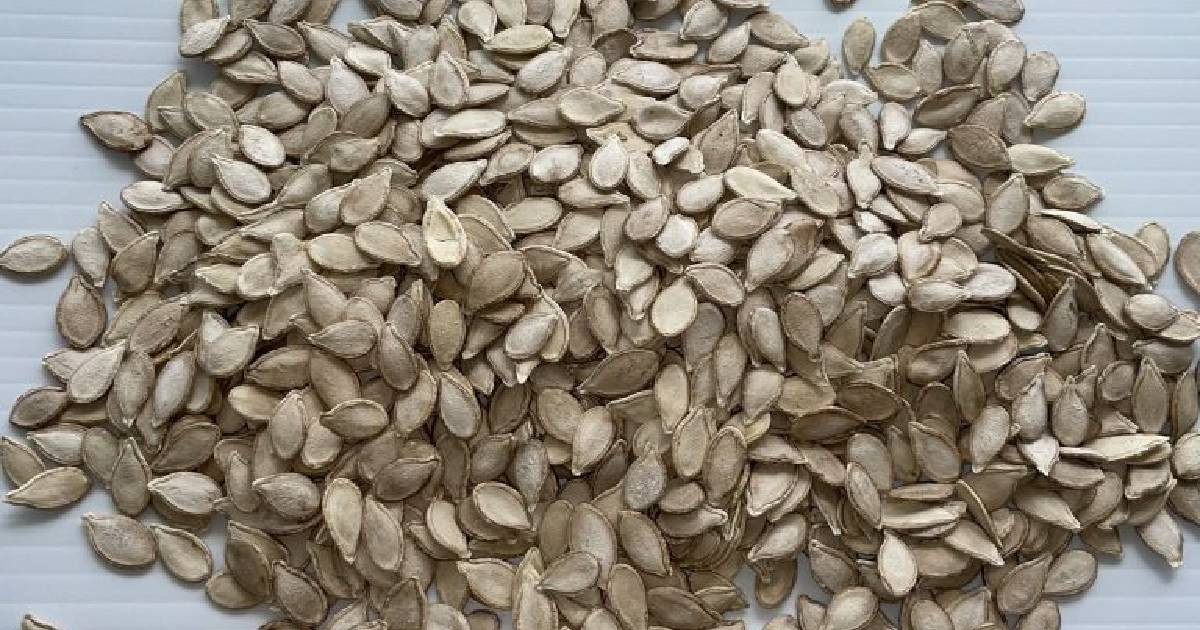
The official newspaper La Demajagua, the mouthpiece of the Communist Party in Granma, published an article this Saturday advocating the consumption of pumpkin, sunflower, sesame, pomegranate, cashew, amaranth, and bean seeds as a means to enhance "food sovereignty" amidst severe shortages. This marks yet another instance of the regime's propaganda efforts in light of the nation's food crisis.
From its first paragraph, the article takes on an educational tone, acknowledging that Cuba is experiencing "times of food scarcity" and suggests incorporating these seeds into breads, soups, salads, creams, and smoothies as a low-cost nutritional alternative.
The irony is hard to miss, with La Demajagua being published from one of the most hunger-stricken provinces in Cuba. According to the recent Food Monitor Program survey, "En Cuba Hay Hambre 2025," 78.9% of Granma's population is facing hunger, more than double the national average of 33.9%.
The same survey revealed that one out of every three Cuban households went hungry in 2025, with 25% of Cubans going to bed without dinner and 29% of families eliminating a daily meal.
The article in La Demajagua almost casually admits that previous regime attempts to diversify agricultural production have failed. It mentions the amaranth plant, noting, "It's a pity the attempt to expand its cultivation hasn't prospered," despite the state’s unsuccessful promotion.
Despite acknowledging these failures, the article concludes with the usual official optimism, claiming, "This way, not only would the country's agricultural biodiversity be better appreciated, but food sovereignty would also be strengthened."
This piece is part of a series of propagandistic initiatives the regime has launched over recent years to replace real solutions with subsistence alternatives. In August 2025, the University of Oriente advocated for moringa as superior to yogurt, milk, and spinach combined. That December, a regime official urged Cubans to stop eating potatoes and rice, asserting they are "not Cuban foods."
By April 2026, Artemisa proposed stevia cultivation as a sugar substitute, while its sole sugar mill produced less than 40% of the planned output. During the same month, a report revealed five provinces, including Havana, Matanzas, Cienfuegos, Guantánamo, and Santiago de Cuba, were at critical levels of food survival.
The structural backdrop is grim, with Cuba importing between 70% and 80% of its food, incurring an estimated $2 billion annual expenditure, as domestic production plummets. Official data shows pork production fell by 93.2%, rice between 59% and 81%, eggs by 43%, and milk by 37.6%.
Recently, leader Miguel Díaz-Canel told foreign communists that Cuba will "eat what it is capable of producing," while Vice Prime Minister Jorge Luis Tapia Fonseca admitted that progress on the Food Sovereignty Law is "far from what the people expect."
Understanding Cuba's Food Crisis and Government Response
What seeds are being promoted by La Demajagua?
La Demajagua promotes pumpkin, sunflower, sesame, pomegranate, cashew, amaranth, and bean seeds as alternatives to enhance food sovereignty.
What is the extent of hunger in Granma according to recent surveys?
The Food Monitor Program's 2025 survey indicates that 78.9% of Granma's population is experiencing hunger, which is over twice the national average.
How has the Cuban government responded to the agricultural production failures?
Despite acknowledging failed attempts to diversify agriculture, Cuban state media continues to promote optimistic solutions like seed consumption and alternative crops.